






Annual list of transformative, world-changing science
Readers are invited to vote for the 11th round and meet the editors. 2:00 PM to 2:30 PM ET on linked in live
Cambridge, Massachusetts, January 9, 2023 /PR Newswire/ — MIT Technology Review announced 10 breakthrough technologies of 2023, features advances that reporters and editors predict will fundamentally change the way we live and work. The 22nd Annual List recognizes important technological advances in artificial intelligence, biotechnology, climate change, space science, telemedicine, and more.. Editorial Package for the January/February Innovation Issue of MIT Technology Review A vote is included to vote for the 11th breakthrough. Editors will be hosting a conversation on LinkedIn Live today. 2:00 PM to 2:30 PM ET.
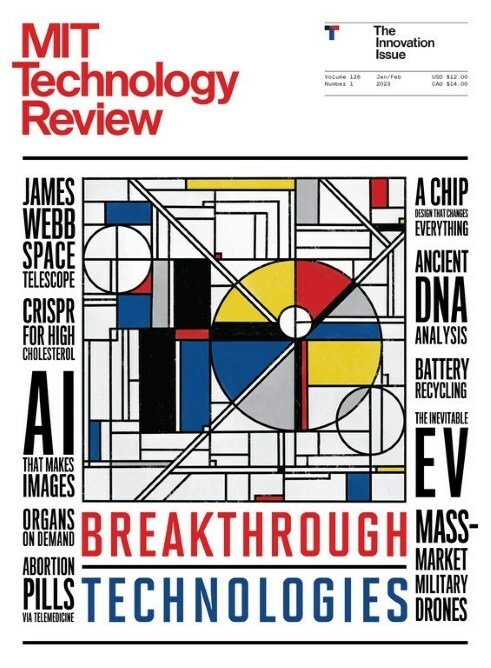
Editor-in-Chief Matt Honan MIT Technology Reviewsaid: It’s a statement about the potential impact of technology. Some of my favorite picks on this year’s list are those that inspire awe and wonder at the scope of human achievement.
Package Intro Essay “Dramatic changes in US tech policy in 2022 will change the way we innovateto David Rotmaneditors in general, MIT Technology Review, We take a deep dive into how legislation that invests hundreds of billions of dollars in industry and research and development can reset how we think about the role of government in the economy.
of 10 breakthrough technologies of 2023 that is:
- CRISPR for high cholesterol: New forms of gene-editing tools may enable treatments for common conditions. WHO: Verve Therapeutics, Beam Therapeutics, Prime Medicine, Broad Institute. Age: 10-15 years. (Special story “Everyone’s gene editing may progress” by Jessica HamzeroSenior Biomedical Writer, MIT Technology Review, post online January 19th.)
- AI to create images: AI models that generate stunning images from simple phrases have evolved into powerful creative and commercial tools. WHO: OpenAI, Stability AI, Midjourney, Google. When: Now. (Special Feature “Generative AI changes everything. But when the hype is gone, what’s left?” Will Douglas Haven, Senior Editor of AI, MIT Technology Review, online now.)
- Chip design that changes everything: Computer chip designs are expensive and difficult to license. That’s all changing thanks to a popular open standard known as RISC-V. WHO: RISC-V International, Intel, SiFive, SemiFive, China RISC-V Industry Alliance. When: Now. (Featured “These Simple Design Rules Could Upend the Chip Industry” by Sophia ChenFreelance Science Journalist, Online Posting January 25th.)
- Mass Market for Military Drones: Turkish-made aircraft like the TB2 have greatly expanded the role of drones in warfare. WHO: Baykar Technologies, Shahed Aviation Industries. When: Now. (Featured article: “Mass-market military drones have changed the way war is fought” by Kelsey D. AthertonFreelance Military Tech Journalist, Online Posting January 30th.)
- telemedicine abortion pills: Medical abortion is becoming increasingly common, but the US Supreme Court’s decision to overturn Roe v. Wade has created a new sense of urgency. WHO: Choix, Hey Jane, Aid Access, Just the Pill, Abortion on Demand, Planned Parenthood, Plan C. When: Now.
- organ on demand: Genetically engineered organs could wipe out waiting lists for transplants. WHO: eGenesis, Makana Therapeutics, United Therapeutics. Age: 10-15 years. (Special Feature: An Entrepreneur Dreaming of an Infinite Organ Factory Antonio RegaladoSenior Editor in Biomedical Sciences, MIT Technology Review, Posted Online January 11th.)
- Inevitable EVs: Electric cars have been available for decades. Now they’re finally mainstream. WHO: BYD, Hyundai, Tesla, Volkswagen. When: Now.
- james webb space telescope: A precision engineering marvel that could revolutionize our view of the early universe. WHO: NASA, European Space Agency, Canadian Space Agency, Space Telescope Science Institute. When: Now. (Special Feature: How the James Webb Space Telescope Destroyed the Universe Jonathan O’CallaghanFreelance Space Journalist, Online Posting January 21st.)
- ancient DNA analysis: A new method that makes damaged DNA readable by commercial sequencers reveals surprising things about the deep past. WHO: Max Planck Institute for Evolutionary Anthropology, David Reich Lab so harvardWhen: Now.
- battery recycling: A new method to recover vital metals in batteries could make electric cars more affordable. WHO: CATL, Umicore, Redwood Materials, Li-Cycle, Cirba. When: Now. (Special Feature: How old batteries will tomorrow’s EVs run? casey clownhartClimate Reporter, MIT Technology Review, Online Posting January 17th.)
Amy NorumOperations Editor-in-Chief, MIT Technology Review, “People are excited about the possibilities of technology and want to better understand how it is shaping our world. discover and help see how these advances will change our future (for better or worse).We explore a wide range of topics, from medicine to energy to digital technology, and staff We have used our deep expertise to identify emerging technologies that are poised to make a significant impact. It has a real impact on the world.”
For more information, 10 breakthrough technologies of 2023, visit MIT Technology ReviewWebsite of technologyreview.com and sign up download Newsletter hereTo watch Honan and Nordlum’s LinkedIn Live January 9 from 2:00 PM to 2:30 PM ETSign up here.
Nodoram article”Here’s what’s not on our list of 10 breakthrough technologies for 2023:featuring 5 of the 50+ nominees not selected by the editors and posted online January 13thReaders can vote for the 11th breakthrough. technologyreview.com/tr10-2023 Use March 1stOptions include quantum-enabled cryptography, super apps, hydrogen planes, and exascale computing.
About MIT Technology Review
Founded in Massachusetts Institute of Technology 1899, MIT Technology Review . MIT Technology Review draws its authority from its relationships with the world’s leading technology institutions, its editors’ deep technical knowledge, ability to see technology in its broadest context, and unrivaled access to leading innovators and researchers. MIT Technology Review Our mission is to bring about more informed and conscious decisions about technology through authoritative, influential, and credible journalism. For more information, visit TechnologyReview.com. apply. listen. join. follow: twitter, Facebook, LinkedIn, Instagram.
Media Contact:
Jennifer A. Maguire, [email protected]
Diane Stephanie, [email protected]
Source MIT Technology Review

