











A study by the U.S. Energy Information Administration (EIA) found that the energy produced by waves reaching the U.S. coast is enough to cover 64% of the country’s energy consumptionGiven the potential for wave power generation and the fact that the oceans account for 97% of the world’s water, it is time to explore desalination plants based on ocean energy such as wave, tidal and wind power. was a problem.new prototype of Floating desalination plant Confirm your interest in these sustainable technologies.
A floating desalination plant made from 170,000 PET bottles
A Canadian company has demonstrated the feasibility of this concept through a modular desalination buoy system. The main apparatus consists of a floating platform anchored to the seabed with a pipeline that brings freshwater to shore.
The first device, codenamed Iceberg Class, uses wave energy to pump water under pressure into a reverse osmosis desalination system. This is the most popular and sustainable technology in desalination plants. As seawater passes through a system of membranes, the salt is removed. Produces up to 50 cubic meters of water dailyThis amount is enough to cover the needs of 100 households of four people.
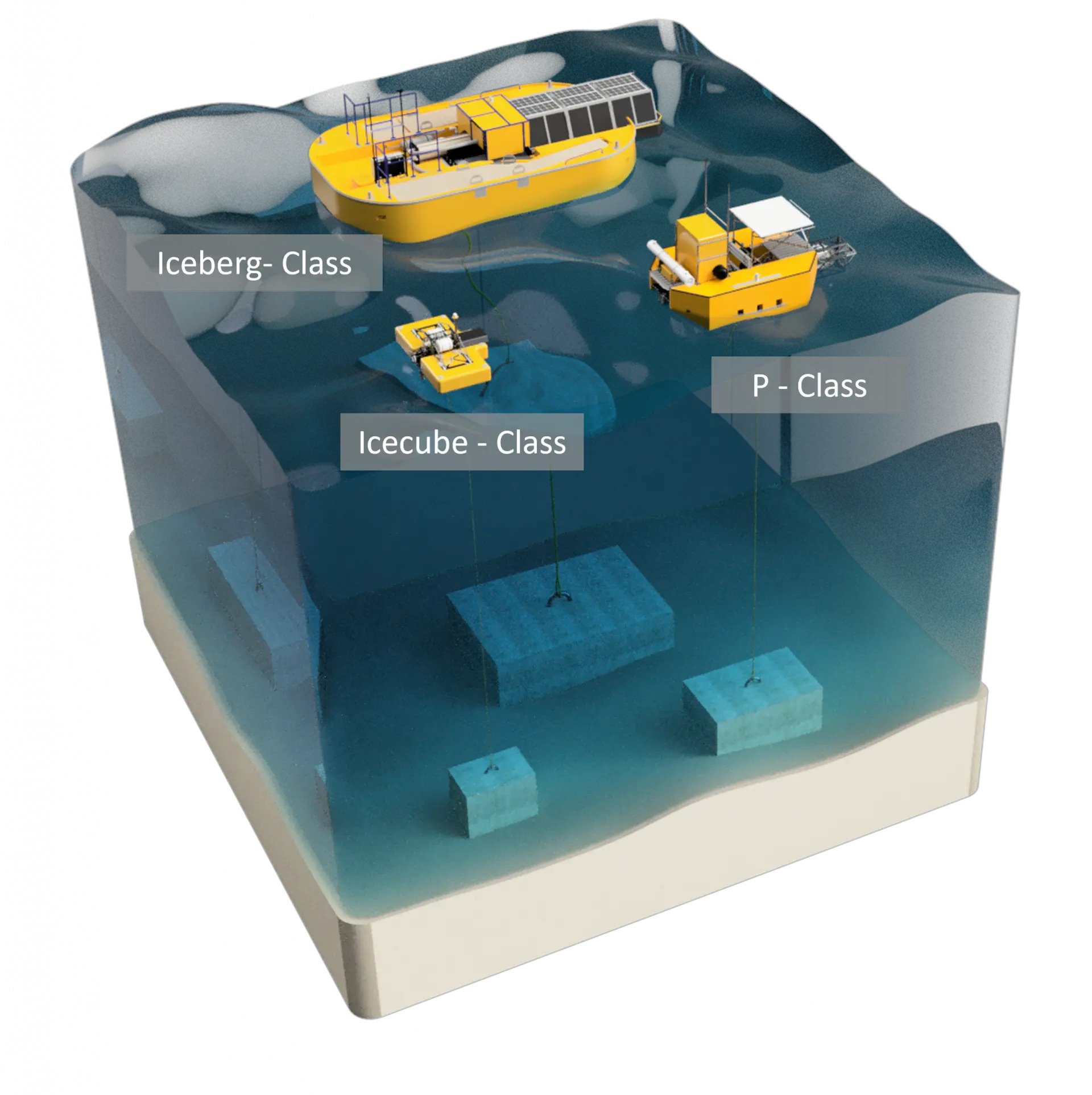
However, the system is designed to be modular and scalable. On the one hand, several units can be installed side by side. On the other hand, there are units of various sizes. In addition to the current basic model, there are two smaller models. The smaller one is intended as an easy-to-install platform for immediate freshwater generation just in case. humanitarian catastrophe in coastal areas. This is the equivalent of this other portable desalination plant recently discussed.
Desalination plants can, in principle, operate within the reach of waves. Minimum height 1 meteralthough the seafloor should have 13-30 meters deepIn terms of dimensions, the Iceberg class machine is 8 meters long, 5 meters wide and weighs 11,000 kilograms.
The new floating desalination plant was conceived from the ground up with a circular economy focus. In addition to using wave power to pump water and solar energy to control onboard sensors, they are mostly made from recycled plastic.Specifically the basic model Recycle up to 170,000 plastic bottlesIt is also equipped with an environmental mesh that prevents the desalination plant from inhaling marine life.

Finally, the developer claims that each unit has a useful life of 15 to 20 years and requires only 3 to 7 visits per year for maintenance. Currently, the amount of freshwater produced is limited, so work is underway to develop a floating desalination plant on an industrial scale.These first units are Entering the pilot phase in 2023.
Alternatives to other floating desalination plants
Canada’s desalination buoy is one of many initiatives that have proliferated in recent years. For example, the US National Renewable Energy Laboratory (NREL) is testing a prototype with promising results. Similar in design to a Zodiac-style inflatable boat, the system uses wave energy to perform a desalination process, pumping water to shore.
Another prototype of a floating desalination plant based on wave energy was recently installed in the Canary Islands by a Norwegian company. Weighing 100 tons and measuring 7 meters in diameter, the Gaia Buoy will undergo tests in the port of Las Palmas de Gran Canaria from 2022. As the results of the experience become clear, it is hoped that a larger platform with commercial applications will be installed.
As you can see, These prototypes are mostly in the experimental stageHowever, it may play an important role in freshwater problems in the future.
If you want to learn more about fully operational desalination technology and its potential to meet humanity’s drinking water needs in the years to come, beyond floating desalination plants, I recommend checking out this article. Also, if you are interested in learning the full potential of offshore renewable energy such as: tidal and wave poweryou can check this other article.
sauce:
