






 When I was a kid growing up in Yorkshire, wasting electricity was almost criminal. Coming from a place synonymous with frugality, I learned early that every kilowatt-hour was sacred. And fair enough: back in the 1970s, generating each kWh of electricity meant burning roughly a kilogram of coal mined by Arthur Scargill’s finest1.
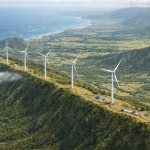
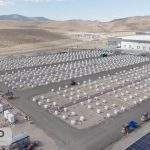
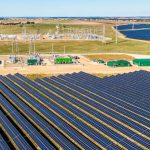
Fast-forward to today and things couldn’t be more different. Solar and wind have free ‘fuel,’ and we often find ourselves with more electricity from wind and solar than we know what to do with.
The solution: curtailment, the practice of intentionally limiting renewable energy output when there’s too much.
Curtailment means we’re well on our way from energy scarcity to energy abundance. And counterintuitively it is not a sign to slow down or stop building more renewable generation.
Continuing to build more solar and wind capacity, which will only increase curtailment, isn’t wasteful; it’s strategic. It ensures our future electricity mix is cheap, clean, and abundant most of the time.
Renewables Are Already Dominant
To give this some substance, consider the work of renewables expert David Osmond, who runs simple weekly simulations2 of Australia’s main electricity grid using scaled-up amounts of solar and wind generation and real demand data. His findings show Australia can get close to 100% renewable electricity using 120GWh of storage (about 5 hours at average demand). His most recent results indicate that:
- Last week his simulation of Australia’s main electricity grid achieved 99.7% renewable electricity, despite demand being well above average, and wind being below average.
- Over the last 186 weeks, the simulated grid averaged 98.7% renewables, with about 16% of wind and solar generation regularly requiring curtailment.
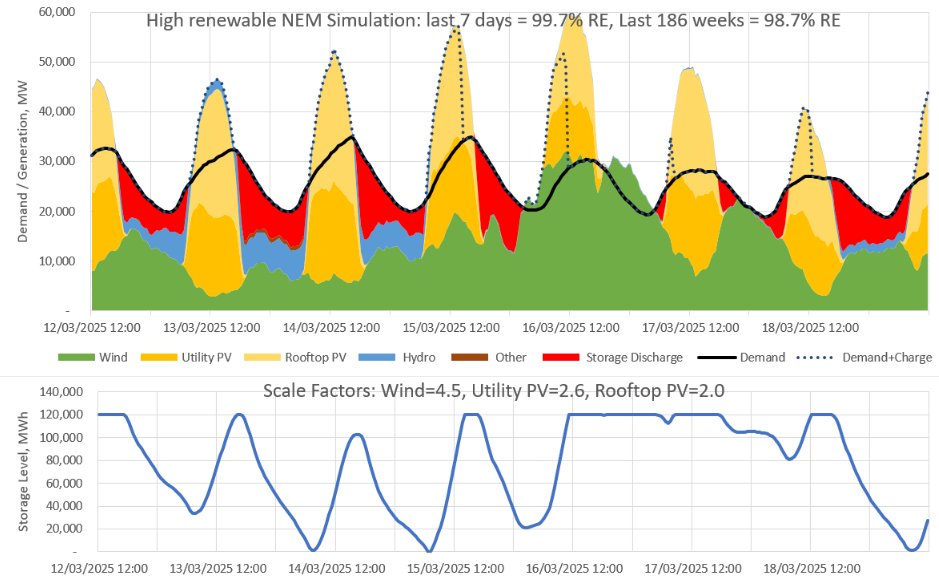
David Osmond’s latest simulation of Australia’s main electricity grid.
How Curtailment Affects Homeowners
For homeowners with recently installed solar, curtailment can mean dealing with flexible exports, when your solar inverter’s exported power is remotely throttled to manage grid stability (but still producing enough solar to power your home).
I get it: it hurts seeing that beautiful solar curve squashed down on your monitoring app, not to mention losing out on feed-in tariffs (FiTs). But here’s the thing: if you crunch the numbers, at current FiT rates (~5 cents per kWh or less), the dollar loss is small relative to savings from self-consumption of solar.3
Some might still see curtailment as wasteful, but that’s old-school thinking. What really matters now is timing. A kilowatt-hour at 6pm on a cold, still winter evening is precious. But at midday on a spring day, electricity can be so plentiful some customers literally get paid to use it.
The challenge today is balancing abundant daytime energy with storage like batteries and pumped hydro, occasionally supported by gas peakers. This optimal mix lets us rely on renewables without fear during those tricky evening peaks.
Next time you hear complaints about curtailment being wasteful, remember it’s proof we’re on the right track, building enough renewable energy to make Australia’s energy mix plentiful, cheap, and clean. Curtailment isn’t just cool — it’s essential.
Footnotes
- I’m assuming 1970’s UK coal plants were half the efficiency of a modern Australian black coal plant
- Yes – this is a very simplified model of the grid, and we’ll need more than just more generation and storage – but it is all doable if we are motivated
- It would, however, take the sting out if more retailers offered higher FiTs in the late afternoon, rewarding savvy homeowners with big west-facing arrays who contribute power precisely when it’s most valuable.
