








With huge numbers of new home batteries sweating through their first Australian summer, temperature has risen to be an issue worth investigating.
Are there some simple solutions to keeping your solar battery and inverter cool? Read on for answers.
What Does Heat Do To Home Batteries?
In short, heat kills electronics and batteries alike.
The lore in electronics engineering says that running 10ºC too hot will halve the life of equipment, especially for components like capacitors and semiconductors, which power handling equipment like inverters and DC-DC converters are packed full of.
This principle is based on the Arrhenius equation, which describes how chemical reaction rates increase with temperature. For many electronic devices, operating at a temperature 10°C over the design specification can roughly halve expected lifespan, while lowering the temperature by 10°C can double it.
Applied to chemical energy storage like batteries, excess temperature ends up with the electrolyte eating the cathode inside the cells. They live hot and die young.
Install Your Battery In The Right Place
The simplest and best way to keep your battery cool is to install it in the right place to begin with. My usual recommendation is to put it inside a cool garage rather than outdoors in the baking sun. In fact radiant heat from direct sun exposure can void your warranty.
Of course the rules and practicalities mean that’s not always possible – your garage might not have space, it might be in the wrong spot, or it might not exist at all.
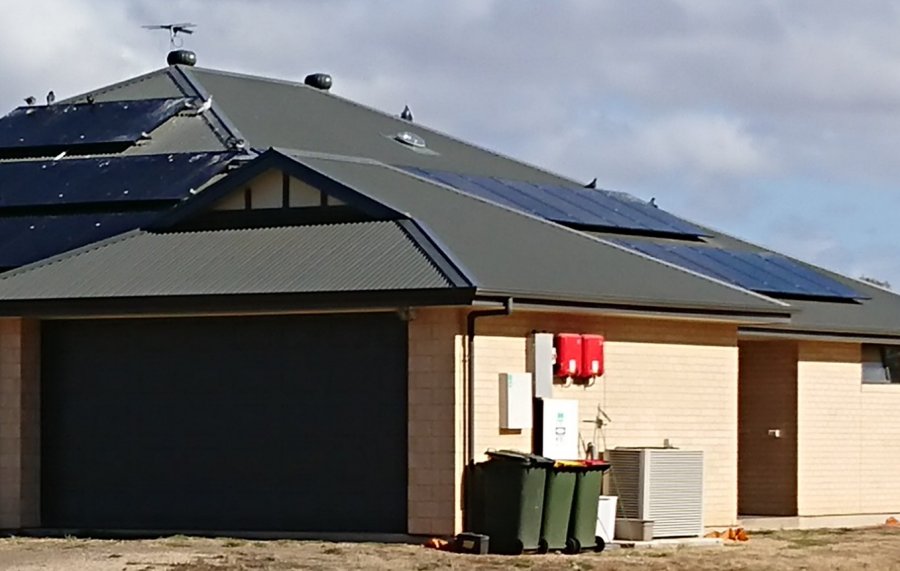
They were so close to the right place but this desperately needs a curtain dropped in front of the expensive electrical hardware.
I’m A Fanboi
Another important factor is getting the right gear – does your battery or inverter feature active cooling?
Fronius have been famous for fan noise since releasing the SnapIn-verter in 2014 and despite others marketing against them with passive aggression and heavy heat sinks, the Gen24 that came to Australia 6 years later had a bigger, better quieter fan.
Tesla took a similar approach even further with the Powerwall 1 in 2015 having liquid cooling to carry heat from an internal DC-DC inverter, and the battery cells, out to a fan forced radiator. It’s the same concept and even the same hoses used on a combustion engine car.
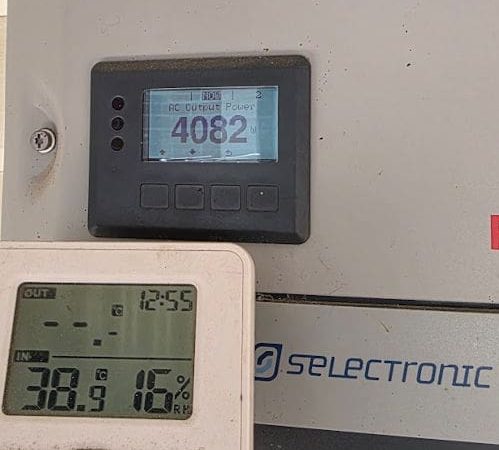
Near 1pm it was 39ºC in the shade and this 4kW Fronius was running flat chat.
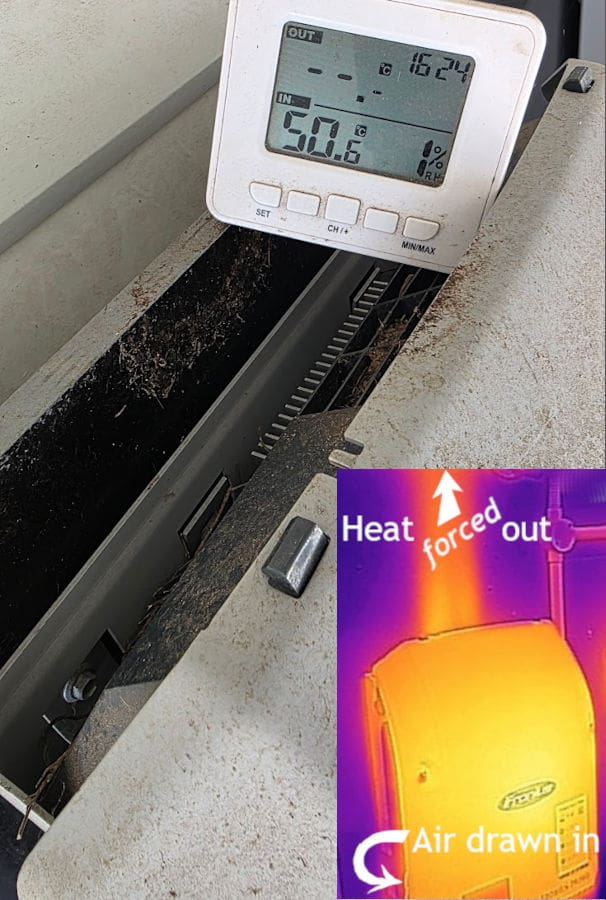
An additional 10ºC blown off the heat sink for the same 4kW Fronius.
Cheaper batteries were simply glued to a big piece of aluminium, but I know from first hand experience, some didn’t perform to specification even when they were new.
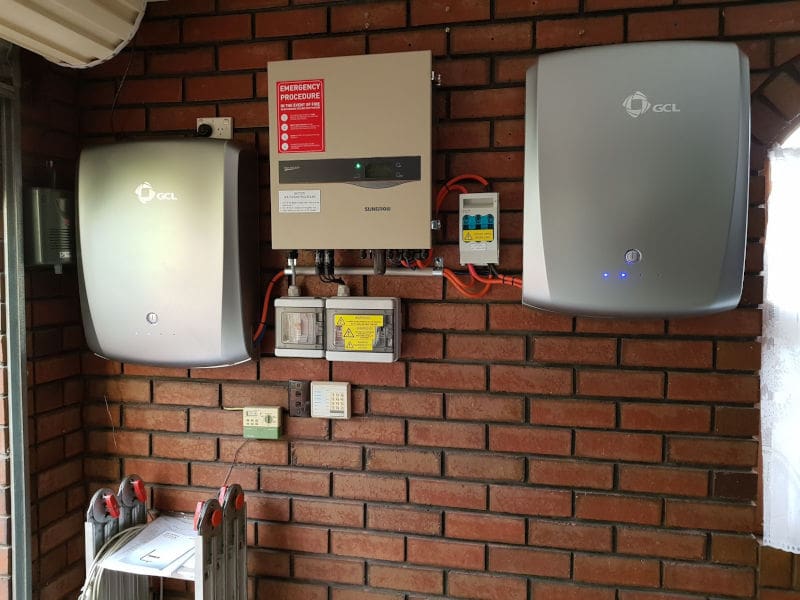
This early adopter found his GCL battery didn’t meet its specified data in its first year. Rather than replace it under warranty, they just gave him a second one and had me install it.
Monitoring Offers Insight
If you do have to install your battery outside, how do you determine if it is actually overheating?
Solar monitoring platforms will help you here, providing insights about individual battery voltages and component temperatures. Not all of them offer all the information to the end user, but when you ring up for technical support, the manufacturer often has deeper access to very specific information – including if a battery gets too hot or too cold.
It’s why a lack of good internet access will shorten your battery warranty in many cases.
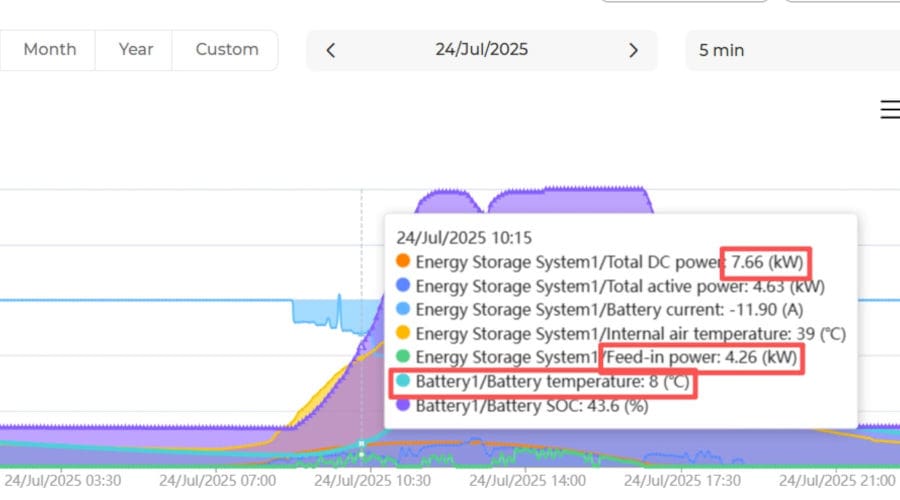
This Sungrow graph came to us after a complaint about excess electricity being exported to the grid instead of charging the battery. There wasn’t a fault, but the low temperature caused the BMS to protect the battery by limiting the charge rate.
It’s worth looking into your brand of system to see what data they offer, and whether temperature is really a concern.
Battery modules with a layer of internal electronics for DC-DC conversion are becoming more popular, so there’s certainly potential for waste heat to be generated.
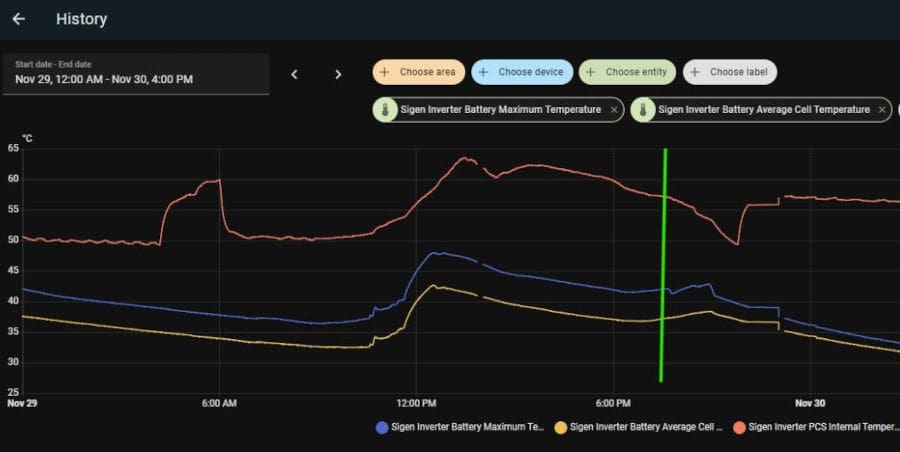
Batteries running at 45ºC and inverters over 60ºC wouldn’t make me comfortable
The Simple Solution
So many batteries installed outside are on the wall, under an eave, beside the fence – it’s almost criminal they’re not better protected.
Many years ago I was a one man band, installing venerable SMA SunnyBoy 5000TL inverters and thanks must go to my old mate Orge for demonstrating the idea shown below.
Electrically the ideal place for the inverter was next to the switchboard, but being on the northern wall was a terrible idea for sun exposure. With display screens that would prove to be sun sensitive, it was a good job we made a shelter for it.
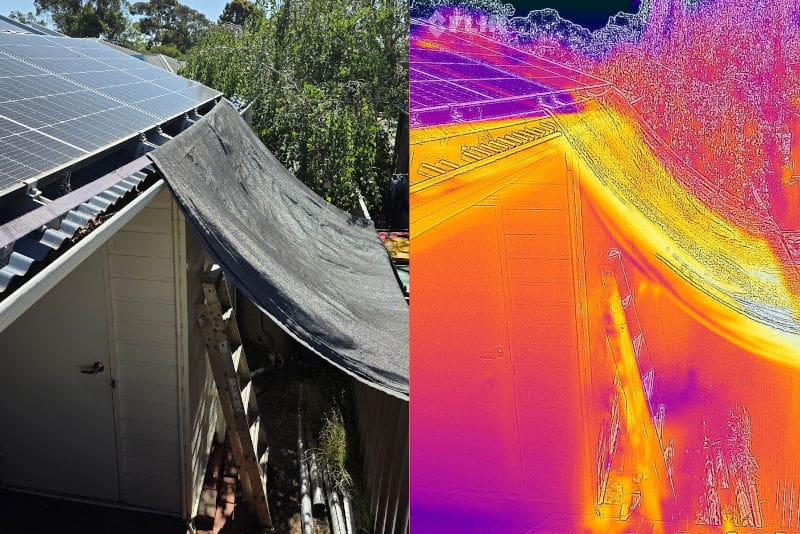
By late afternoon, the sun was coming in sideways and the aluminium ladder was picking up temperature. However the wall was still just as cool as the door under the verandah.
Shadecloth Offers More Than Shade
Keeping the weather off means simply stopping rainstrike makes a difference.
However the main benefit of shade is a 10ºC drop in temperature.
As a one time renter, using 3 large shade sails and some tile mounting brackets for solar arrays, I took this principle to cooling the whole western wall of a shitty, uninsulated brick veneer house, and it worked admirably.
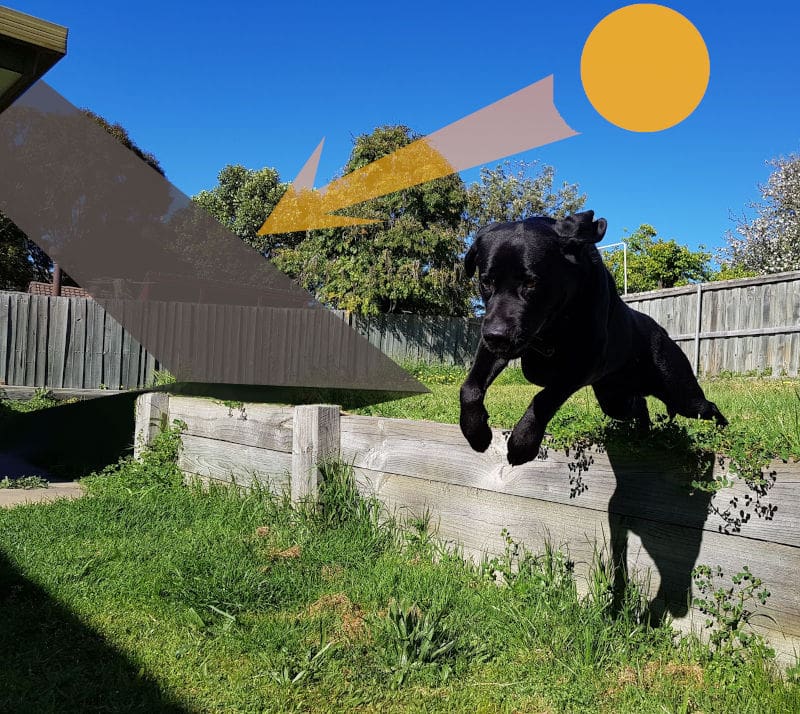
This image was taken in the morning, but by afternoon the sun would bake the western wall. Sadly I’ve lost the actual photo but this explains how the dog ended up walking onto the roof.
Proving A Concept
For this post I have simply strung a ratchet tie down strap between the “L feet” that anchor my solar array to the roof.
It’s a rough replica but for a permanent solution you could ask your solar installer to fit two brackets and a 3 metre length of rail. Perhaps screw anchors to the underside of your eaves, or fix with rivets to a metal fascia.
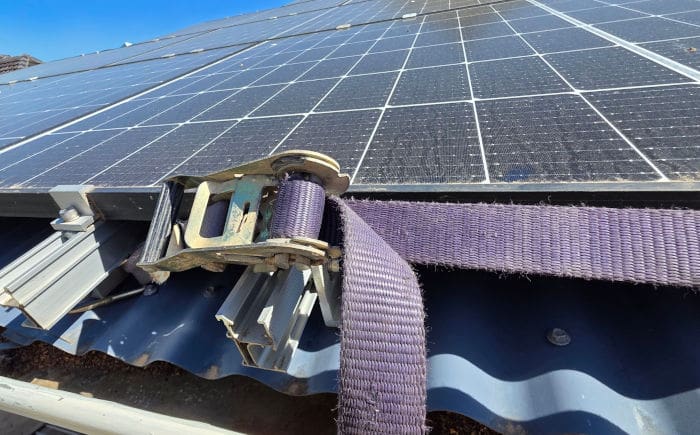
Be careful with ratchet straps, they can rip things apart.
Pull a 3m square shade sale around this strap/rail and then use your choice of rope, trampoline spring, turnbuckle, ratchet strap or shock cord to secure the loose ends, either to the fence or the ground.
Voilà, you have a generous sized weather screen for your expensive equipment which doesn’t impede cooling airflow but offers 10 times broader protection than a cheap awning.
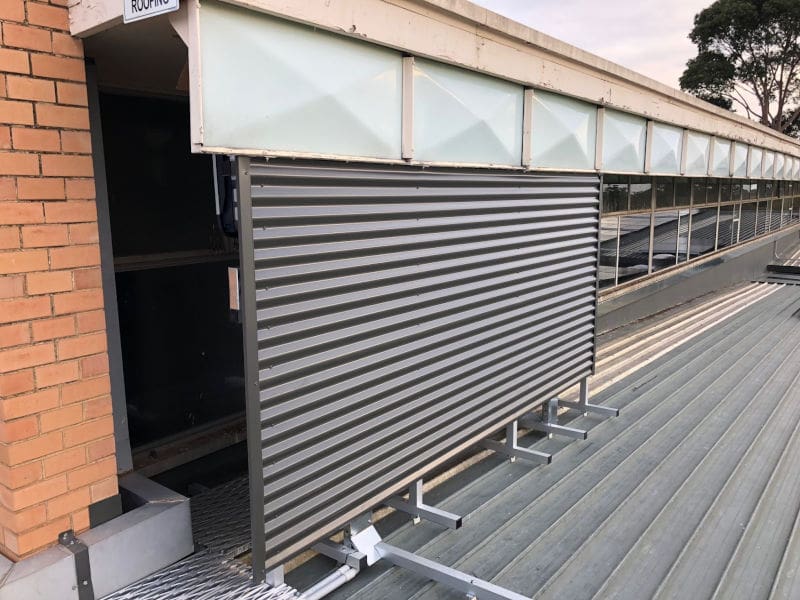
This school building had a nice big eave to hide four inverters. We added horizontal corrugated iron to completely block the northern sun, but shadecloth would suffice.
Tune in for more solutions as we explore this subject further in the coming weeks.
For more on home batteries, read our dedicated explainer page covering the essential details.
