





Managing Energy Costs in Facilities
Small shifts in usage can have a big impact.
When your electric bill arrives, your total energy use may look similar to last month’s. However, peak demand fees rise and fall throughout the day and shift again with the seasons, quietly driving up costs even when overall consumption stays steady. Here is what is behind these spikes and how to bring them down without easing off the cooling.
What Are Peak Demand Charges and Why Do They Matter?
Peak hours are the periods when electricity usage is at its highest. Utilities build and maintain extra infrastructure to handle these surges, and the cost of keeping that capacity ready shows up as fees on your bill. These are peak demand charges, additional costs based on the highest level of power your facility draws during a specific time window.
Understanding how these fees work is crucial when you want to reduce your maximum consumption. Even a slight reduction in your highest kilowatt draw can translate into meaningful monthly savings. Managing demand also eases pressure on the electrical grid that everyone depends on, especially during heat waves.
For facilities looking to significantly reduce their bills, the first step is identifying when the highest consumption occurs and what triggers it — it’s often large machinery or cooling equipment. This information helps monitor usage and adjust accordingly.
Proven Strategies to Cut Peak Demand
If climate control is nonnegotiable in your facility because it houses sensitive machines, ensures personnel comfort or maintains product integrity, then the focus shifts to minimizing demand charges without turning off your cooling equipment. Facilities manage that balance with the following strategies.
Install Efficient Equipment
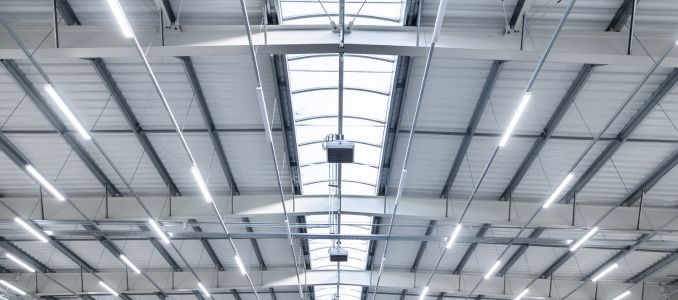
Upgrading to modern, energy-efficient cooling technology lowers both power draw and heat output. LED lighting, for example, uses at least 75% less electricity than incandescent bulbs and generates significantly less heat in the space. Appliance size matters just as much.
Oversized air-conditioning systems cycle on and off too frequently, a pattern that drives spikes rather than preventing them. Choosing appropriately sized devices helps keep cooling steady and demand in check.
For facilities such as data centers, temperature and humidity targets matter just as much as runtime. ASHRAE recommends maintaining room temperatures between 65° and 80° Fahrenheit, with relative humidity capped at 60%, to support reliable cooling, occupant comfort and energy efficiency.
Reschedule Electricity-Intensive Operations
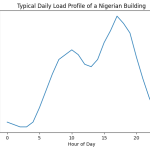
The busiest hours shift by season, time of day and time zone, which means the cost of electricity changes depending on when usage is highest. During the summer months, prime weekday windows typically occur in the afternoon and early evening, when air conditioning loads are at their highest and grids are under the most strain.
- Eastern: Usage peaks from 2-6 p.m. Off-peak runs from 6-2 p.m.
- Central: Usage peaks from 1-5 p.m. Off-peak runs from 5-1 p.m.
- Mountain: Usage peaks from 8 a.m.-11 p.m. Off-peak runs from 11 p.m.-8 a.m.
- Pacific: Usage peaks from 5-9 p.m. Off-peak runs from 9-5 p.m.
In winter, consumption patterns shift as heating needs increase in the morning and evening, resulting in two distinct windows in some regions.
- Eastern: Usage peaks from 6-10 a.m. and 6-10 p.m. Off-peak runs from 10 a.m.-6 p.m. and 10 p.m.-6 a.m.
- Central: Usage peaks from 5-9 a.m. and 5-9 p.m. Off-peak runs from 9 a.m.-5 p.m. and 9 p.m.-5 a.m.
- Mountain: Usage peaks from 7 a.m.-10 p.m. Off-peak runs from 10 p.m.-7 a.m.
- Pacific: Usage peaks from 6-10 a.m. and 5-8 p.m. Off-peak runs from 10 a.m.-5 p.m. and 8 p.m.-5 a.m.
When possible, shifting energy-intensive equipment to off-peak hours helps reduce surge charges. Irrigation pumps and electric water heaters, for example, benefit from nighttime operation, which lowers maximum demand and limits water loss tied to daytime evaporation. Simple timers automate these changes, cutting costs with minimal disruption.
Use Thermal Storage to Shift Cooling Load
Thermal storage that produces ice overnight when electricity rates are lower enables cooling systems to take a break during prime periods. Then, during the day, the stored cold reduces the need for compressors to operate, potentially cutting annual peak demand by up to 22%.
Cycle Equipment Duty
For facilities that manage multiple compressors or chillers, staggering their operation helps level out peak loads by ensuring they do not all run simultaneously. Additionally, some utilities offer programs that temporarily interrupt nonessential loads in exchange for discounts. This creates a win-win for both facilities and the power grid.
Embrace Alternative Power Sources
Generators can help shoulder part of the load during the busiest operations, thereby reducing grid reliance and associated fees. Renewable energy sources, such as rooftop solar, also generate power when demand spikes during sunny days, directly offsetting peak consumption. A good rule of thumb is that the more electricity you draw from the grid, the greater the benefits of installing solar panels.
Keep Cool While Cutting Costs
Cutting peak demand without losing comfort is possible. The key lies in smart planning, effective technology and a clear understanding of how your facility uses power and water. Keep cool, spend less and support a more sustainable energy future — all at once.
About the Author
Ellie Gabel is a freelance writer with a passion for keeping up with the latest innovations in science, tech and sustainability. She also works as the associate editor for Revolutionized. When she’s not working on her next article, you can find her relaxing with her husband and their cat.
