







Support CleanTechnica’s work through a Substack subscription or on Stripe.
Or support our Kickstarter campaign!

The US solar industry has been fighting back in court against White House efforts to throttle down activity and investment. One firm, the leading thin film solar manufacturer First Solar, has also taken its case to the court of public opinion. However, some of the most significant action is taking place behind the scenes, as domestic innovators expand their markets here at home and globally. Call it quiet quitting, solar industry style.
Voltage Energy Group Keeps Insisting Upon Itself
Investors in the solar industry could just as easily pack up their bags and take their business elsewhere, but the enormous scope of the US market is like catnip to financiers eager to avoid taking on fossil energy baggage.
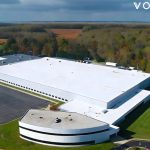
Voltage Energy Group is the most recent example to surface. On February 4, the startup announced that it will park a new manufacturing facility in Roxboro, North Carolina, along with its forthcoming Global Headquarters. The site is no small potatoes, including 246,000 square feet for the factory within a 72-acre site.
“The move reflects the company’s long-standing strategy of building and scaling its global operations from its American roots,” Voltage explained in a press statement, adding that its current headquarters is located in Chapel Hill, North Carolina. The company also has an office in Frankfurt, Germany.
Voltage Energy Group Who?
If you’re not familiar with Voltage, join the club. The rooftop solar installer SunRun and other public-facing firms in the solar industry are more likely to catch attention, along with leading solar panel manufacturers like QCells and First Solar, among others.
News about individual solar projects is another attention-getter, as large and small companies race to burnish their green cred (and get cheaper electricity rates) with on-site rooftop solar panels or by calling dibs on utility-scale solar projects off-site.
Voltage is among the companies that sets the stage behind the scenes. It focuses on utility-scale projects, aiming to provide developers with the best-case scenario for getting the job done quickly and efficiently, with reliable performance over the long term.
The company lists advanced visualization tools including 3D renders, 360-degree walk-throughs, and virtual reality previews in its toolkit.
“Its flagship products, VOLTAGE®LYNX, VOLTAGE®ALEX, and VOLTAGE®IBEX, can be tailored into flexible, customized solutions with the agility to meet each client’s unique requirements, underscoring the company’s enduring focus on customer-centric service and long-term success,” the company elaborates.
The US Solar Industry Is Quiet-Quitting Federal Policy
North Carolina is one of those states where Republican members of the state legislature and US Congress have been holding the line on right-wing policies despite having a Democratic governor in office, so it’s somewhat of a surprise to see the US solar industry expanding its footprint in the state.
Nevertheless, local office-holders of any political stripe have been reluctant to turn down the prospect of bringing new jobs to their constituents. It’s all well and good for the White House and members of Congress to issue directives from on high, but when it comes down to local politics, all politics is local. Voltage is a good example.
Cynthia Petty, the Mayor of the City of Roxboro, chipped into the Voltage announcement with this statement:
“I am committed to working with and supporting Voltage in any way possible. Once again, I extend a warm welcome.”
All right, so that was somewhat tepid. Kyle Puryear, who chairs the Person County Board of Commissioners, responded more enthusiastically (break added for readability):
“On behalf of the Person County Board of Commissioners, I am proud to welcome Voltage Energy to our community. We are grateful that Voltage has chosen our county as the home for its operations, and we look forward to a long and successful partnership.
“The company’s presence will create quality jobs, strengthen our tax base, and contribute to our ongoing efforts to attract innovative industries for a diversified manufacturing sector that is needed to bolster our local economy.”
The last time we checked, Pearson County government fell solidly onto the Republican side. “The county is politically conservative and Republican. No Democratic presidential candidate has carried Person County since Jimmy Carter in 1980,” notes Wikipedia.
No word yet from North Carolina’s two US Senators, both of whom are members of the Republican party, but perhaps they have other matters on their minds.
Everybody Loves Solar Energy
Politics aside, manufacturing jobs are good jobs. Bob Slack, the CTO of Voltage Energy, emphasizes the interplay of local job creation with global action. “North Carolina has always been the foundation of Voltage Energy,” he said. “By expanding our manufacturing footprint and planning for our future Global Headquarters here, we are reinforcing our commitment to customers, partners, and the local community while supporting the long-term growth of the clean energy sector.”
The US trade organization Solar Energy Industries Association has trying to get that same message across. Part of the action also involves working both sides of the aisle in Congress to pass new, streamlined federal permitting regulations. That can be a two-edge sword in favor of fossil energy development, but the immediate goal is to ensure that clean power gets the same treatment as fossil energy.
On January 28, SEIA CEO Abigail Ross Harper testified to that point in a hearing before the US Senate Environment and Public Works Committee.
“The most effective way to address that is through greater buildout of solar and storage. Unsubsidized solar is now the cheapest source of electricity in history in much of the country. With no fuel costs, solar provides a hedge against natural gas price volatility that continues to cause electricity price spikes,” Hopper emphasized.
“States with higher levels of deployment of solar and storage, like Texas, are experiencing lower and more stable electricity prices,” she added. “Streamlining permitting is essential to addressing the energy affordability crisis American households and businesses are facing.”
Republican US Senator John Boozman of Arkansas seemed to agree, providing Hopper with a leading question.
“Ms. Ross Hopper, Arkansas is currently seeing major investments in AI and cloud infrastructure, including a multi-billion dollar data center in Little Rock and West Memphis,” he explained. “Arkansas was able to land these investments in part because of a reliable, affordable, and all-of-the-above energy supply including solar.”
Hmmm, perhaps Republican members of the US Senate are getting the message after all. Keep an eye on First Solar for another angle on that. The company commissioned a poll showing that the US solar industry is supported by the majority of voters who come under the Trump-MAGA branch of right wing politics, and you know how much politicians follow the polls (note: the polling news is exclusive to Axios as of this writing).
Image: Another day, another big move for the US solar industry as Voltage Energy announces expansion in North Carolina (cropped, courtesy of Voltage).
Support CleanTechnica via Kickstarter

Sign up for CleanTechnica’s Weekly Substack for Zach and Scott’s in-depth analyses and high level summaries, sign up for our daily newsletter, and follow us on Google News!
Have a tip for CleanTechnica? Want to advertise? Want to suggest a guest for our CleanTech Talk podcast? Contact us here.
Sign up for our daily newsletter for 15 new cleantech stories a day. Or sign up for our weekly one on top stories of the week if daily is too frequent.
CleanTechnica uses affiliate links. See our policy here.
CleanTechnica’s Comment Policy
