




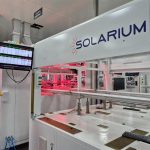



Solarium said the modules produced at the facility would be sold to external customers as well as for its own engineering, procurement and construction (EPC) activities.
The company highlighted how modules account for 50-60% of total project EPC costs and said its move into module manufacturing was part of a “backward integration strategy” to reduce dependence on external suppliers.
“The commissioning of this facility is expected to strengthen Solarium’s supply chain, reduce dependence on third-party suppliers, accelerate execution timelines and improve margins through captive consumption,” the company said. “This move also positions Solarium as an integrated solar solutions provider.”
Completed in nine months from its original announcement last June, the facility required a capital expenditure of INR900 million (US$9.6 million).
Commenting on the commissioning of the facility, Ankit Garg, Solarium’s chairman and managing director, said: “The commissioning of this facility marks a significant milestone in our growth journey. Delivered in under nine months, the plant reflects our strong execution capabilities. With a fully automated line capable of producing high-efficiency G12 modules of up to ~725 Wp, this facility strengthens our supply chain, enhances execution capabilities, and supports margin improvement across our EPC business.”
The development comes as India rapidly expands its domestic PV production capabilities. A report yesterday from market research firm Mercom said that in 2025, the country added 119GW and over 9GW of new module and cell production capacity, respectively.
