











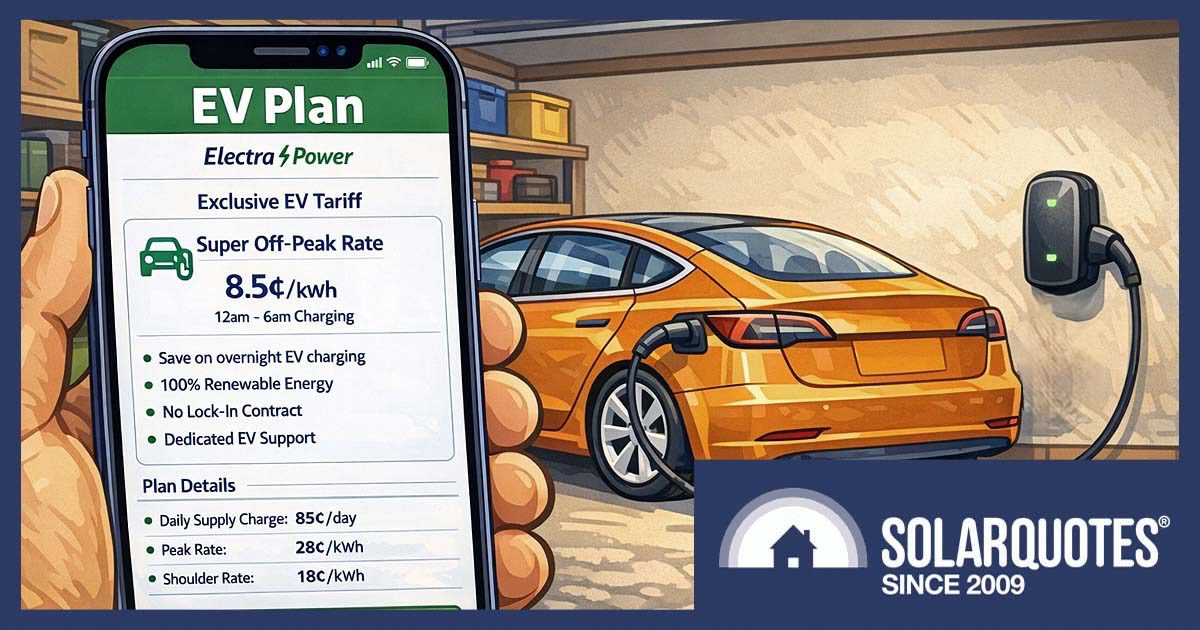
This article explains how EV-specific electricity plans work and what EV plans are currently available in Australia
EV plans are typically time-of-use tariffs marketed as EV products. They can offer very low electricity prices during a defined overnight window, but that discount is usually offset by higher prices at other times of the day.
EV Electricity Plans in Australia
The EV plan market in Australia is still evolving, with retailers testing different tariff structures and charging incentives.
The rates and time windows below focus on each plan’s lowest-cost EV charging period. This shows how each plan is structured, but doesn’t represent the full tariff — higher rates apply at other times and outcomes vary by state, network area, and meter setup. For exact details, follow the plan links for your area.
In practice, most EV plans fall into two main structures: night-based charging tariffs and alternative or managed charging options — the differences become clearer when you look at real plans.
Night Charging Plans
These are the most common EV-specific plans, offering a dedicated overnight window where electricity is significantly cheaper.
OVO Energy – The EV Plan
Good for: Overnight charging households
Benefit: Very low overnight rate (~4.5c/kWh, typically 12am–6am)
Watch out for: Higher peak rates
ENGIE – EV Flex Charge
Good for: Predictable night charging
Benefit: Low overnight rate (~10c/kWh equivalent, typically 12am–6am)
Watch out for: Fixed window
AGL – Night Saver EV Plan
Good for: Heavy night-time users
Benefit: Lower overnight rate (~8c/kWh, typically 12am–6am)
Watch out for: Higher peak rates
EnergyAustralia – EV Night Boost
Good for: Off-peak EV charging
Benefit: Discounted overnight rate (~10–20c/kWh equivalent, varies by network window)
Watch out for: Complex structure
Powershop – EV Night Saver
Good for: Night charging users
Benefit: Lower overnight rate (~10–20c/kWh equivalent, off-peak window)
Watch out for: Peak rates
Synergy – EV Add-On
Good for: WA EV users
Benefit: Multi-period EV tariff including cheaper overnight and daytime super off-peak charging windows (~8c/kWh daytime / ~19c/kWh overnight).
Watch out for: State-specific tariff and multi-period pricing structure
Other EV Charging Plans
These use alternative structures such as daytime discounts, weekend incentives, or managed charging systems rather than a single overnight window.
Powershop – EV Day Saver
Good for: Daytime charging / solar alignment
Benefit: Lower daytime rate (~10–25c/kWh equivalent, midday window)
Watch out for: Peak rates
Red Energy – EV Saver (Weekend Free Window)
Good for: Weekend charging
Benefit: Free electricity window (effectively $0/kWh during weekend period)
Watch out for: Fixed window
Origin Energy – EV Power Up
Good for: Managed / flexible charging households
Benefit: Smart charging with a discounted rate (~8c/kWh when charging is scheduled automatically by Origin)
Watch out for: Not a fixed tariff — charging times are controlled, and standard plan rates apply outside scheduled sessions
(Disclosure: SolarQuotes is owned by Origin Energy.)
Free Daytime Charging Offers
Some retailers include a free 3-4 hour daytime window around midday. While they are not always labelled as EV-specific plans, they can still be used for EV charging where the timing suits the household and your EV charger is fast enough to take advantage.
Are EV Plans Worth It?
EV electricity plans can save you money, but only if the pricing fits your charging routine.
Home overnight? EV plans are probably your cheapest option.
Home during the day with good solar? Smart solar charging off your excess generation will likely beat an off-peak tariff.
Home during the day but solar can’t keep up year-round? An overnight EV tariff or ‘3 free’ plan is great for cheap top-ups.
Got a home battery too? An EV tariff paired with a grid-configured charger lets you fill the car without draining the valuable kWh in your home battery.
Thinking of a home battery? An EV plan lets you buy a smaller battery because you don’t have to charge your car from your home battery.
The Bottom Line
Whether an EV tariff is for you depends on when your car is home, what generation and storage you have, and how much you actually drive. And don’t sign up for an EV tariff, without checking what happens to your daytime rates. There’s no point saving money on EV charging only to lose it powering the rest of your home.
