











There are always people warning of the risk of job loss from artificial intelligence and robotics. Still, few regret the support provided by a new device developed by several universities in the UK. Inspection of the narrowest drain and water pipesThe machine is part of a new batch of scientific and technological breakthroughs that will allow it to operate underground where few people set foot.
Measures against water leakage
Access to drinking water is a human and sustainability challenge. The fate of much of the water in pipelines due to infrastructure deficiencies is therefore doubly devastating. In countries such as the United States, Up to 50% of treated water is lost each year due to leakageOther countries such as the UK lose 3 billion liters of water every day due to this kind of problem. That’s the equivalent of 1,180 Olympic swimming pools.

In these cases, it is important to detect and respond quickly. This project in Burgos, SpainSmart System MonitorEd for each liter of water flowing through it water systemIn this case, big data, IoT, business intelligence, the physical meter better understand what was happening underground
Working in these metro environments can be difficult, dangerous and, in the case of wastewater infrastructure, unhealthy. This is why Joey’s prototype has generated so much interest.
Swarm of robots inspecting pipelines
The Universities of Leeds, Sheffield, Bristol and Birmingham in the UK are working closely together to Works autonomously on all kinds of pipesThe aim was to create a prototype that could operate in tight, wet, dark spaces with no GPS coverage, as this type of signal does not travel underground.
Result is Extremely lightweight robot weighing only 70 grams, using 3D-printed rotating legs. Joey integrates various technologies such as cameras, spatial sensors, inspection lights, and artificial intelligence navigation and control systems. Plus, it’s designed to use very little energy, resulting in longer battery range. All this means that the robot can move independently, identify cracks and send images to the control center. It can then return to its base of operations on its own when its battery runs low.Presumed Each costs about 300 euros.
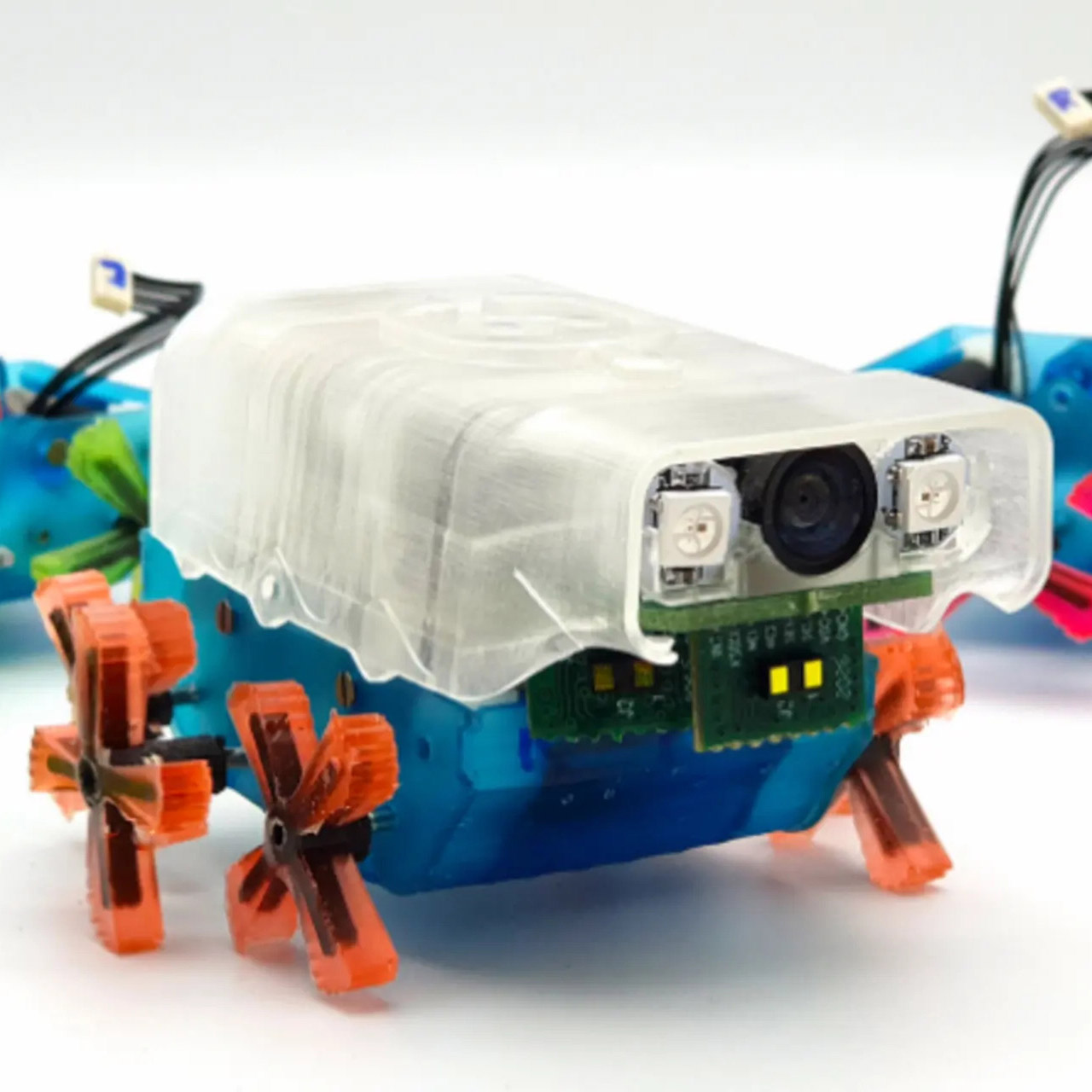
Joey is part of the Pipebots project, which brings together several UK universities and water infrastructure managers. And that’s just the first step in the project. The roadmap includes the joint use of a swarm of interconnected robots transported by a “Queen Mother” called Kanga. This “mothership” has pipeline repair capabilitiesTo do this, we first send a “descendant” to detect the point at which intervention is required. The University of Leeds is also currently testing the first of her Kanga prototypes.
Either way, Joey has to overcome several obstacles in its development. First, it’s not waterproof, so it won’t work in an underwater environment. Second, it cannot automatically recover its position when falling.
Other Strategies for Preventing and Repairing Water Leaks
Robotics is not the only advanced technology for detecting underground leaks. In recent years, multiple approaches have been adopted to tackle this problem. Here are some of the most important ones:
- satellite technology. There are already operators using AI to analyze the microwaves emitted by satellites that can pass several meters underground. Microwaves are sensitive to the conductivity of water and can distinguish between drinking water, rain water and salt water. This quality also allows us to monitor the water resources used to grow crops.
- acoustic sensor. Other companies rely on the use of sensors that emit acoustic signals through pipes. It then uses an AI system to detect leaks.
- IoT technology. The increased number of sensors through the use of IoT technology also makes it possible to maintain more effective leak control. Also, as in the previous case, AI can be used to alert infrastructure administrators to incidents.
Pipe inspection robots and other technologies mentioned throughout this article are intended for business and industrial environments. However, wirelessly connected home leak detectors are becoming more prevalent, alerting tenants to incidents. Environmental awareness aside, it can save users from multiple scares when returning from vacation.
sauce:
