











Support IPWatchdog with an individual sponsorship: Click here
“The Court of Appeal was wrong to conclude that the overall width or size of the specification of goods or services can never lead to an inference that an application was made in bad faith.” – UK Supreme Court Judgment
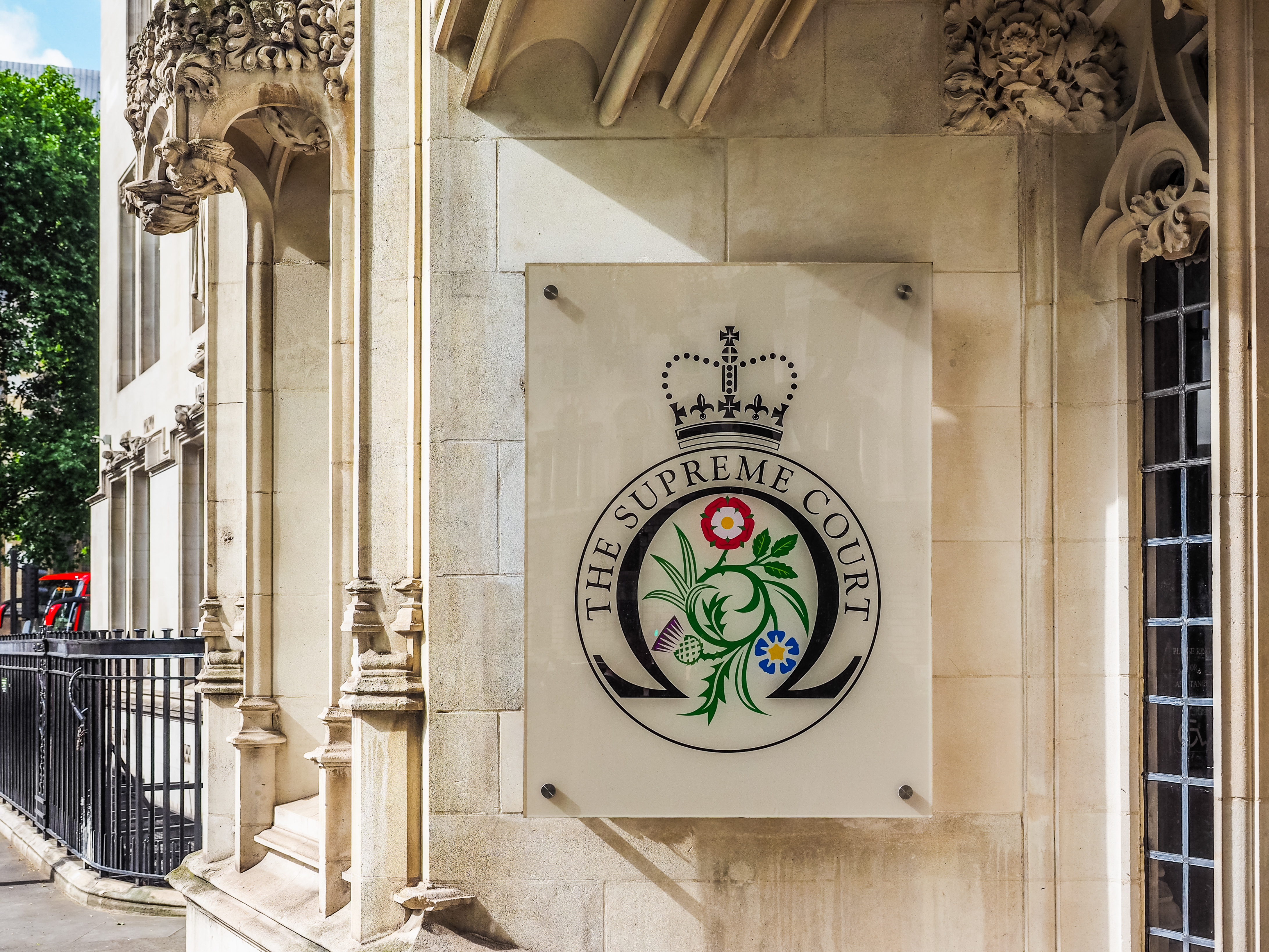 The UK Supreme Court today held that the England and Wales Court of Appeal was wrong to overturn a 2020 High Court decision that found Sky Ltd. had acted in bad faith when applying for the mark SKY in categories of goods and services it never intended to put on the market. The Court of Appeal’s decision had come as a relief to trademark applicants and owners whose registrations included broad specifications in the UK, but today’s decision revives uncertainty and has been dubbed a “shock” ruling by UK legal media.
Sky is a major broadcaster and telecommunications services provider in the UK, and SkyKick is a cloud services provider. Sky’s registrations covered a large number of goods and services, including “software” in Class 9 and “Internet portal services” in Class 38. SkyKick challenged the validity of the registrations, which Sky claimed SkyKick infringed, on two main grounds: (1) the marks were registered in respect of goods or services that were not specified with sufficient clarity and precision, and (2) the marks were registered in bad faith because Sky did not intend to use them in relation to all the goods and services covered by the registration.
As there is no requirement of use or intent to use when filing trademark applications in Europe, many applicants file broad specifications. However, the courts have ruled that in certain circumstances, lack of intent to use could be relevant to, and evidence of, bad faith.
Previous Rulings
There have been four first instance decisions, one Court of Appeal ruling, and a judgment by the Court of Justice of the European Union (CJEU) in this case.
In its 2020 ruling on the matter, the CJEU ultimately held that “a lack of clarity and precision of the terms designating the goods or services covered by a trade mark registration cannot be considered contrary to public policy, within the meaning of those provisions” and that therefore the lack of clarity and precision in a specification is not a ground for invalidity.
The CJEU explained: “a Community trade mark or a national trade mark cannot be declared wholly or partially invalid on the ground that terms used to designate the goods and services in respect of which that trade mark was registered lack clarity and precision.”
While registering a mark “without any intention to use it” may constitute bad faith “where there is no rationale for the application for registration,” bad faith cannot be presumed based merely on a finding that, at the time of filing, the applicant had no economic activity corresponding to the goods and services. The CJEU also said that if the lack of intention to use concerns only certain goods or services, the mark could only be invalidated for those goods or services.
Then, in July 2021, the Court of Appeal reversed one of the main court of first instance findings. The first instance judge had found that Sky did not intend to use the trademarks for some goods and services covered by the specifications, and there was no foreseeable prospect that they would do so. The Court of Appeal said the problem with this conclusion was that its significance to a finding of bad faith varies depending on the goods and services being looked at: “It is true that Sky had no prospect of using the mark in relation to every conceivable sub-division of computer software, but that fact is not, in my judgment, a relevant or objective indication of bad faith,” wrote the court.
The Court of Appeal also said:
“An applicant for a trade mark does not have to formulate a commercial strategy for using the mark in relation to every species of goods or services falling within a general description. Such an applicant is entitled to say ‘I am using the mark for specific goods falling within description X. I have no idea precisely where my business in goods of that description will develop in the next 5 years, but there will undoubtedly be more such goods than there are now.’”
The opinion concluded that the lower court’s findings “only have traction” if one treats the applicant as obliged to have a prospect of or strategy for using the mark in relation to every type of goods and services falling within a category. “The applicant is under no such obligation,” the Court of Appeal’s opinion said. In the absence of any other factors, it was not open to the judge to hold that any of the selected goods and services was applied for in bad faith. The Court of Appeal judge also criticized the first instance court’s procedure as being unfair to Sky because the company did not have the opportunity to demonstrate its intentions and good faith related to the selected goods and services.
Supreme Court Holding
Today, however, the unanimous Supreme Court, led by Lord Justice Kitchin, said “[t]he High Court was entitled to find that the SKY marks were applied for in bad faith to the extent that it did, and the Court of Appeal was wrong to reverse that finding.” The 145-page judgment allowed the appeal in part, also finding that:
“the Court of Appeal “made no error in approaching the issue of infringement on the basis of the specifications of goods and services as amended by the judge, and in finding that: (a) infringement by the Cloud Migration service had not been established and the judge fell into error in finding to the contrary; but (b) the judge was entitled to find that the Cloud Backup service did amount to an infringement of the SKY marks so far as they were registered for the relevant computer services.”
The Supreme Court also ruled on the jurisdictional implications of Brexit for the case. The Court held that UK courts continue to have the jurisdiction provided for by the EUTM Regulation for cases pending before a UK court prior to “IP completion day,” or the date of the UK’s exit from the European Union.
With respect to the key aspect of the ruling—bad faith—the Court explained in a press summary that the Court of Appeal “was wrong to conclude that the overall width or size of the specification of goods or services can never lead to an inference that an application was made in bad faith.”
In fact, said the Court, it would be “anomalous if bad faith could never be inferred in cases where the applicant had chosen to describe the goods and services the subject of its application using broad or general terminology rather than appropriate sub-categories.”
Reaction
Geoff Steward of Addleshaw Goddard said the case will have a significant effect for brand owners:
“Brand owners (and trademark attorneys) are going to be desperately reviewing their UK trade mark portfolios to see what registrations are vulnerable to bad faith; and also have to have a radical re-think about their UK trade mark filing strategies to ensure that their specifications can be commercially justifiable,” Steward said. “Gone are the days of overreaching to gain wider trademark monopolies. The Supreme Court decision will mark a sea change in trademark filing practices.”
Farah Mukaddam of Norton Rose Fulbright said that while the full impact remains to be seen, “in light of this decision, trademark proprietors should review their filing strategies, as trademarks with broad specifications, without apparent commercial justification, and that are not used, could be vulnerable to challenge and be declared invalid, on grounds that they were registered in bad faith.”
However, added Mukaddam, the ruling could be a boon for new market entrants:
“The decision benefits businesses and organizations looking to launch a brand by giving them greater confidence regarding unused marks. Regarding infringement, the Supreme Court states that a specification that includes ambiguous terms should be interpreted to cover just those goods and services that are clearly covered. This will also be welcome news for new brands entering the market.”
And Daniel Prim of Harbottle & Lewis said “the impact of this decision should not be underestimated.” Prim noted that the Supreme Court’s decision to proceed with the Judgment despite a settlement that had been reached was “unusual” but “brings some much needed clarity to brand owners and the IP industry in a number of important areas.” He added:
“With the Supreme Court holding that broad trade mark specifications may result in a finding of bad faith, trade mark owners should revisit their existing portfolios, and carefully consider the decision’s impact on any current or potential disputes. Looking ahead, broad specifications are now increasingly at risk of a bad faith invalidity attack and owners should consider whether a revised approach to their future filing strategies is needed.”
This article was updated at 1:36pm on 11/13.
Image Source: Deposit Photos
Author: claudiodivizia
Image ID: 166034586
