











The dream of millions of people who are raising awareness to use the earth’s resources responsibly is to have access to clean energy with zero CO2 emissions. People living in remote areas dream of access to energy development.
Two tidal turbine-based projects are currently underway, with already very optimistic results in Canada and the UK. Let’s dive into them.
Harnessing the movement of the sea with tidal turbines.
In late 2016, the Cape Sharp Tidal Society installed a 2 megawatt tidal turbine in its test center. Fundy Ocean Research Center for Energy (FORCE) in Canada. tidal turbine They are very similar to windmills, except that they are installed on the ocean floor and the blades are moved by ocean currents. The service life he has is 25 years and requires a maintenance cycle of 5 years.
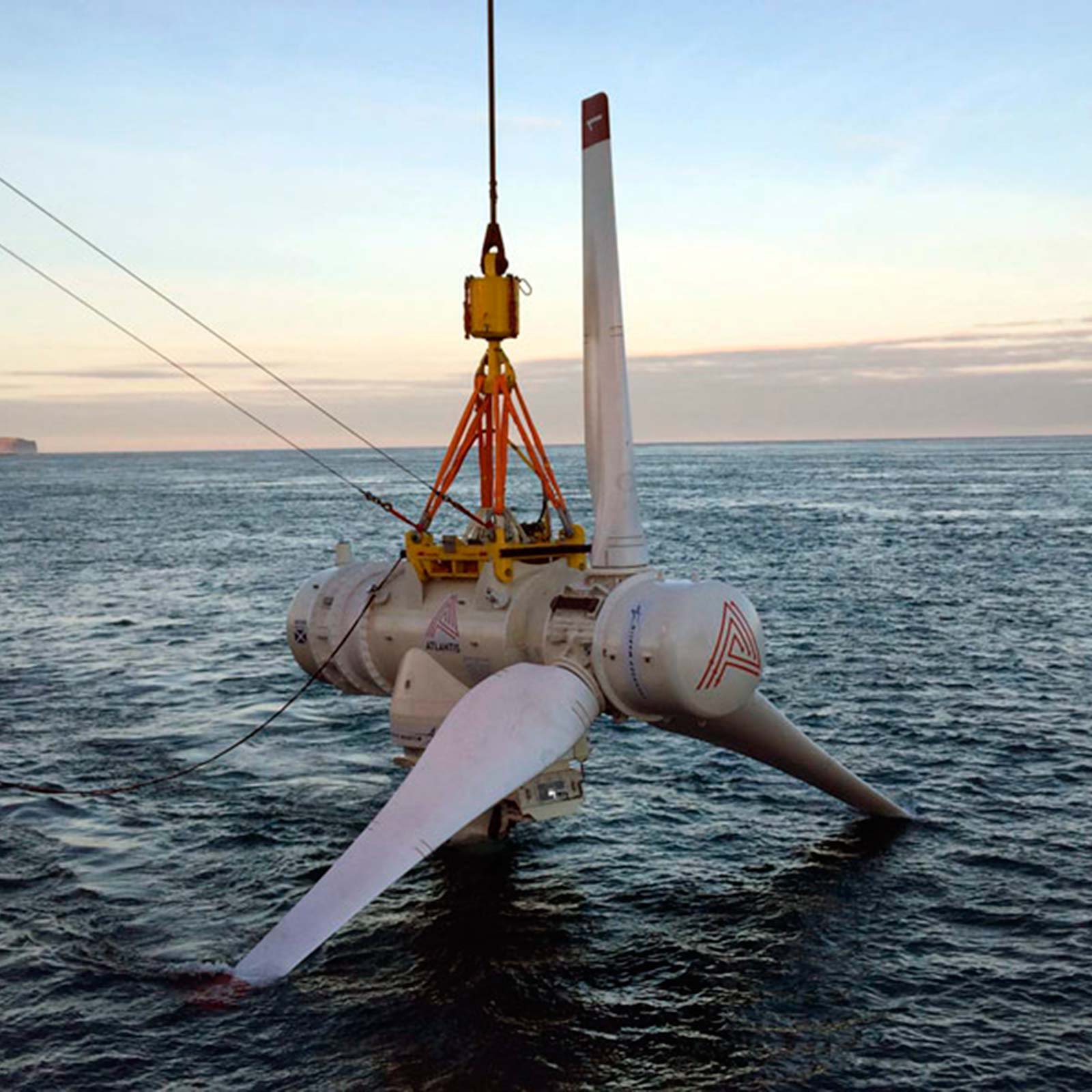
But how exactly are they moved? Tides are caused by the gravitational pull of the moon and sun on the earth. It is a physical phenomenon common to coastlines around the world. When a large amount of water rises and falls several feet in just a few hours, it creates an electric current with large amounts of kinetic energy that can be converted into electricity thanks to tidal turbines. One of the big advantages is that since water is 832 times denser than air, the rotors are smaller than wind turbine rotors, so they can be placed in close proximity to each other in large quantities.
“Wind power can be intermittent. But the ocean is always flowing.”
The Canadian turbines installed in the Bay of Fundy, where the average tide level is 14.5 meters and powers 500 homes, tapped only a fraction of the energy potential. His second generator, with installation underway in 2017, will complete a 4-megawatt project expected to overcome the need to burn 2,000 tons of coal. 6000 tons of CO₂ emissions avoidedThis equates to removing 1000 vehicles from circulation each year.
Local officials say the project is clean energy and Economic boost to the region.
Europe’s clean power: where conventional wind turbines can’t reach.
the selected site MeyGen project Located in Pentland Firth, Scotland, where the AR1500 generator was installed in its early stages. This is a horizontal axis turbine capable of delivering 1.5 megawatts of power and is already in full operation.
Implementation of the second 6 MW phase will begin in late 2017, The entire project is expected to deliver approximately 400 megawatts of total power.
This could be a solution for the thousands of people without access to wind power or having difficulty accessing energy resources near coastlines, while providing the environment with a much-needed respite. I have.
sauce: Renewable Energy, State of Tidal Energy, Global News, Globalspec.com
image: Atlantis Resources
