












Apple has revised its security advisory released last month to add three new vulnerabilities affecting iOS, iPadOS and macOS.
The first flaw is a race condition (CVE-2023-23520) in the Crash Reporter component that could allow malicious actors to read arbitrary files as root. iPhone makers say they have addressed this issue by adding validation.
Two other vulnerabilities, credited to Trellix researcher Austin Emmitt, exist in the Foundation framework (CVE-2023-23530 and CVE-2023-23531) and can be weaponized to allow code execution. There is a nature.
“Apps may be able to execute arbitrary code from their sandbox or with certain elevated privileges,” Apple said, adding that it patched the issue with “improved memory handling.” Added.
iOS 16.3, iPadOS 16.3, and macOS Ventura 13.2 shipped on January 23, 2023 patched the medium to high severity vulnerability.
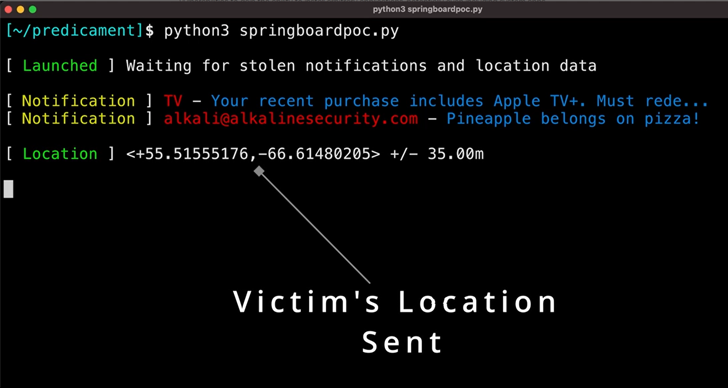
In its own report on Tuesday, Trellix described the two flaws as “bypassing code signing and executing arbitrary code in the context of multiple platform applications, causing privilege escalation and sandbox escapes on both macOS and iOS. A new class of bugs”. .”
The bug also bypasses mitigations Apple has put in place to combat zero-click exploits like FORCEDENTRY, which was used by Israeli mercenary spyware vendor NSO Group to deploy Pegasus on targeted devices.
As a result, attackers can exploit these vulnerabilities to break out of the sandbox and elevate privileges to execute malicious code and access the calendar, address book, messages, location data, call history, camera, microphone, etc. , may allow access to your photos.
To make matters worse, security flaws can be exploited to install arbitrary applications or even wipe the device. However, exploiting the vulnerability requires an attacker to already have an initial foothold.
“The vulnerability described above relies on individual applications querying higher-privileged services to gain granular access to the subset of resources they need, and nothing else. It represents a major breach of the iOS security model,” said Emmitt.
