











Researchers used artificial tongue to understand how chocolate changes from solid to smooth emulsion
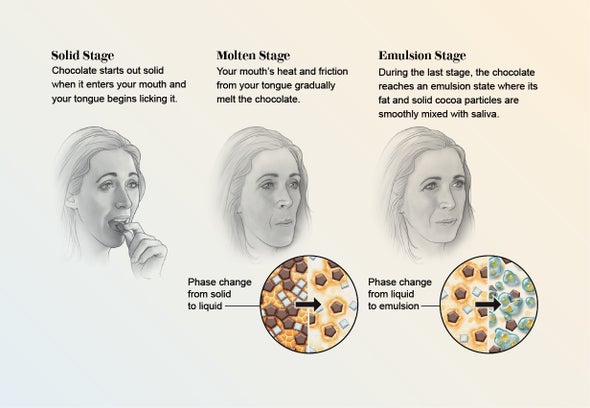
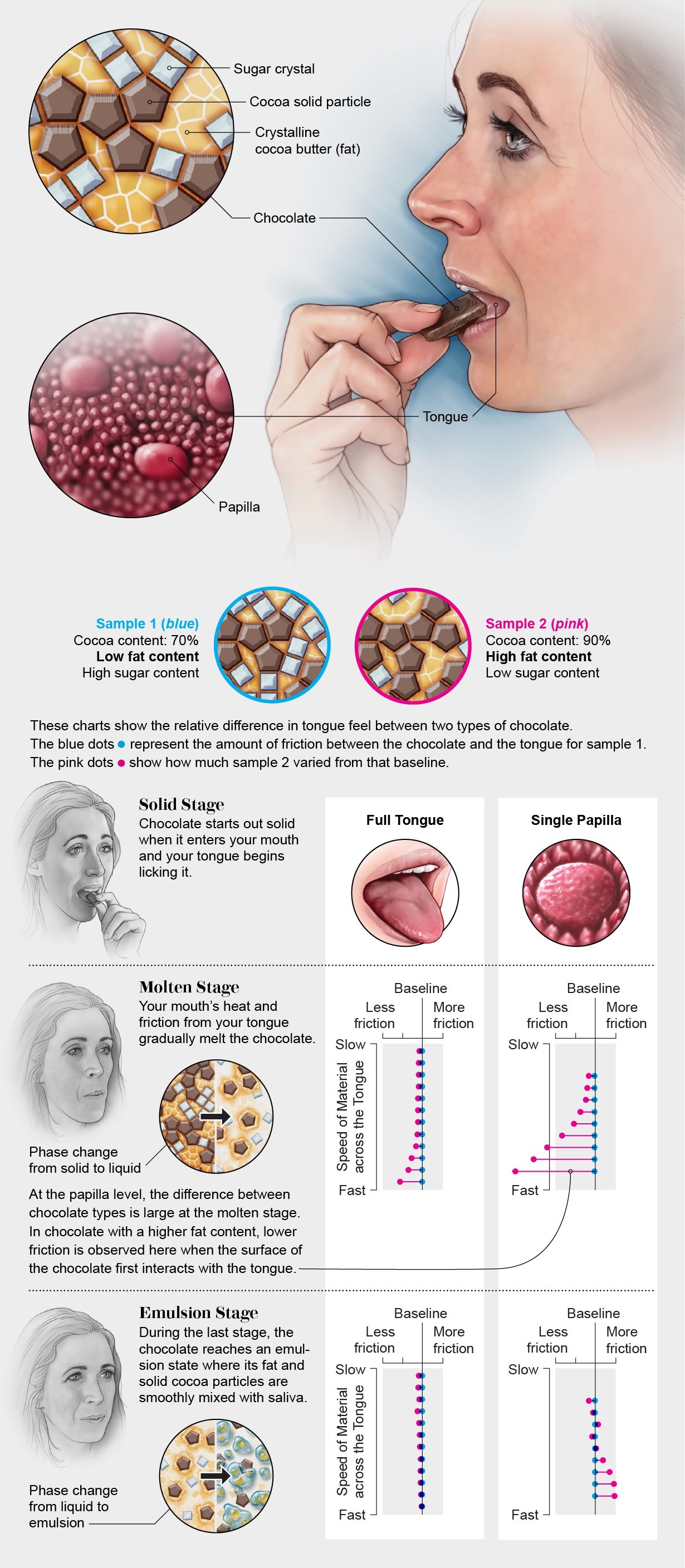
There is nothing like the feeling of rich chocolate melting on your tongue. To understand how this process takes place at the molecular level, scientists created a biomimetic tongue that mimics the texture, surface distribution, and mechanical properties of the human tongue. Siavash Soltanahmadi, a researcher at the University of Leeds in England, said: He and his collaborators, Anwesha Sarkar and Michael Bryant, placed chocolate on a tongue substitute and watched the surfaces interact. Their measurements allowed him to break down the process of eating chocolate into three stages: solid, melt, and emulsion. Scientists have found that the delicious feel of chocolate depends on the snack releasing a film of fat that coats the tongue.”Where the fat is in the chocolate is more important than the amount of fat,” he said. says Soltanahmadi. The findings suggest that by putting fat on the top layer of the chocolate surface and reducing internal fat, chefs can create healthier treats that feel the same in the mouth.
This article was first published in Scientific American 328, 4, 80 (April 2023) under the title “The Science of Melting Chocolate”.
doi:10.1038/scientificamerican0423-80
About the author

