











IT hygiene are security best practices that ensure that digital assets within an organization’s environment are safe and perform well. Good IT hygiene includes vulnerability management, security configuration assessment, maintaining an inventory of assets and systems, and comprehensive visibility of activity occurring within the environment.
As technology advances and the tools used by cybercriminals and cybersecurity professionals evolve, the strategies used to carry out cyberattacks differ based on their complexity and uniqueness. Threat actors continuously target organizations with poor IT hygiene to exploit known security weaknesses and human error. Security administrators can defend against cyberattacks by implementing appropriate countermeasures. IT hygiene Practices like whitelisting programs, keeping systems up to date, etc.
Having complete visibility into your IT assets is the foundation for developing an effective security strategy. The emergence of shadow IT, such as rogue assets, software, and user accounts, can create blind spots that threat actors can exploit as attack vectors. IT hygiene measures address visibility issues, ensure that IT assets are adequately protected, and reduce the attack surface.
Common Problems Faced by Organizations with Poor IT Sanitation
Some of the problems organizations face as a result of poor IT hygiene are:
- exposed to security breaches; These are costly and damage the reputation of a company or organization. . Threat actors can exploit the lack of proper security controls, such as improper configuration management, to compromise an organization’s security.
- Vulnerabilities where critical data is lost in cyberattacks or other disasters due to lack of backups. This can affect the availability of information systems and affect the operations of your organization.
- Lack of visibility into critical endpoint processes and operating system information leads to hidden malicious activity. Threat actors can exploit legitimate processes to perform malicious activity without being detected.
- Vulnerability to attacks by outdated applications, operating systems, and hardware.
- Poor protection and security. Organizations with security solutions that don’t offer comprehensive monitoring and response capabilities are at higher risk of breaches and cyberattacks.
Why is IT hygiene important?
IT hygiene is critical to maintaining the security and resilience of an organization’s IT infrastructure. Adhering to good IT hygiene practices helps organizations ensure the protection, performance, and reliability of their IT infrastructure while complying with regulatory requirements and minimizing costs. IT hygiene is important because:
First, an organization can significantly strengthen its security posture by practicing good IT hygiene through comprehensive vulnerability and patch management. This ensures that your endpoints and applications are protected from malicious attacks.
In addition, maintaining good IT hygiene improves visibility of all IT assets and helps organizations effectively reduce their attack surface.
Finally, following good IT hygiene practices will help you meet regulatory requirements and industry standards and save money. Proactive monitoring and response can help organizations avoid legal sanctions and financial and reputational damage resulting from data breaches and cyberattacks.
How Wazuh Helps Improve IT Hygiene
Wazuh is a free, open source security platform that provides integrated XDR and SIEM capabilities. It helps provide security across workloads in cloud and on-premises environments. Provides a centralized view to monitor, detect, and alert on security events on monitored endpoints and cloud workloads.
This section covers some of Wazuh’s essential features to keep your network clean and secure.
1 – System Inventory: IT hygiene begins with real-time visibility into the digital assets in your environment and the events that occur within them. Real-time visibility includes up-to-date inventory of assets and systems. This includes instantly identifying risks, vulnerabilities and misconfigurations across these assets.of Wazuh System Inventory This feature collects relevant information such as hardware, operating system, ports, packages, Windows updates, and network interfaces on monitored endpoints. This information is very important for developing effective IT hygiene measures that improve the security posture of the entire organization. For example, system inventory data includes a list of open ports on endpoints, helping security administrators identify and close unnecessary ports, thereby reducing the attack surface.
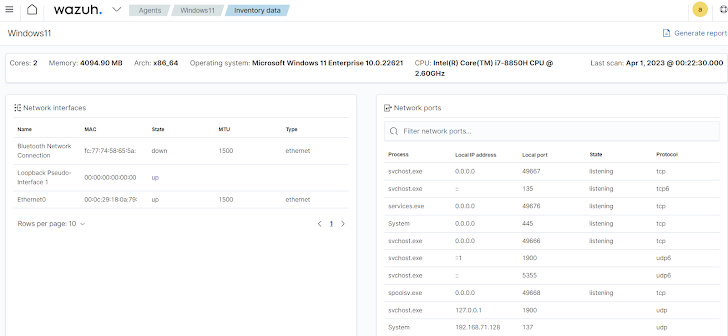 |
| Figure 1: Wazuh dashboard showing inventory data for monitored endpoints. |
2 — Security Configuration Assessment (SCA): This requires extensive analysis of security issues on monitored endpoints. Based on compliance standards to improve your security posture. IT hygiene best practices require security administrators to perform regular configuration assessments to identify and remediate endpoint vulnerabilities and misconfigurations. Security configuration assessment and endpoint hardening effectively reduce an organization’s attack surface.
of Wazuo SCA This feature evaluates system configurations and triggers alerts when those configurations do not meet secure system policies. Depending on the industry, IT Sanitation ensures that endpoints are compliant with his HIPAA, PCI DSS, NIST 800-53 compliance standards, and CIS benchmarks.
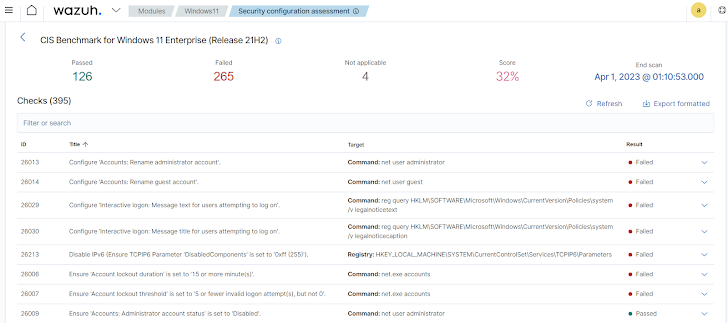 |
| Figure 2: Wazuh dashboard showing SCA reports for monitored endpoints. |
3 — Vulnerability Management: It is a proactive and continuous process of identifying, prioritizing, and remediating endpoint vulnerabilities. A vulnerability management process is critical to maintaining the health of your IT.Wazu vulnerability detector This feature allows you to detect security vulnerabilities in operating systems and applications installed on your monitored endpoints. Security administrators can take necessary actions to remediate vulnerabilities and improve IT hygiene.
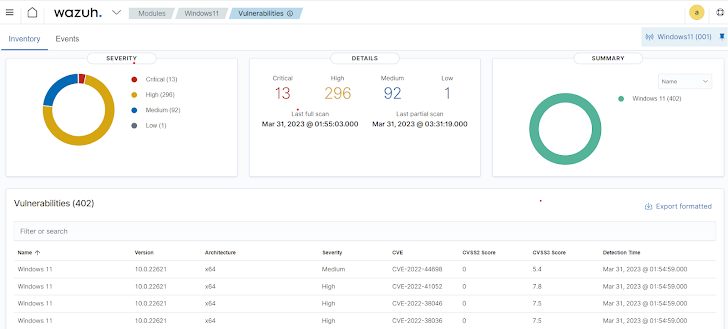 |
| Figure 3: Wazuh dashboard showing vulnerability reports for monitored endpoints. |
4 — Enhanced threat detection and automated response: This helps maintain IT health by continuously monitoring and analyzing the activity of endpoints within an organization’s environment. This continuous monitoring ensures proactive detection and response to threats and malicious activity. XDR/SIEM solutions allow security teams to quickly identify and isolate infected endpoints, preventing the spread of malware within corporate networks. Wazuh helps organizations monitor and protect their IT infrastructure by providing comprehensive threat detection and security. auto answer Functionality of the endpoint. It helps organizations improve their IT hygiene habits by providing continuous monitoring. Malware detectionincident response, and compliance functions.
Conclusion
In today’s ever-changing threat landscape, creating good IT hygiene routines is essential to prevent security breaches by cybercriminals. By leveraging Wazuh’s capabilities, organizations can proactively detect and respond to security threats and maintain a robust cybersecurity posture.
Wazu is a free, open source SIEM and XDR solution that provides comprehensive security for your organization. Wazuh alerts administrators to vulnerabilities, suggests remediation steps, and uses several threat response capabilities to improve her IT hygiene in the organization.
Wazuh has over 20 million downloads per year and supports a wide range of users through its ever-growing open source community.
