










For millions of Nigerians, electricity is no longer just a utility, but it is a daily operational challenge. With unreliable grid supply and rising tariffs, many homes and businesses depend heavily on fuel generators.
On the surface, generators seem cheaper than solar. But when fuel, maintenance, health, noise, and long-term expenses are considered, generators often become the most expensive way to generate electricity.
This article breaks down the true cost Nigerians pay for power based on our research and explains why solar energy is increasingly becoming the smarter long-term choice.
1. Upfront Cost vs Lifetime Cost
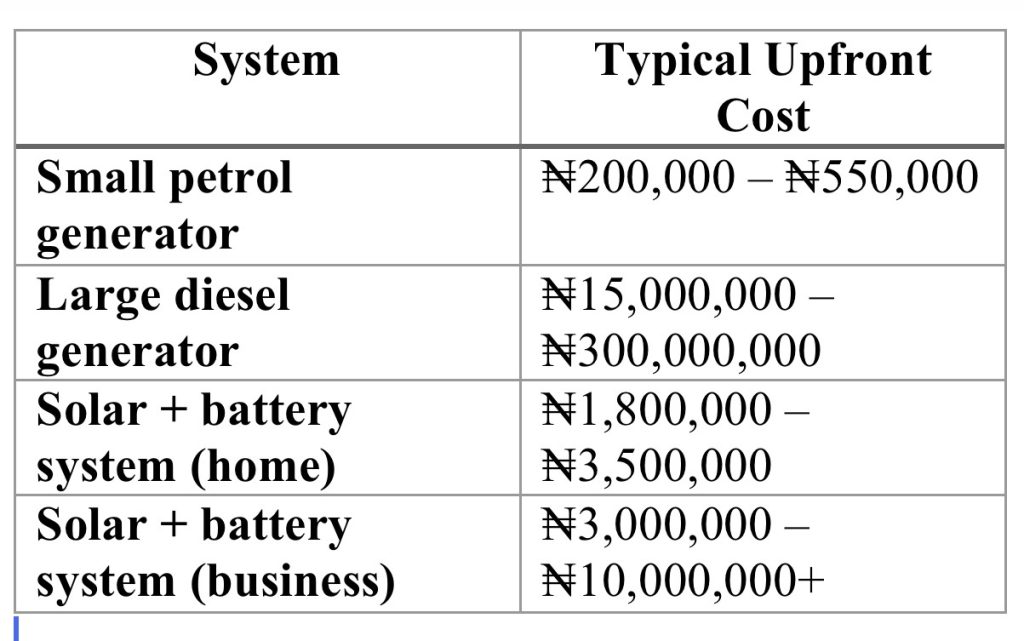
Generators are cheaper at purchase, but that is only the beginning. Solar is capital-intensive upfront, but its operating cost is zero or very low.
2. Fuel Cost – The Silent Drain
A typical household generator consumes between 1-2 litres of petrol per hour.
Assuming:
- 6 hours of daily usage
- 1.5 litres/hour
- Petrol at ₦900 per litre
Daily fuel cost:
6 × 1.5 × ₦900 = ₦8,100/day.
Monthly: ≈ ₦243,000
Yearly: ≈ ₦2.916 million
This excludes maintenance and repairs.
Solar uses sunlight, which is free.
3. Maintenance and Repairs
Generators require:
- Oil changes every 1-2 months
- Spark plugs, filters, belts
- Mechanical repairs due to vibration and wear
Typical maintenance:
- ₦30,000 – ₦50,000 per month for small generators
- Much higher for diesel industrial units
Solar systems require:
- Occasional panel cleaning
- Battery monitoring
- Inverter servicing every few years
Annual solar maintenance is usually less than 2% of system cost and sometimes 0% depending on the quality of the products.
4. Noise, Health & Environmental Cost
Generators produce:
- Constant noise pollution (70–100 dB)
- Carbon monoxide, nitrogen oxides, and particulate matter
- Indoor and outdoor air pollution
This affects:
- Respiratory health
- Sleep quality
- Workplace comfort and productivity
Solar systems are:
- Silent
- Emission-free at point of use
- Environmentally sustainable
5. Lifespan Comparison
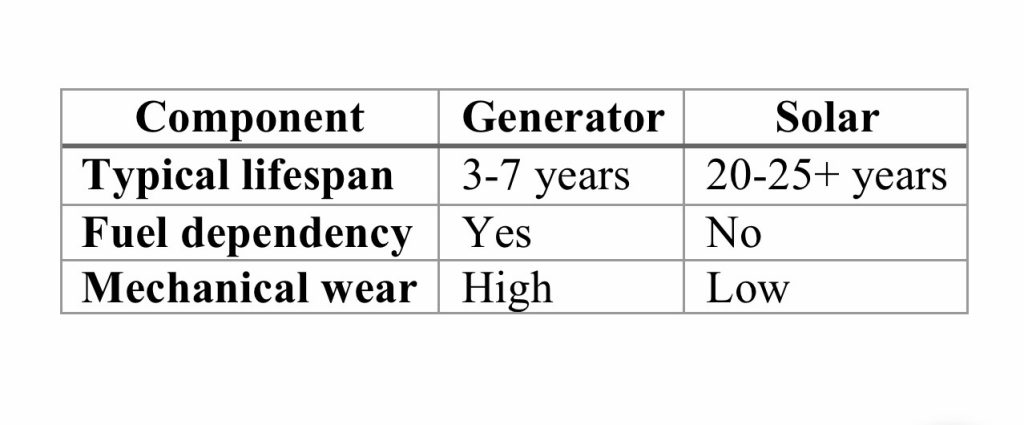
A generator may need full replacement multiple times within the lifespan of a single solar installation.
6. 10-Year Cost Comparison
Using conservative assumptions:
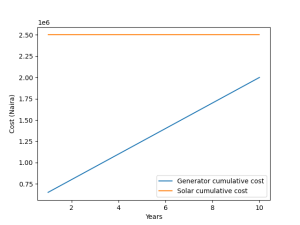
- Generator fuel + maintenance = ₦2.9 million/year
- Solar system installed once at = ₦2.5 million
Over 10 years:
- Generator total: = ₦29 million
- Solar total: = ₦2.5-3 million (+ minor maintenance)
This difference is shown in the chart below.
Conclusion: Solar Is Not Just Cleaner But It Is Cheaper in the Long Run
Generators feel affordable because their costs are spread daily in fuel purchases and repairs. Solar feels expensive because its cost is visible upfront.
But over time:
- Generators continuously drain cash.
- Solar stabilises energy costs and protects against fuel price shocks and tariff hikes.
For Nigerian homes and businesses seeking long-term reliability, predictability, and sustainability, solar is not a luxury but it is a strategic investment.
About Kowatek Solar LTD
Kowatek Solar designs and installs reliable solar and energy storage systems for Nigerian homes and businesses, helping customers move from power uncertainty to energy independence.
If you are tired of blackouts, generator noise, and rising fuel costs, solar offers a cleaner, quieter, and more affordable path forward.
