











CSTA April 6, 2026:
CGN has broken ground on the 50 MW concentrated solar power (CSP) project at Wumatang township in Dangxiong County near Lhasa, Tibet. At about 4,550 meters above sea level, it will be the highest‑altitude parabolic trough CSP plant in the world.
The high‑altitude site faces large day–night temperature swings, thin air, and very high UV, shortening the construction season and reducing labor productivity, so the project includes heating, oxygen supply, and on‑site medical facilities to protect workers.
The engineering team adapted its collector system for the high‑altitude operation, with tighter tracking control and structures designed for wind and cold. A CSP R&D institution focused on this plant has been set up in Tibet.
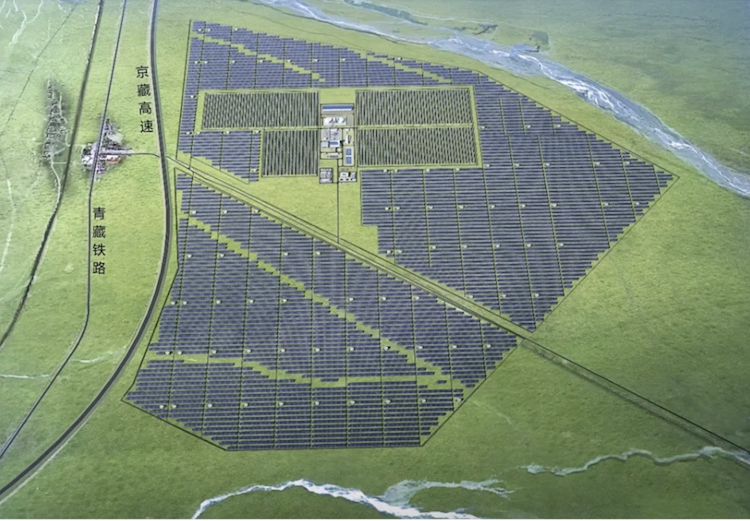
The hybrid solar site at Wumatang combines 50 MW of CSP with 400 MW of photovoltaics, and is expected to connect to the grid in 2027. The PV project, under construction since 2025, uses a “solar‑pasture” model that allows grazing under the panels.
The project includes the first commercial deployment of a larger‑aperture parabolic trough collector developed by CGN (China General Nuclear, one of China’s large state-owned entities). Eight loops will use the new larger collectors (about 8 m) and the remainder will use standard 6 m trough collectors.
The trough plant uses thermal oil technology across a roughly 240,000 square‑meter solar field with 68 loops.
A true CSP–PV hybrid – it shares thermal storage
With about six hours of molten‑salt thermal storage, the plant can generate after sunset and support the Tibet grid during evening peaks.
Feeding into its six‑hour CSP thermal energy storage block, the storage system also includes a 20 MW electric molten‑salt heater to absorb excess daytime PV output.
With that heater connected into the thermal storage tank, this is a genuine CSP and PV hybrid, not just two solar technologies side by side in a renewable energy park: the CSP not only stores its own solar heat but it also converts excess PV electricity to heat to later generate power after dark.
When in operation, the integrated CSP‑plus‑PV hybrid project is expected to generate 700 gigawatt‑hours of electricity annually.
