











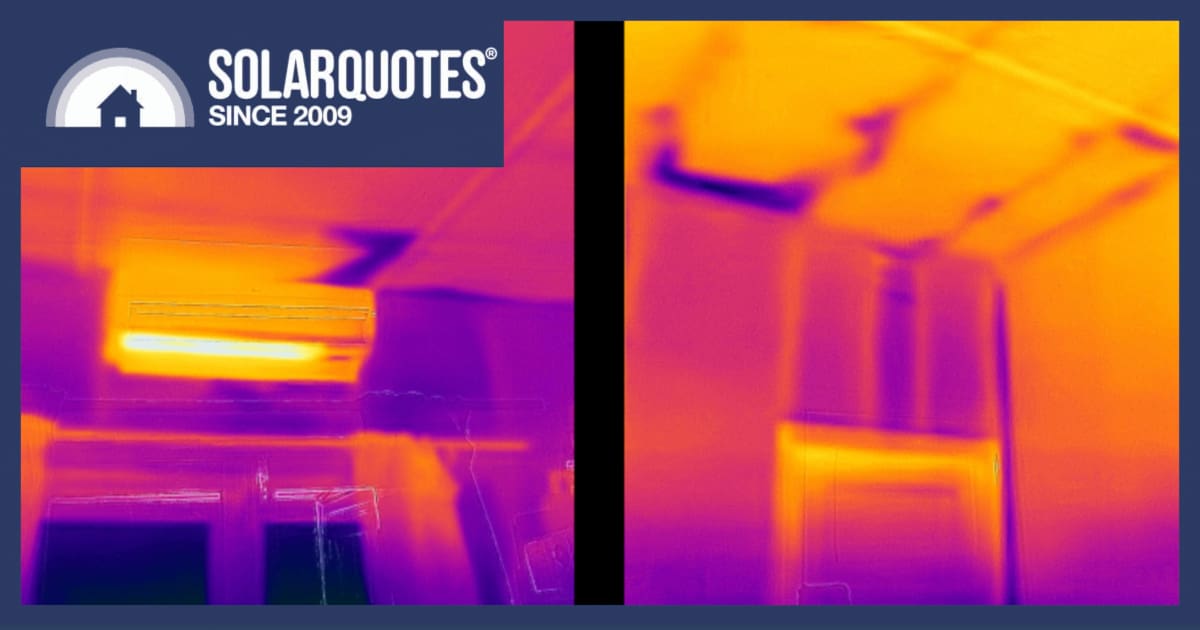
As the cold finally kicks in across southern Australia, minds turn to warmth versus wallet.
Staying warm doesn’t mean bankrolling your electricity retailer. Applying a few helpful hacks and habits can make a real tangible difference.
I have spent 15 years evangelising electrically; the good news is solar is cheap and smart arse comments are free, but the tradies who make them aren’t.
The bulk of the builders I’ve met aren’t horrible people, but they operate inside an industry that’s horribly powerful, expensive and cocksure; right up until you ask for something they’re unfamiliar with, like energy efficiency.
At that point, builders are highly resistant to change, because “nah mate” is the easiest answer when you’re not the sharpest tool in the trailer. And if saying NO doesn’t work, they’ll happily refer you to management, who apply “the d!ckhead tax” to price what you want out of existence.
Happily, that means we’re starting from a low base, so significant improvements aren’t hard to make — and if you’re a solar system owner, a well-insulated home means you can better retain the heat from electric heating powered by your panels during the day.
Where To Begin
I’ll be documenting some home improvements in the coming weeks because my house is a diabolically bad example.
If you want real comfort then I highly recommend gutting your home, insulating, replacing the roof, installing bulk solar and buying a new heat pump, because I’m great at spending other people’s money.
Of course, that’s not as sexy or immediate as buying a solar battery. Nor is it cheap and easy, because you’ll have to both deal with builders and somehow invent a double glazing industry that barely exists in Australia.
All Houses Are Different
Even identical houses have different owner expectations so we aren’t spelling out a recipe, but rather hatching some ideas you can use or adapt, and hopefully identifying some pitfalls to avoid.
I’m partial to old houses with ceiling height, but unlike a lot of aged housing stock locally, this cottage doesn’t have 300mm thick solid stone walls for thermal mass.
Rather, I have weatherboards, sagging stumps under a timber floor, chimneys, sash windows and a lack of insulation.
I can’t afford the expense to make it all perfect, but I’ve lived here long enough to know where it needs most attention, and hopefully you’ll see similar low-hanging fruit you can pick yourself.
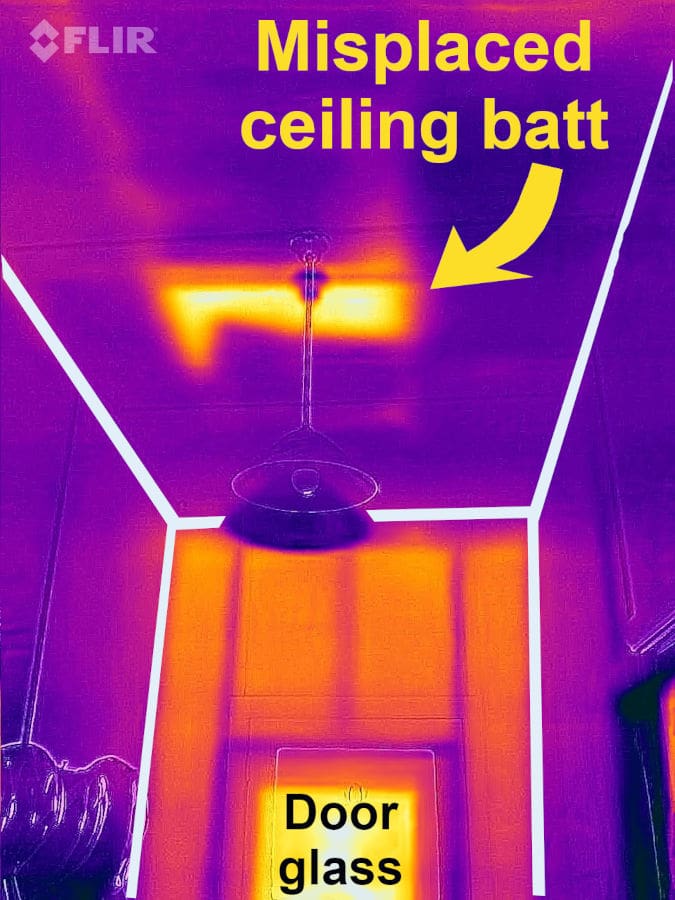
I’ve added white lines for clarity, but this hallway clearly shows the front wall around the door isn’t insulated, and the roof possums need to refit a ceiling batt.
1. Close The Bloody Door
You wouldn’t leave a window open in July, but if your doors and windows are leaking air, you basically are. 1
However plugging drafts can cut your heating bills by up to 25%. That’s huge.
There are many sites offering advice (Green It Yourself is a great option). In many instances, it’s just some time, foam tape, and maybe some door snakes.
One heads-up: Fixing your kitchen rangehood and bathroom exhausts can be an easy first win.
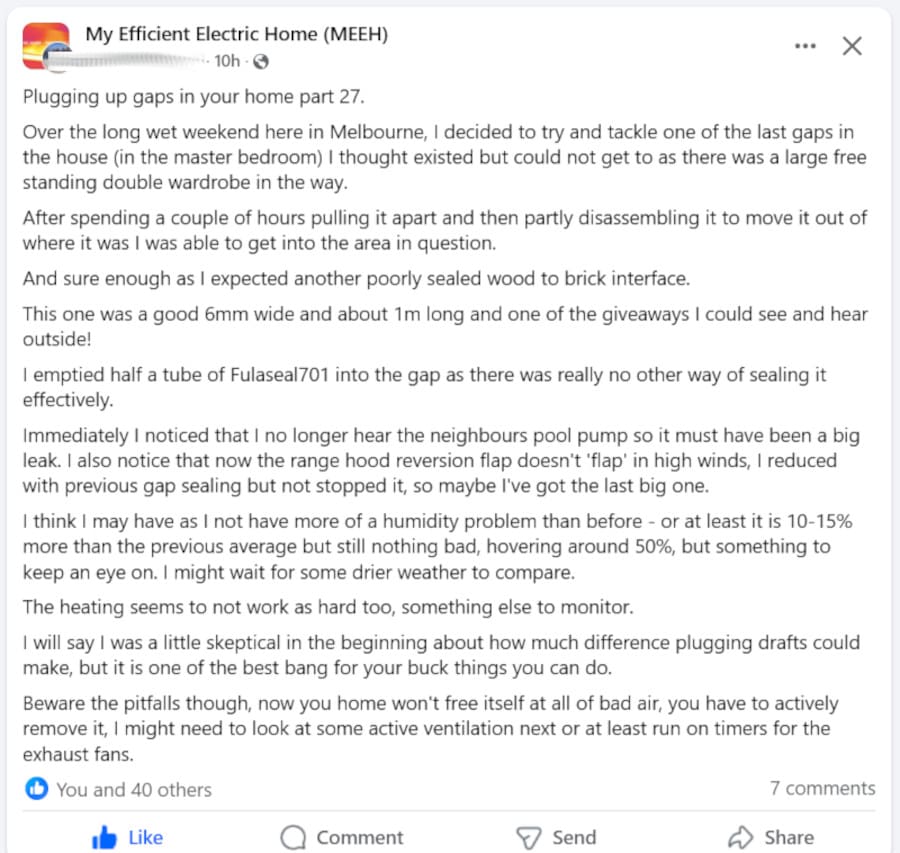
Gap sealing can be a battle but it’s one worth fighting.
2. Heat The Human, Not The House
If you’re working solo from home, don’t bother heating the whole place. Electric throws, heated desk pads, and good socks are your friends. Same at bedtime — a heated blanket is far cheaper to run than blasting the split system all night.
Just bear in mind that while the Nordics leave their babies outside in the snow, really low temperatures can be hard on your health if you’re somewhat asthmatic like me.
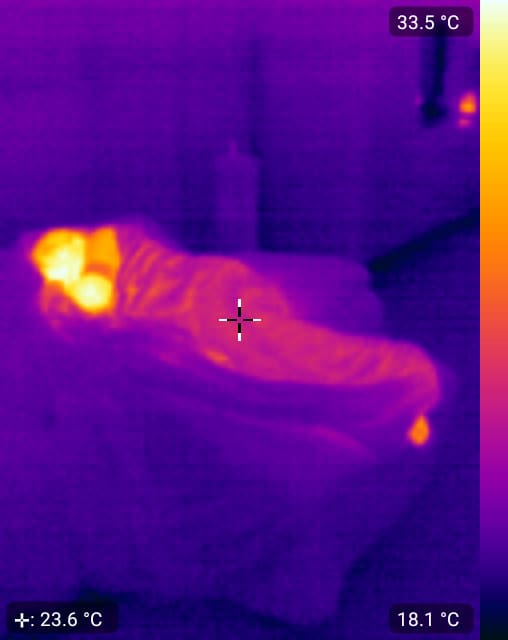
Laying bolt still in the dark this human gave the thermal camera operator a scare.
3. Insulate Your Windows
Seriously, this is so important that it will become several articles. When Australian builders worked out that glass is cheaper than bricks, our windows grew to be far too big, and we were sold a lie that this is just great!
A single-glazed, three-millimeter deep pane of glass can lose from 10 to 15 times more heat than an uninsulated wall of the same area.
Making windows excellent is expensive, but improving them dramatically isn’t hard.
-
Thick curtains or blinds: They need to fit snugly. Even better, add a pelmet up top to stop warm air from slipping away.
- Cellular or honeycomb blinds: These aren’t cheap but they’re well suited to modern houses with square window reveals. They’re available as translucent or light-blocking and they’re easy to automate, which is a boon for keeping temperatures under control without having to think about it.
-
Window insulator kits: Think of them as cheap and cheerful double glazing. Using thin plastic, stretched tight with wrikles removed by a hair dryer, you can keep you valuable warm air away from the cold glass.
-
Bubble glazing: Lets face it, some windows are best frosted anyway. Slap bubble wrap on with a spray of water for the worlds cheapest double glazing.
- Retrofit magnetic glazing: Once the materials arrive I’m going to show how to both draftproof and double glaze for heat and noise with a single pane of perspex.
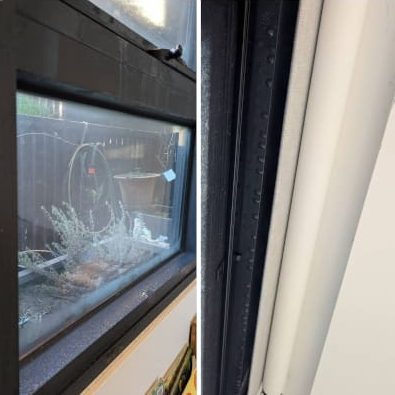
A photo from the Australian Passivhaus FB site showing condensation build-up even on double-glazed windows, because of the use of non-thermally broken aluminum window frames.
4. Beware Condensation
Too much condensation can lead to mould — it’s unhealthy and in extreme cases can cause structural damage.
-
Use the rangehood when cooking and the fan when showering.
-
If you dry laundry inside, make sure the room is ventilated.
-
Add insulation to cold walls and ceilings — condensation loves cold surfaces.
-
Use a dehumidifier. Even a small one can pull litres of moisture out of the air.
5. Hot Water Matters
Hot showers in winter feel great, but they’re costing you. If your water heater isn’t solar or a heat pump, it’s probably chewing through power. Swapping out showerheads for efficient ones is cheap, fast, and saves money every single day.
I’m A Builder, But Even I Battle With Tradies
Recently I had a plumber install a new bath in my house and I wanted it insulated, so it stays warmer for longer. Had I left him to it, he’d have refused.
So I hung around like a bad smell while he remonstrated with an argument that devolved from “nobody does” to “we can’t” to “our warranty won’t cover” so when pushed, he rang his boss who didn’t answer.
I offered to ring his boss only to be told “nah he’s busy and if he doesn’t answer me he won’t answer you”. Thankfully the stalemate was broken when the boss rang back. He was much more co-operative and told his worker to follow my lead as I showed them how to go about stuffing the bath cavity with pink batts.
It’s not rocket science but it’s bloody hard work dealing with trades who assume you’ll accept whatever they want.
And in the end the bath was still installed incorrectly, voiding the warranty… you wouldn’t read about it.
Making Blood Boil
The saddest part is the building industry is so short-sighted, crooked, just plain bent, that they’ve managed to corrupt the government into surrendering on energy.
In many parts of the country, including where I live in South Australia, the minimum energy standards for housing are now “frozen”2 because builders actively lobbied against progress. Their “win” means we all lose, because buildings don’t have to improve performance for the next ten years.
That’s a future of cheap rubbish houses that will forever cost more to run and be less comfortable to live in. So if you’re going to keep warm this winter in one of these homes, you’ll have to take matters into your own hands.
For more on cutting your bills during winter, read my explainers on how to improve the performance of reverse-cycle heating, and how to get off wasteful ducted gas.
Footnotes
- My kids leave doors open in July— they are seemingly impervious to cold and “forget” so often I’ve installed automatic door closers.
- Yes the builders have frozen energy standards, in winter, so we all freeze. What a dismal pun
