











There’s a certain kind of energy advice that just won’t die. You’ve probably heard it:
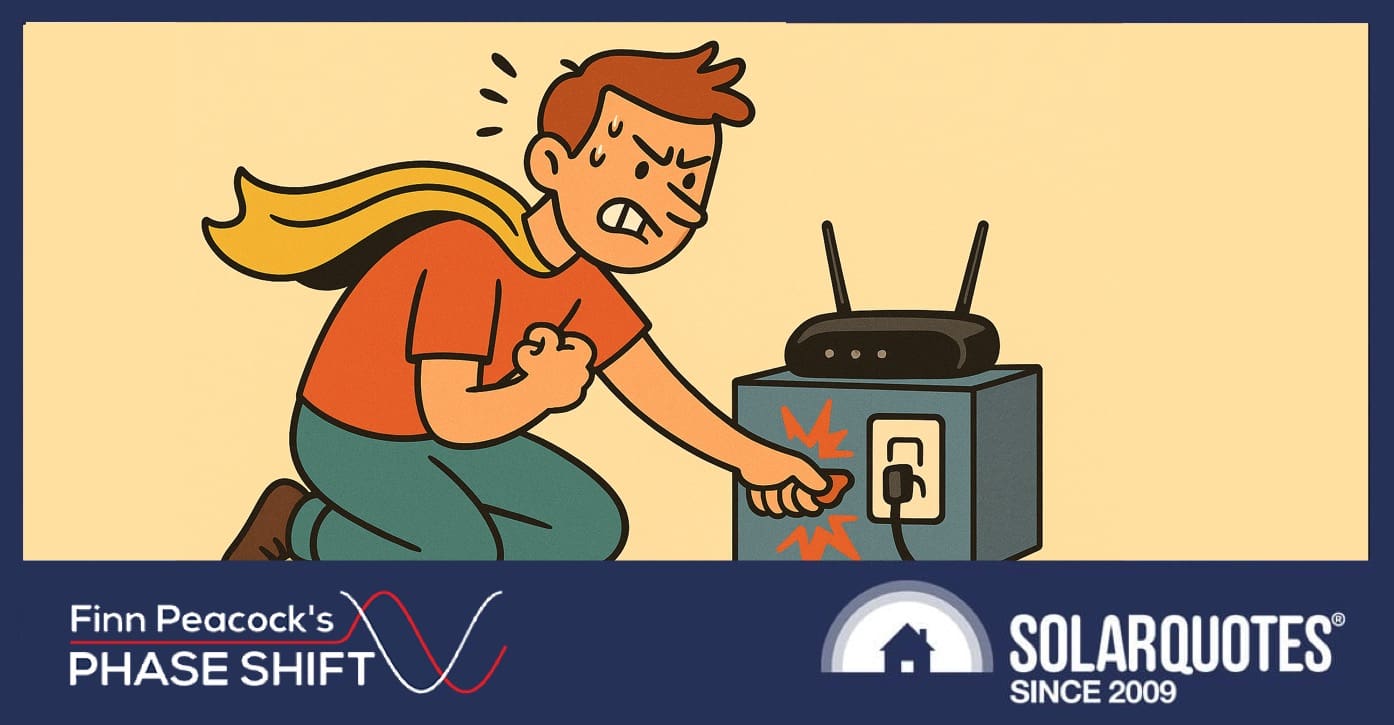
Switch off appliances at the wall. Phantom loads are stealing your electricity!
That made sense twenty years ago. Back when power bricks got properly hot. Back when standby meant drawing tens of watts. These days? Not so much.
Take my 2023 LG C3 OLED. Beautiful TV. Pulls 115W when its on. But in standby? 0.5 watts. Over 8 hours overnight, that’s 4 watt-hours. At 30 cents per kilowatt-hour, we’re talking 0.1 cents. One-tenth of a cent. Even over a full year, that’s $0.36. Less than a Chupa Chups.
Routers and NBN modems? Let’s be generous. Together they might draw 20 Watts when idle. That’s 160 watt-hours overnight. About 5 cents per night. A bargain for always-on internet, smart home updates, and iCloud backups while you sleep.
And yet, earnest advice-givers will still insist you flick every switch. Every night. And again every morning.
Save Your Attention For What’s Important
Here’s the problem: all that mental energy spent switching off things that barely matter leaves less bandwidth for decisions that do.
Last night, I got fed up trying to set a delayed start on my new Bosch dishwasher. I had to work out how many hours until off-peak kicks in at 1 am. So I grabbed my phone, opened the Home Connect app, and two minutes later it was configured for a set start time instead of a fixed delay. Now I just press one button after dinner, and it waits quietly until off-peak. I’m not sure I’d have had the idea if I was busy switching every appliance in the kitchen off at the socket.
It’s the 80-20 rule on steroids. Most homes burn 80% of their energy on way less than 20% of their appliances: hot water, anything that heats, cools or dries, EVs. That’s worth your attention. But your router? Please.
I get it, flicking a switch feels proactive. But the real wins now come from systems thinking, not socket flipping.
Electronics Are Now Designed To Run Continuously
And then there are the unintended consequences. Cycling power 730 times a year doesn’t do your gear any favours. Modern electronics are designed to run continuously. Power-cycling stresses components, especially capacitors1
Look, I’m a progressive. Always have been. But one of the traps we fall into is sweating over virtuous small stuff while missing the big picture. And sure, switching something off costs nothing. A new heat pump or solar system costs thousands.
But your time, attention, and patience are finite resources too.
Spend them wisely.
Footnotes
- Frequent power cycling can stress components like capacitors and solder joints, potentially shortening the lifespan of electronics. It’s a well-known issue in power supply design, flagged by both IEEE and manufacturers like Texas Instruments.
