











Microplastics are a growing environmental problem, but South Korean researchers have now developed a new water purification system that can filter out these tiny debris and other contaminants very quickly and with high efficiency.
Given that plastic is ubiquitous in the modern world, it is not surprising that small pieces of plastic are found basically everywhere on Earth, even in pristine environments. It has been detected from pole to pole, up to the top of the highest mountains, and has progressed down the food chain all the way to humans.
A variety of materials have been tested to help filter microplastics, including magnetic “nanopillars”, nanocellulose, semiconductor wires, sand, gravel, and filtration columns containing biofilms. Now, researchers at the Daegu Gyeongbuk Institute of Science and Technology (DGIST) in South Korea are seeing promise in a new design.
The key is a material known as a covalent triazene framework (CTF). This is a highly porous material with a large surface area. This means there is plenty of space inside to store the captured molecules. Similar materials have recently been demonstrated to be effective in removing organic dyes from industrial wastewaters.
The team carefully designed the CTF molecule to attract more water and exposed the material to mild oxidation. The resulting filters were shown to be effective in removing microplastics from water very quickly. Reportedly, more than 99.9% of the contaminants he removed within 10 seconds. The material can also be reused multiple times without degrading its performance.
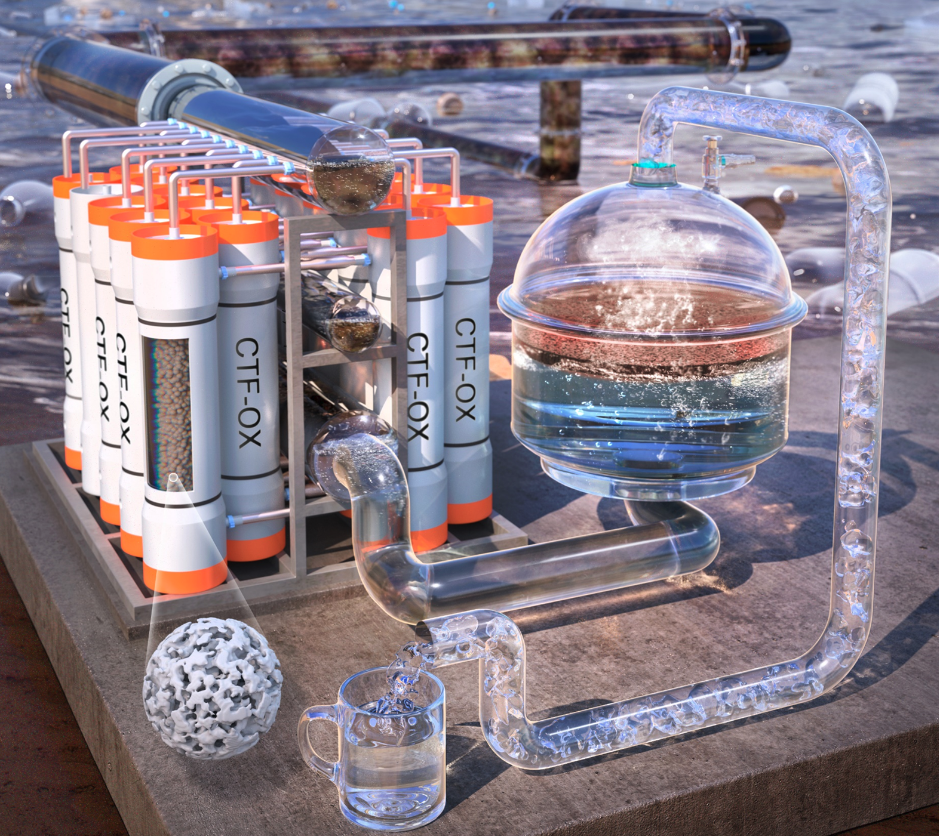
Daegu Gyeongbuk Institute of Science and Technology (DGIST)
In another test, researchers have developed a version of the polymer that can absorb sunlight, convert the energy into heat, and use it to purify another pollutant known as a volatile organic compound (VOC). did. This allowed him to remove over 98% of the VOCs with a single solar exposure. A prototype combining both types of membranes was able to remove over 99.9% of both types of contaminants.
“The technology developed here is an unparalleled water purification technology with the world’s highest purification efficiency that removes more than 99.9% of phenolic microplastics and VOC pollutants in water at an ultra-fast rate.” Study. “We had high hopes that it would become a highly economical and versatile technology that could purify contaminated water and supply drinking water even in areas without power sources.”
A study was published in a journal advanced materials.
Source: DGIST via Asia Research News
