











“My phone battery is dead” is one of the popular expressions in the hyper-connected age. Smartphone screens, processors, and specs have improved over the years, but the batteries that power these devices seem to lag behind. We’re sticking with the same lithium technology we had 10 years ago. That is why thousands of companies around the world are researching new alternatives. New Generation of Power-Hungry Wearables and SmartphonesThere is also another problem. Current technology is very polluted.Therefore, considerable effort has been put into developing biodegradable batteryPapertronics is one area that promises to take recycling to a whole new level.
Cellulose-based sensor One of the most popular approaches over the last few years, it requires its own power source and has traditionally required a traditional battery. But a team led by his Seokheun Choi, M.D., at Binghamton University in New York, USA, attempted another study.their goal was to develop Inexpensive, Flexible and Biodegradable Batteryand to achieve that, they looked into organic compounds.
They printed a very thin layer of metal on the surface of the paper, added a polymer, and then tried freeze-dried exoelectrogen. Let me explain it a little more. Freeze-drying is basically drying the material by freezing it and heating it in a vacuum to evaporate the resulting ice crystals. And what about exoelectrogen?Well, they are microorganisms such as bacteria, and they can transfer electrons out of the cell. battery, emit electrons from exogenous bacteria that reach the electrode and generate electricity. Two minutes after he added the liquid to the prototype, the researchers said it produced enough power to power an LED light and a calculator.
The battery developed by Choi’s team is completely biodegradable. When the device runs out of power, bacteria start eating the paper, breaking it down into environmentally friendly compounds.
this is disposable technology It has a lifespan of two months, but it has a wide range of uses in emergencies and can even power alert systems.In fact, one of the main advantages of this is Innovation Bacteria, one of the oldest organisms on earth, is able to survive in the most extreme conditions and harsh environments.
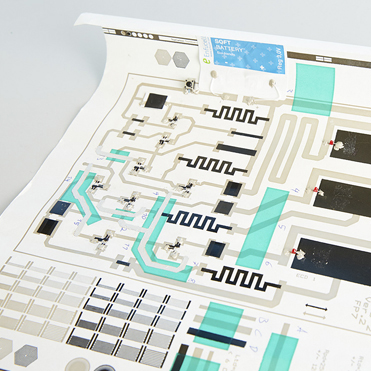
paper transistor
Batteries aren’t the only area where paper is being destroyed in electronics, however. Earlier this year, Portuguese researchers Elvira Fortunato and Rodrigo Martins published a paper in the scientific journal ACS exploring the potential of paper transistors.As with batteries, their goal is biodegradable technology It can eliminate silicone.
Researchers have successfully developed semiconductors and electrical insulators based on cellulose biopolymers. To achieve that, they printed the surface of the paper with special inks infused with nanoparticles of gallium, indium, or zinc. Finally, the paper is coated with a nano-thin layer of aluminum that acts as a conductor and helps dissipate heat.
this innovative technology It could also enable the printing of solar cells, sensors and even RFID circuits. In short, these transistors aren’t going to replace computer chipsets anytime soon, but they could have interesting uses, like tracking products in the food industry, for example.
sauce: reverse, ACS
