











-
Vehicle-to-grid – V2G
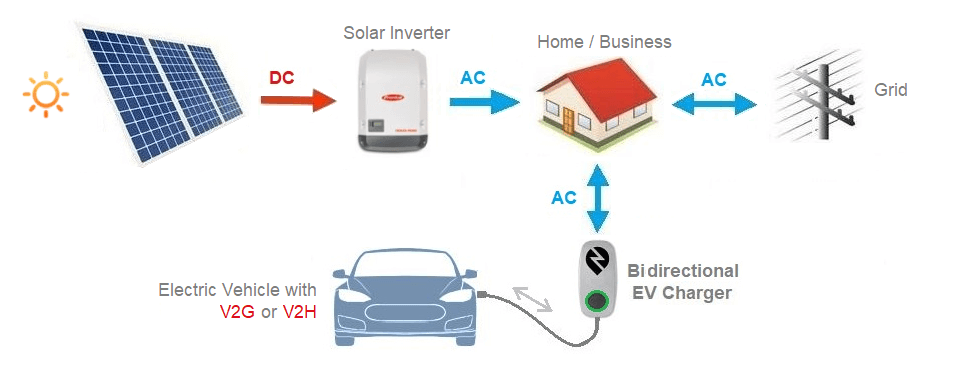
Vehicle-to-grid (V2G) is where a small portion of the stored EV battery energy is exported to the electricity grid when needed, depending on the service arrangement. To participate in V2G programs, a bidirectional DC charger and a compatible EV is required. Of course, there are some financial incentives to do this, and EV owners are generally given credits or deductions on their electricity bills. EVs with V2G can also enable the owner to participate in a virtual power plant (VPP) program to improve grid stability and supply power during peak demand periods for financial returns. Currently, only a handful of EVs currently have V2G and bidirectional DC charging capability; these include the later model Nissan Leaf (ZE1) and the Mitsubishi Outlander or Eclipse plug-in hybrids. However, many other vehicles, including Tesla, have been trialled successfully with bidirectional chargers, as described at the end of this article.
Once more electric vehicles are certified, and the use of bidirectional chargers becomes widespread, the combined power of thousands of EVs has the ability to transform entire power grids and reduce the need for expensive peaking power plants, which are generally powered by gas or diesel. This, in turn, will make grids cleaner and cheaper to operate.
Despite the publicity, one of the problems with the roll-out of V2G technology is the regulatory challenges and lack of standard bidirectional charging protocols and connectors. Bidirectional chargers, like solar inverters, are considered another form of power generation and must meet all regulatory safety and shutdown standards in the event of a grid failure. To overcome these complexities, some vehicle manufacturers, such as Ford, have developed simple AC bidirectional charging systems that only operate with Ford EVs to supply power to the home rather than exporting to the grid. Others, such as Nissan, operate using universal bidirectional chargers such as the Wallbox Quasar, described in more detail below. Learn more about the benefits of V2G technology.
