











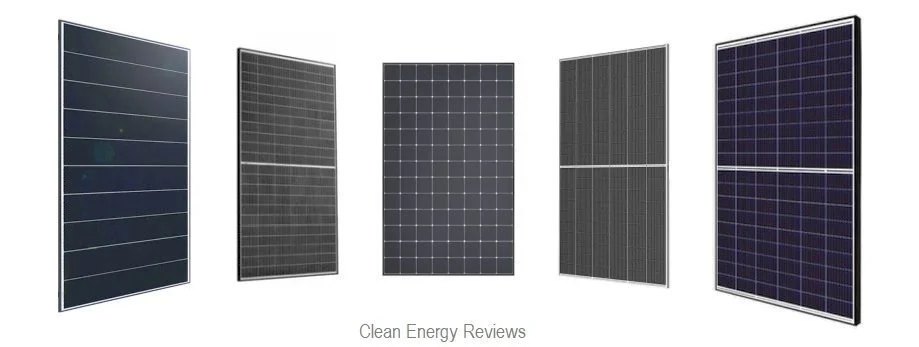
The power rating of a solar panel, measured in Watts (W), is determined under Standard Test Conditions (STC) at a cell temperature of 25°C and solar irradiance level of 1000W/m2. However, in real-world conditions, the cell temperature often surpasses 25°C (77°F) depending on the ambient temperature, wind speed, and amount of cloud cover. In hot, sunny weather, solar panel temperature can easily increase to 45 or even 60°C (140°F), resulting in an 8-15% reduction in power output, depending on the solar temperature coefficient explained below.
Power temperature coefficient explained
The power temperature coefficient of a solar panel determines how the panel perform under different temperature conditions. As the temperature of a solar panel increases during the day, the electrical resistance also increases, resulting in a slight reduction in power output, referred to as the power temperature coefficient, measured in %/°C. For every degree above the STC temperature of 25°C, the power output will decrease by a small percentage.
Solar cell temperature coefficient from highest (worst) to lowest (best)
-
P-Type PERC cells: 0.35 – 0.40 %/°C
-
N-type TOPcon cells: 0.29 – 0.32 %/°C (Trina, Jinko, Winaico, Phono)
-
N-Type IBC cells: 0.28 – 0.30 %/°C (Sunpower Maxeon, Longi)
-
N-Type HJT cells: 0.25 – 0.26 %/°C (REC, Aiko & Panasonic)
Solar panels made using N-type IBC and HJT cells have improved efficiency in higher temperature environments than traditional Monocrystalline (Mono) and Polycrystalline (Poly) panels. All SunPower Maxeon, REC Alpha and Panasonic panels utilise N-Type IBC and HJT cells with very low power temperature coefficients, resulting in extremely good high-temperature performance.
Real-world performance
To help determine the real-world performance of a solar panel, manufacturers also provide a power rating under Nominal Operating Cell Temperature (NOCT) conditions. NOCT assumes a cell temperature of 45°C and a lower solar irradiance of 800W/m2 to mimic average operating conditions. This simulates that solar panels often face temperatures and light levels other than the ideal STC conditions, giving consumers a more accurate idea of how they will perform in everyday scenarios. Both the STC and NOCT ratings are shown on the solar panel datasheet. They are helpful for consumers to make informed decisions when choosing solar panels for their specific environmental conditions, especially when installed in very hot climates or on a dark-coloured rooftop that absorbs more heat.
