










Haiti, 2010: It’s been a week since the tropical island was hit by a devastating earthquake. All hope was lost and rescue efforts gave way to clearing debris. Suddenly, workers found the body of a two-week-old baby. Her name is Elizabeth and she is breathing. But that scene belongs in the realm of miracles. There are few scenarios where time is more valuable than a rescue operation to search for survivors, especially if they are injured. Over the past decade, 780,000 people have died in these types of disasters. This speaks to its disastrous results. These are life-or-death situations and so far rescue dogs have been the main aid.
Currently, the Institute of Particle Technology at the Swiss Federal Institute of Technology (ETH for short) in Zurich (Switzerland) says:electronic noseIt can detect a wide variety of substances, such as ammonia and isoprene emitted by human breathing and skin.
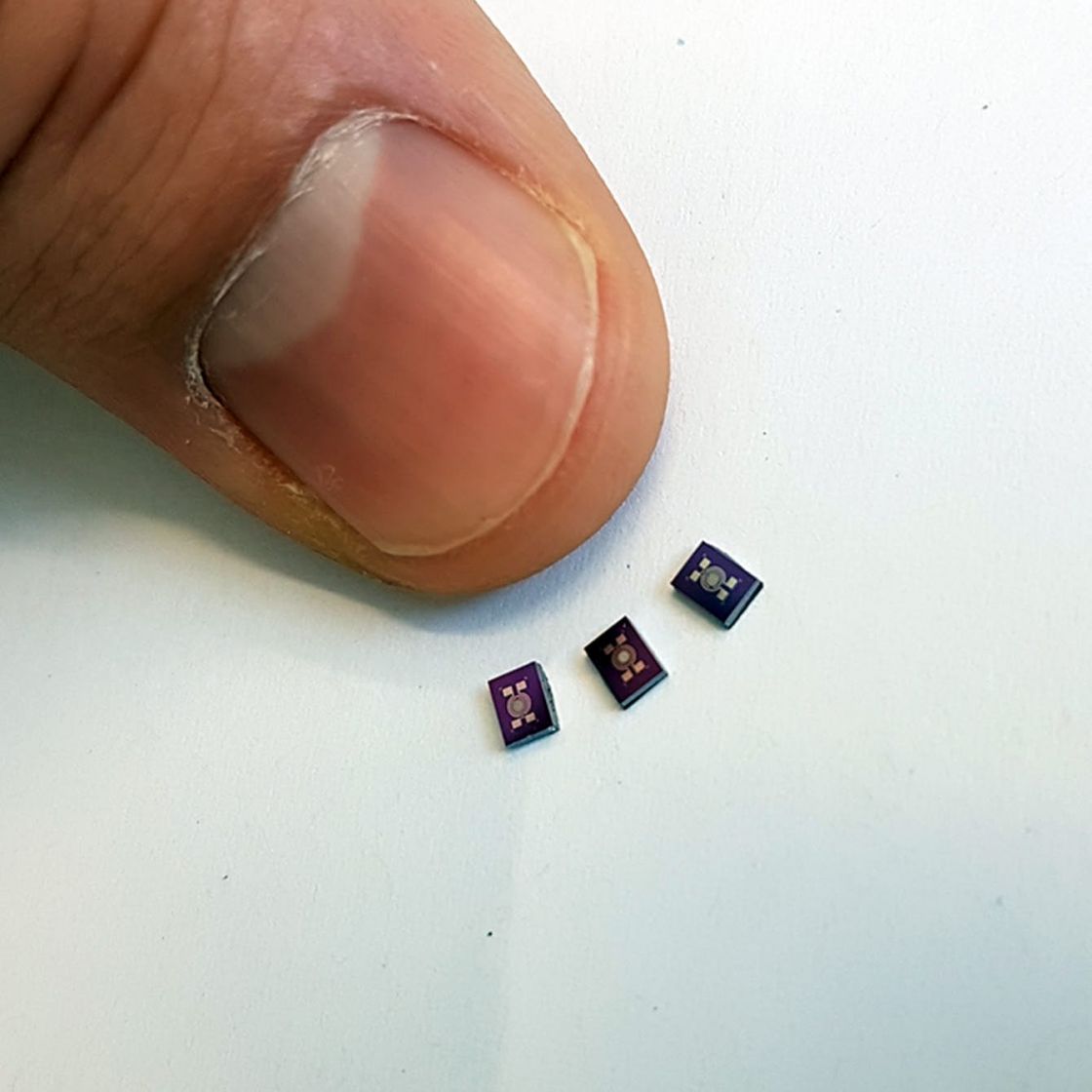
of innovative deviceconsists of three very small sensors made of oxide-metal nanostructures and can detect the presence of acetone, ammonia, isoprene, and carbon dioxide and moisture with great accuracy.Researchers tested their efficiency New technology With volunteers in the isolation room.The result was published in a magazine analytical chemistry, indicating that the system is able to minimize “false positives”. For example, carbon dioxide could indicate the presence of humans, but it could also be a sign of fire. Similarly, molecules emitted by the skin (such as ammonia) and those contained in exhaled breath (acetone and isoprene) are different and detected by sensors.
The next step is sensor under real conditions. The main immediate advantages are the low cost of production and the possibility of combining with currently used infrared cameras and microphones.
rescue robot
After Timothy McVay’s 1995 Oklahoma bombing, which destroyed federal buildings, Robin Murphy decided to establish the Center for Robotic Assisted Search and Rescue (CRASAR) in Texas (USA).So she developed different kinds of rescues technology It can operate on land, air and water to assist professionals in an emergency.
Murphy and her team’s major contributions in this area are: smart machine She can access difficult sites and use sonar devices to map disaster areas, as she did in the aftermath of the 2011 tsunami that hit the coast of Japan. At the time, Murphy was using submarine robots to inspect the pier foundations.Girlfriend robot We can also analyze the geological features of the area to minimize the risk of search efforts.
Considering the vast amount of data her robot acquires, she Latest innovation is focused on Artificial intelligence Deep learning that enables analysis of thousands of images. This makes it possible, for example, to identify pieces of debris that are large enough for a survivor to be trapped underneath.
sauce: ETHZ, ACS, Wired
