










Mining is an important sector of the extraction of raw materials. He is also one of the most dangerous.Dramatic stories, such as the Chilean miner incident a few years ago, are reminders that despite technological advances, this centuries-old job still carries a certain amount of risk. but now New technology Thanks to robotics, dangerous conditions for human workers have improved. Drones flew in the skies a long time ago, self-driving cars are in advanced testing stages, and underwater self-driving cars are already exploring the oceans, but there is still one frontier to be traversed. It’s a dark, damp place where GPS signals are often lost, and lots of rocks and a complex network of tunnels can complicate wireless transmission. This is where camera technology developed by the Australian Robotic Vision Centre, based at the Queensland University of Technology, comes into play and offers the best possible solution. The project is also supported by US heavy truck and industrial equipment manufacturer Caterpillar.
Until recently, laser sensing systems were used, but Australian researchers have proposed a more efficient and cheaper alternative. That is, a camera-based system that enables positioning using biologically-inspired algorithms that mimic the way insects and animals avoid. Copies the ability to create paths through obstacles, unexplored terrain. Researchers also AI system Remove blurry images and discard obscure images due to dust in the air. One of the main advantages of their prototype is that it does not require additional infrastructure for mining.
The first successful test in an Australian mine was technologyAt the moment, this new generation of positioning systems can track the location of vehicles to within a few meters, so the challenge is to increase the accuracy to within centimeters, which would allow the use of fully autonomous vehicles in underground mines. will be
Cutting edge of automated mining
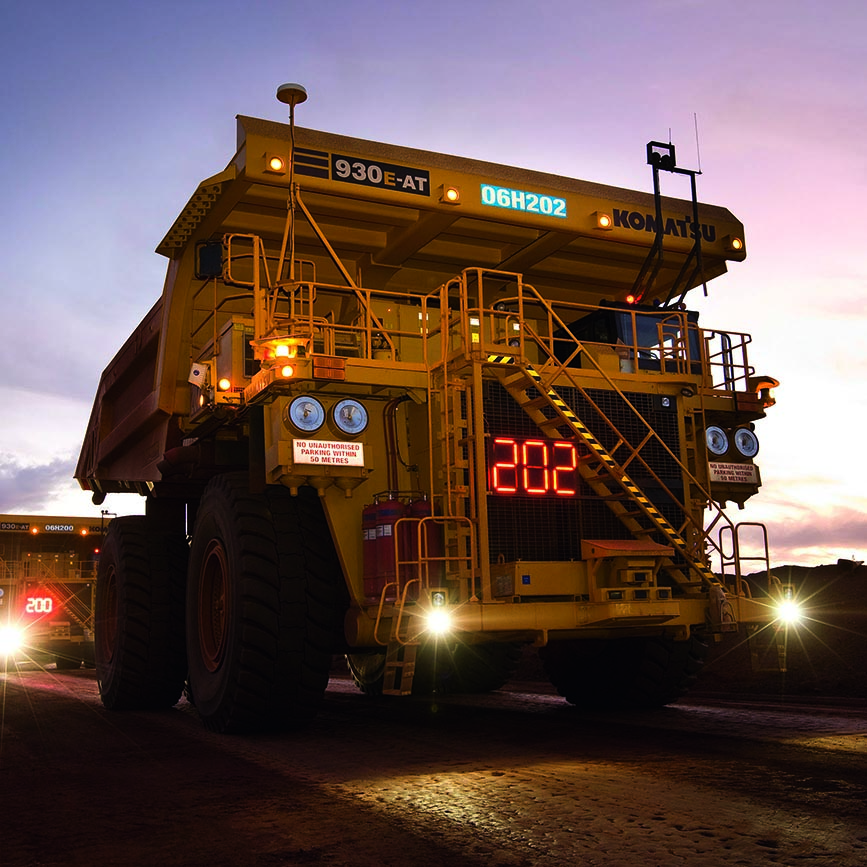
A study conducted by the Robotic Vision Center in Australia is another building block in the world of automated mining operations. Self-driving heavy trucks are becoming a common sight in strip mines.this is thanks robotics Machine radar and LiDAR positioning systems and traditional GPS navigation developed by manufacturers such as Caterpillar and Komatsu in partnership with software companies such as ASI (Autonomous Solutions, Inc.) are the most common technologies used in this field. is part of .
Rio Tinto, one of the world’s largest mining companies, already uses most of these vehicles. The 300-ton monster, capable of hauling ore unaided, occupies his quarter of the 400 vehicles working at the Pilbara (Australia) iron ore mine. These giants can sense wormwood rolling and follow their tracks to stop. With a machine of this size, safety is of course a top priority.
Rio Tinto also aims to achieve full automation of trains during 2018, covering a network of 1,700 km connecting 16 mines and four ports in Pilbara. The operations center is now located in Perth on the other side of Australia. From there, the operator can control any issue in real time from the comfort of their office chair.
sauce: Robotic Vision, Digital Journal, The Economist
