











The first great industrial revolution thrived on cheap energy sources like coal that were later replaced by the oil boom. Back then, so-called black gold literally flowed naturally from the earth in places like America. . However, the current scarcity of resources and growing awareness of environmental protection lead us into a new era. power efficiency When sustainable energy There is rapidly no room for negotiation.
Today, one of the main reasons for selling new cars is the reduction in gasoline consumption, and electric engines are slowly but steadily gaining momentum. Similarly, terms such as circular economy with a zero-waste approach are becoming part of productive jargon. Within such frameworks, there are areas of science that have attracted many supporters. It’s called biomimicry and basically means applying nature’s solutions to technological challenges.we recently talked Examples of biomimicry Bio-glue inspired by slugs and pine cones, among others, serve as inspiration for autonomous buildings. This article deals with various technologies that provide smart energy-saving systems based on biomimicry.
Turbines powered by whale flippers
“This is not true,” said Fluid Mechanics expert Frank Fish when he examined a whale sculpture in a gift shop. He was talking about some strange bumps that, according to conventional scientific thinking, should be placed behind rather than in front of an animal’s fin. But after doing some research, I realized that neither nature nor the sculptor was on the wrong side. Rough edges, technically called nodules, were far more efficient than any other technology ever implemented in turbines and fan blades. The fact is that the ridges help create water currents and create multiple whirlpools, giving the whales a strong impulse, reducing water resistance and allowing them to move their flippers over a wider angle.
Shortly thereafter, Frank Fish founded WhalePower Tubercle Technology. This is a startup that has developed a range of solutions, from graphics card cooling fans to diesel engine cooling systems, all based on whale ‘bumps’.
A honeycomb that teaches you how to optimize your energy consumption
The Biomimicry Institute is one of the most staunch defenders of nature as a source of technological solutions. One of the company’s latest energy-efficient designs is a software solution called Swarm Logic, based on communication patterns between bees. With this software, you can control the most power consuming devices in your system, such as AC units and heating devices, and adapt them to the actual demand. According to the developer, this software solution can save 15% to 30% energy.
That seaweed has movement
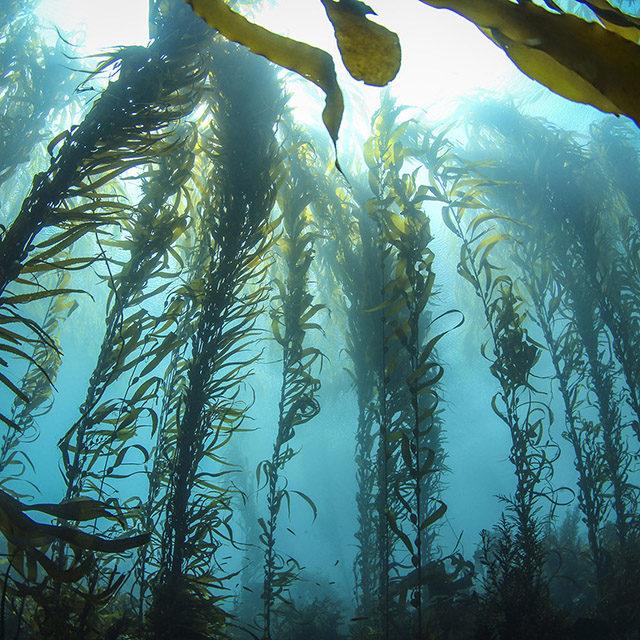
Solar and wind energy are major components of the current energy mix. In fact, there are countries, like Portugal, where he met his electricity needs for four days in a row exclusively from renewable sources. This was unthinkable for him ten years ago.However, there are other Renewable energy It may not make headlines, but it has great potential for tidal energy. To find the best way to harvest the ocean’s kinetic energy, Australian researchers at BioPower Systems decided to take the leaves from a truly old book, seaweed. Reaching lengths of over several feet, this aquatic plant follows the tide rather than resisting it. Their movements inspired him to create his BioWave, a head system that is rocked by water currents. Today at BioPower Systems he is developing a 1MW power plant.
fern solar cell
Still in Australia, but leaving the aquatic environment behind and moving to the mainland, a team of researchers from RMIT University Inspired by the fractal structure of fern leaves. The leaves of this plant have a rich network of veins that allow them to store energy and distribute water efficiently throughout the structure.As such, the Australian scientist estimated that his 3,000 We have developed a new type of electrode with double the capacity. Although the technology is still in its early stages, prototypes utilizing graphene films could open the door to solar cells that can collect and store energy in a single device.
shark as flight instructor
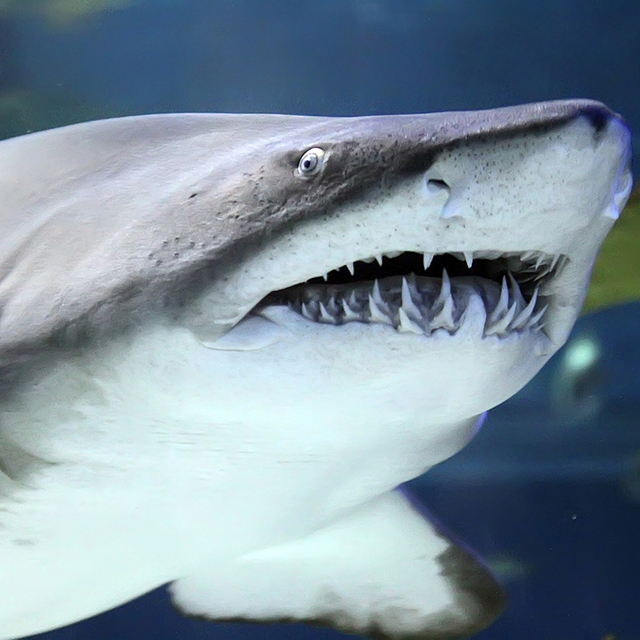
Aviation is one of the sectors that has made the most progress. energy efficiencyNew aircraft from Boeing and Airbus use less fuel and have more range than their predecessors. biomimicry It also has a say in this area, especially through the behavior of sea creatures. Previous planes utilized perfectly smooth fuselages. But Airbus engineers naturally took notice that the skin of sharks, a species that is very efficient when it comes to movement in liquids, is covered with millions of microscopic scales, also called dermal denticles. I found Following their example, engineers developed a small “libret” patch. This is a textured surface on the fuselage and wings that mimics the effect of sharkskin. This drag-reducing surface has proven particularly effective in high-speed flight.
Wind turbine with dragonfly wings
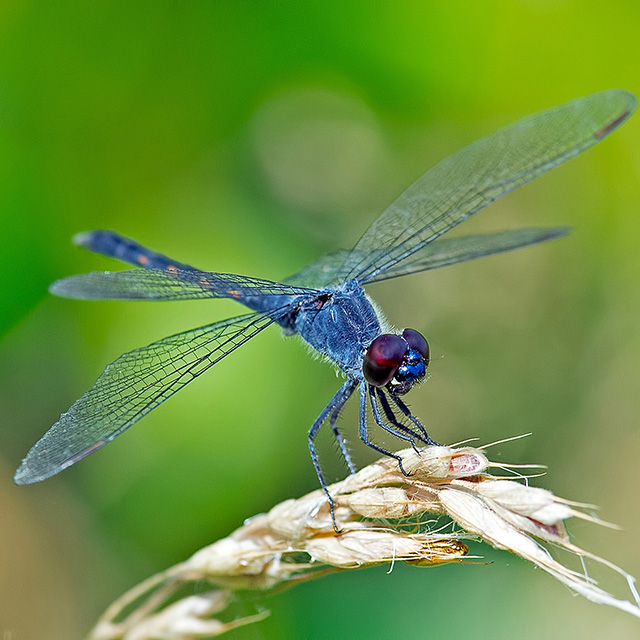
wind energy is one of the most efficient renewable resources Electrical. Nevertheless, it suffers from its own shortcomings. Blades require relatively high wind speeds, but if the wind current is too strong, the blades are prone to failure. A team of researchers from the Sorbonne University (France) analyzed the wings of flying insects like dragonflies to understand the source of their efficiency in their flexibility. Therefore, they developed a flexible blade prototype. Proceedings of the Royal Society Ah, They can operate more efficiently in response to changes in wind speed and produce more power under the same conditions as traditional wind turbines.
Do you know other examples of power efficient technology inspired by nature? Let us know in the comments below.
sauce: Guardian, Power Technology
