











The shift from the PC-centric world to smartphones and tablets has given way to the Internet of Things and wearables, connected devices embedded in clothing, or connected devices used as accessories such as watches and bracelets used as fitness trackers. It is The current trend is blurring the lines between device and user.
But in this hyper-connected world, with longer life spans, more people are feeling more isolated and disorientated than ever before. They are people suffering from Alzheimer’s and senile dementia.Fortunately, the implementation of technology New possibilities are opening up, such as GPS location enabled by the miniaturization of devices.Zenoma, a Japanese company specializing in smart clothesprovided a unique take on this technology.
Xenoma chose the latest Consumer Electronics Show in Las Vegas to showcase its new line of nightwear with a twist. It can measure a user’s vital signs and transmit the information wirelessly. The initial design of these pajamas is aimed at early detection of health problems within the clinical setting. The outfit consists of pants that can detect movement and signal sleep disturbances or movement beyond a certain area. The latter is particularly useful for dementia patients who tend to wander. The top of the pajama is equipped with several sensors that measure indicators such as heart rate and body temperature. Also included is a plastic disk with a battery, a Bluetooth transmitter, an accelerometer and a gyroscope.
One of the biggest advantages of this smart garment is that it does not require direct skin contact via special gels or other solutions. The next step is to expand its use in home healthcare. That’s because the manufacturer believes these sets will sell for under $100 when production begins.
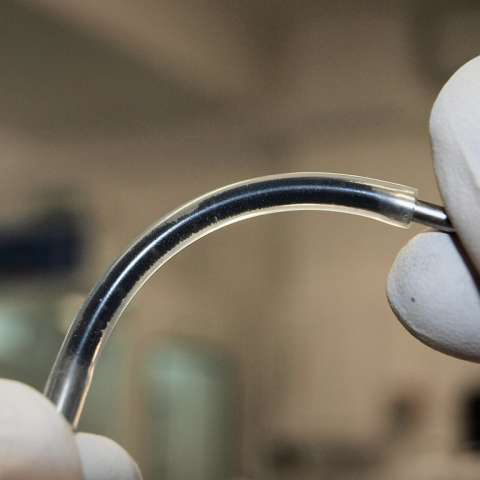
graphene salad dressing
But Xenoma’s efforts are not unique in this area. wearable health techNewborns, like dementia patients, are some of the most vulnerable humans. So researchers at the University of Sussex have developed a new class of microsensors that can detect health problems such as sleep apnea and other ailments in young children.
First published in the journal Nanoscale Science, these microsensors are based on compounds made of graphene, oil and water. When microtubes holding liquids are stressed or stretched on their surface, the liquids can react to the change and carry them.
In an interesting anecdote, Dr. Matthew Large, the man behind this technology, was inspired by a salad dressing he made for his daughter. He came up with conductive liquids when he noticed tiny air bubbles forming within the emulsion. Graphene allows the bubbles in his sensor to remain stable, but when the bubbles expand due to stress or stretching processes, their conductivity decreases proportionately. According to Dr Raj, this makes it the most sensitive liquid-based sensor ever created. In the near future, these sensors will be embedded in baby clothes to control vital signs.
Very cheap and easy to make, the technology was originally designed as a system to monitor newborns in developing countries in response to a contest launched by the Bill and Melinda Gates Foundation to make it cheap. rice field. healthcare wearableHowever, in its current state, fitness applications are also available.
sauce: Engadget, Physical
