











Deep inside Antarctica’s frigid interior, air-filled, fluffy snow accumulates layer by layer, compacting into slabs of ice over thousands of years. Palaeoclimatologists have long flocked to remote continents, drilling down kilometers and recovering ice cylinders spanning hundreds of thousands of years of Earth’s history. This is like a vertical tree ring. Ancient gas bubbles trapped in these ice cores hold the key to understanding how atmospheric carbon dioxide levels affected surface temperatures throughout the past. is about as close as you can get to time travel.
Now teams of palaeoclimatologists from Europe, Australia and the United States are working to find the oldest ice on Earth so that trapped air can be used to directly measure greenhouse gas levels millions of years ago. Researchers are particularly looking for ice that is about 3 million years old. At that time, the temperature was 2-3 degrees Celsius warmer than today, and the sea level was about 20 meters higher than today. This will give scientists a better idea of how much temperatures will rise in the future.
“The big question we have is how much do you think the planet will get warmer if we continue to emit CO2?2 Sarah Shackleton, a member of the US team and a postdoctoral researcher in paleoclimatology at Princeton University, said. A US project called the Center for Oldest Ice Exploration (COLDEX) uses a novel and unique approach to finding that old ice. Its members are refining new techniques for sequencing intermixed ice formations, hopefully assembling a timeline of atmospheric and climatic conditions from the oldest discoverable ice formations to the present.
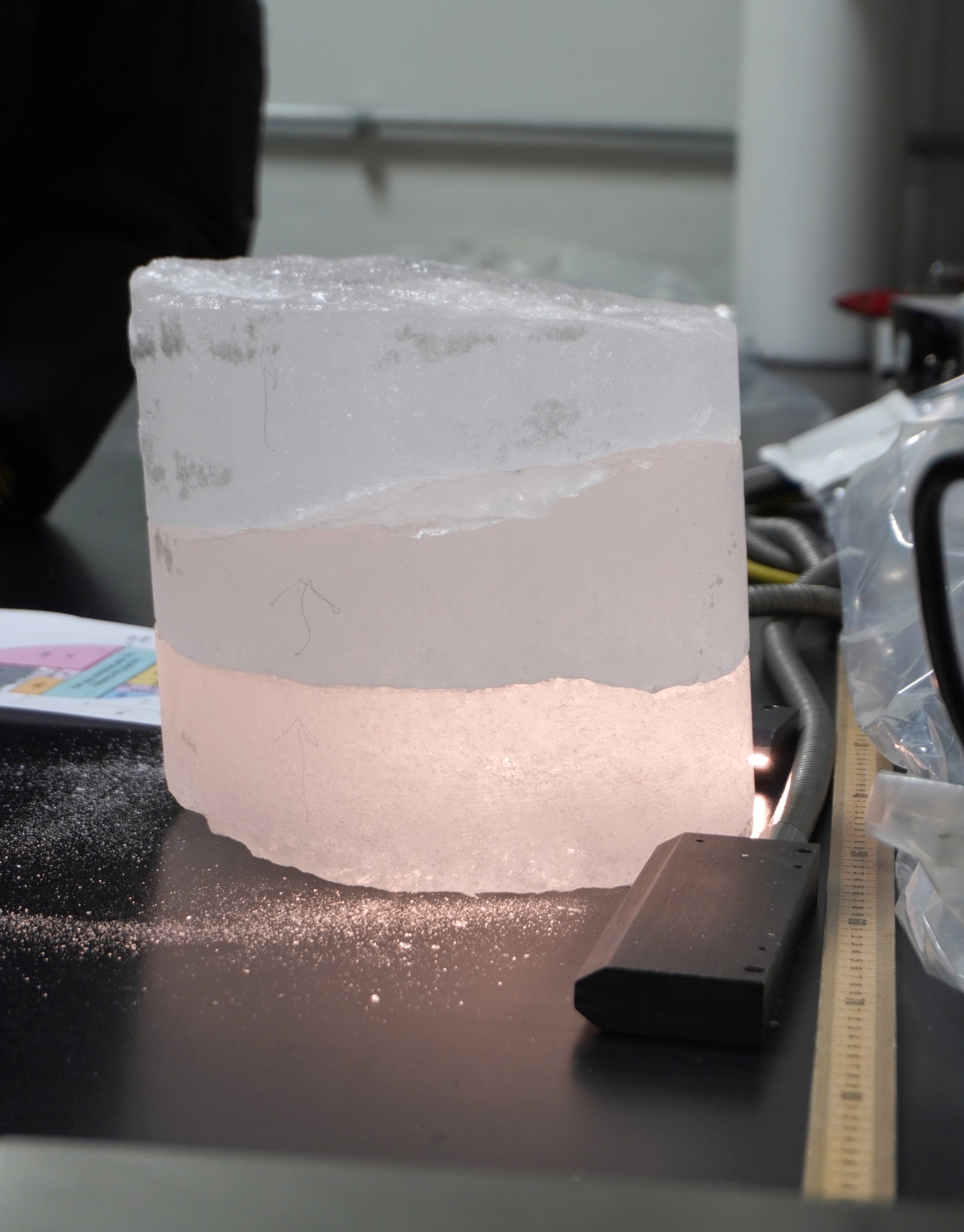
Most ice cores drilled so far are known as continuous cores, meaning that the layers are arranged in an orderly chronological order. But the oldest continuous ice core ever collected, completed in 2004, is only 800,000 years old. Older ice may exist at greater depths, but it is difficult to find. “The ice that has accumulated on the surface of Antarctica is burying and slowly flowing out towards the South Pole. [continent’s] And eventually it’s lost, either melted into the ocean, or the iceberg breaks up into the ocean. That’s why the oldest ice is always rare,” says Ed Brook, a paleoclimatologist at Oregon State University and he’s the director of COLDEX.
In recent years, scientists have discovered a possible way to reach such ice. At certain locations near the edge of Antarctica, random individual layers of old ice are sandwiched by new layers closer to the surface. At this location, rocky ridges push the ice sheet up as it flows toward the coast. The COLDEX team, led by Princeton paleoclimatologist John Higgins, was sent to a location called Allan Hills near the east coast of Antarctica from November to January last year. There, constant winds blow away the upper ice layers as they rise. This means that the older layers are much closer to the surface, tens to hundreds of meters below instead of thousands of meters, making retrieval easier.But while the ridges help push the ice up, they also smash the formations into an incoherent mess, like a geological blender. [continuous] Oregon State University paleoclimatologist Christo Buizert, who leads the COLDEX ice analysis team, said: But in a core drilled from the edge of a continent, “it’s like someone solved a puzzle and mixed all the pieces together.”
To determine the age of ice in jumbled layers and sort them out, the team painstakingly analyzes each layer for clues and makes use of recent technological advances such as argon dating. The concentration of argon in ice can be accurately dated because elemental potassium naturally decays over time to argon at a constant rate. Additionally, the machine takes images of the layers with multiple wavelengths of light to find creases and other discontinuities in the core, helping scientists connect and position the layers. “Finding out how to deal with disturbed ice is a whole new challenge for us,” Buiselt says. “It’s been a lot harder, so we’ve been trying to avoid it as much as we can. But maybe the only way the oldest ice is preserved is in this really disturbed state. And We have no choice but to learn to decipher it and figure out how to put the jigsaw pieces back together.”
COLDEX scientists also plan to drill a traditional continuous core dating back 1.5 million years in the interior of the continent near Antarctica. It is also the target age for drilling activities in Europe and Australia. Next, the COLDEX team will work on the layers of Allan Hills, sort them chronologically, and hopefully extend the record to a total of 3 million years ago.
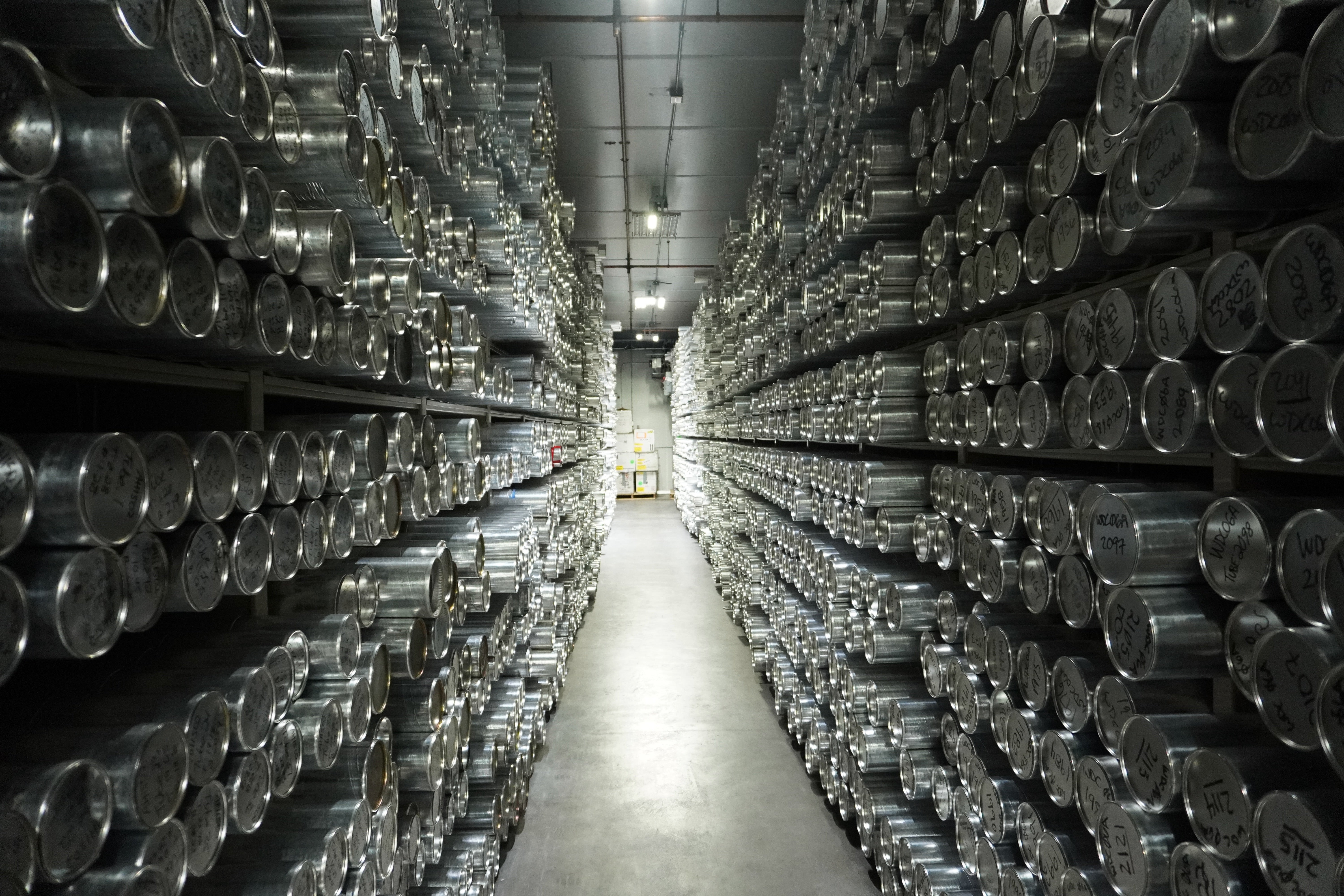
The COLDEX team could have found much older ice near the bottom of the ice sheet near Antarctica. However, like the ice at the edge of the continent, it could have been shattered as it flowed over the rocky crust below or melted by geothermal heat emanating from deep within the earth, giving as much analysis as the ice in the Allan Hills. To look for the oldest accessible continuous samples near Antarctica, the team used airborne ice-penetrating radar techniques to locate high snowfall and relatively cold parts of the Earth’s crust. launched a five-year mission to identify areas to
After they obtain a messy mixture of old ice layers and date them, the team members will use new techniques to improve the analysis of gases from bubbles trapped inside. They sliced the core every few meters, melted it, and measured the amount of carbon dioxide and other gases released. Scientists only used consecutive cores with time-sequenced layers, so they were able to estimate gas levels in the layers in between. Scientists would have to sample every layer of jumbled ice to get accurate gas readings for each. A new method can be used to melt a narrow strip spanning the entire length of the core and analyze the gases contained therein. This will give you an accurate measurement for each layer, which you can link to the age of that layer.
“We have dreamed of doing this for a very long time because we know that the number one priority for everyone in the ice core community is to retroactively extend ice core records. Because it was obvious,” says Buiselt. COLDEX scientists now have in mind the ‘why’ behind all this work. That is, we understand the warmer world we are fast approaching. “I think ‘Oh, we found the oldest ice’ is a catchy headline, but there’s a reason we’re interested in these early ices,” says Shackleton. “And that’s because they were warm.”
This story was supported by a grant from the Pulitzer Center.
