











episode transcript
Joel Barbell: If you feel that you are not being listened to, you are free to choose another doctor.
Here are five tips on what to do if you don’t hear your voice when you go to the doctor’s office.
Looking back on how I started TikTok, about two years ago, when I was in my second year of medical school, COVID became an epidemic, and I had a lot of time to think about the world. Black Lives Matter. The George Floyd protest that was happening. I’ve heard stories of Breonna Taylor and Armaud Arbery being hunted down and killed.
And he was the same age as me.
Seeing that I am also a black medical student in a field where less than 5% of doctors are black, I wondered what I could actually do to use my voice to speak about these issues in a unique way. I started thinking.
I didn’t want to sit idly by anymore.
I was the first black medical student in Washington State University medical school. I feel like I asked a question that other classmates would never ask in my classroom.
So I started making TikToks about things I didn’t learn in school.
Second, go in with others if you can. If you can’t do that… Second, go with someone else if you can. If you can’t, be sure to call someone. Or record the conversation for later.
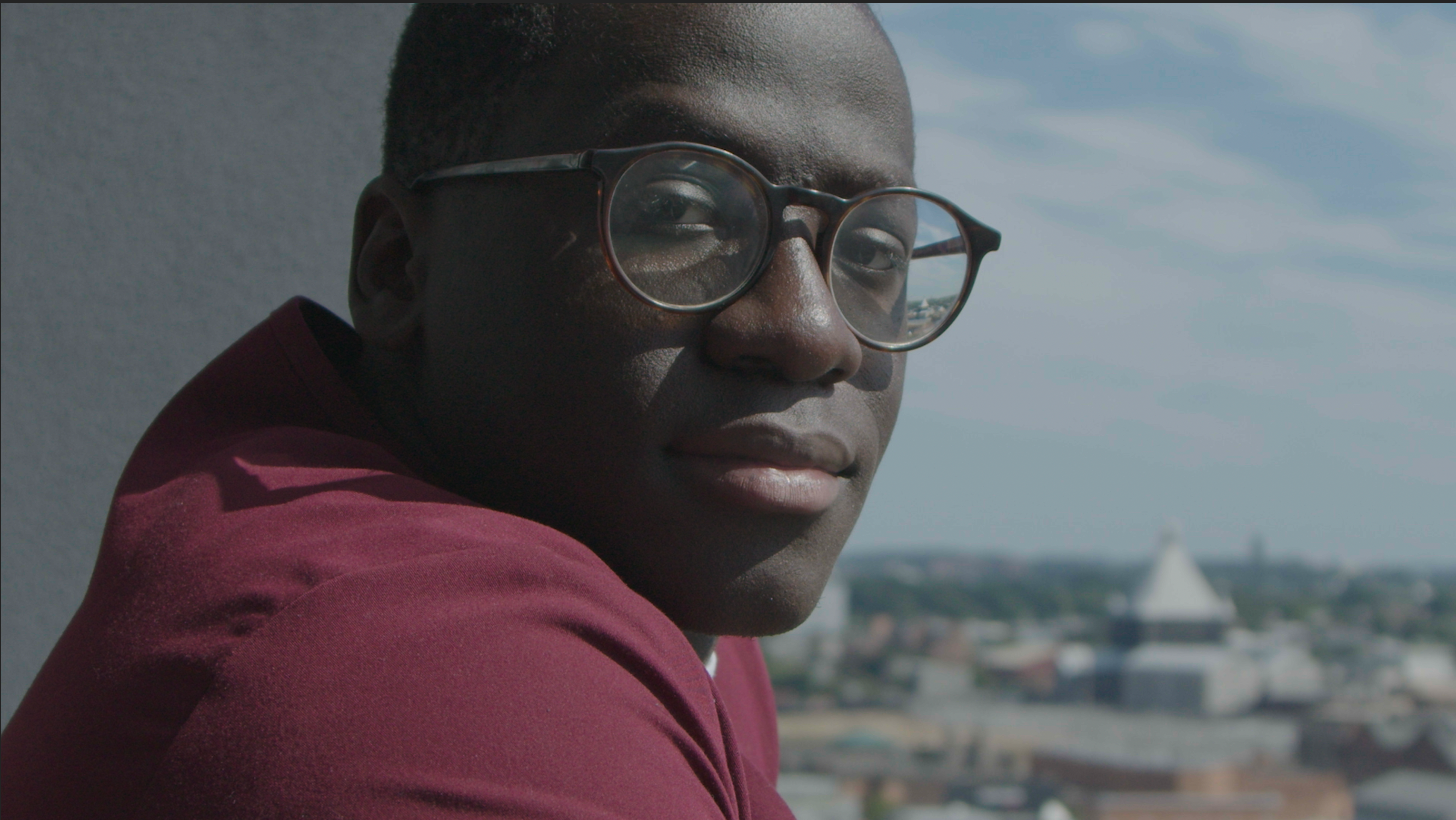
My name is Joel Barbell. I’m his senior year in medical school, and I’m well known on social media for being a medical myth breaker.
I’m looking at the TikTok idea calendar right now. Basically whenever an idea comes to me I try to write it down so I remember it.
So for most of my upbringing, my grandmother was my primary caretaker while my parents were away. But she didn’t speak English at all.
When I was in 7th grade, she returned to Ghana, West Africa. She unfortunately contracted malaria while there.
When she was taken to the hospital, they told her she was to bring her own materials to the hospital regarding tubes and IVs, but she didn’t know.
And, unfortunately, these delays in care led to her death.
That was the first moment I saw health disparities. Now, when we look at the medical field, there are a great many studies published, but unfortunately they are locked behind paywalls and difficult to access.
Even if you have access to it, you may not understand what the actual research is saying.
I see my job as turning complex findings into 30- to 60-second videos so people can actually defend themselves in the clinic. That’s the beginning.
One of my first Tiktoks was about a pulse oximeter.
Pulse oximeters do not treat all skin tones equally. Which device is worn on the finger to measure blood oxygen saturation?
However, pulse oximeters have been shown not to work as well for darker skin, and the video went viral.
The comments were from doctors, nurses and PAs that I had never heard before.
Then someone contacted me and said my TikTok may have saved their life.
And since then, he has continued to expose things he should have been taught in medical school that he wasn’t learning.
Meet Elena Wicker. That makes her ten years younger than the average medical student.
This man lived with a hole in his head from a horrific government radiation experiment that happened when he was five years old.
Welcome to Hidden Medical History. Let’s talk about the lesser-known story of Vertus Hardiman.
My video talks a lot about how history is important to understanding our current healthcare system. I think it came
When thinking about implicit bias, I think we have to recognize that everyone has prejudices that affect the way they view patients and other people.
But understanding these prejudices is necessary in order to try to mitigate them.
you stretch all the way back. We see how the medical system has played a role in perpetuating these false beliefs.
Trichotillomania was actually a disease that slaves had to escape from and be whipped to cure.
Individuals still believe that black patients feel less pain, that black patients have thicker skin, or that black patients have fewer nerve endings.
A study was recently conducted. Nearly 50% of survey respondents supported at least one false belief about black patients.
I think the reasons for the shortage of black medical students and black doctors are complicated. It has to do with history. It’s resource related. It is related to what we have access to now.
I often think about the so-called Flexner Report. The Flexner Report is his 1910 report. It was created by the American Medical Association and commissioned Mr. Abraham Flexner to go to every medical school in the United States and see how they basically operate.
What ended up happening was that almost all schools training women were closed, and so were almost all schools training minority doctors.
For more than half a century, women and minority doctors were not trained.
It wasn’t until the Civil Rights Act that medical schools were actually required to admit non-white people.
Rachel Barbell: Talk about where the medicine we practice falls short. We don’t really prioritize the public health work being done or the opportunity to go through all these processes.
Imagine if COVID and the recent monkeypox show that we need to better respond to public health emergencies.
I’m honoured to be able to meet you. Let’s talk later.
Joel Barbell: Yeah, have fun at school tomorrow.
Rachel Barbell: Oh yes.
Joel Barbell: Unfortunately, the healthcare system is expensive. When you’re in medical school, it will probably cost you over $200,000. Often, medical students spend about $5,000 just to apply to medical school, but there’s no guarantee that it will be accepted.
So, considering how long it’s been, it’s basically a generation of people who can’t go into medicine.
I can’t find a mentor to actually get me there. I have had so many conversations with friends who shouldn’t be doctors right now but someone down the road told them they weren’t good enough. had. I wouldn’t be here if it wasn’t for the mentors who spoke to me and taught me that I could be where I am today.
Amitabh A. Iyer: Where are you? [inaudible]…and fast forward, this was when we were doing a series of webinars and such.And at some point in October, I think the year [inaudible].
Joel Barbell: in a typical day? I work probably over 14 hours. I have a lot of projects I’m working on right now. I am always trying to find the best way to make information accessible.
One of the things I’m doing now is working with the White House. We are also working with the World Health Organization to clean up online medical misinformation and misinformation.
I work in a surgeon’s office. I was actually able to make a video with Dr. Vivek Murthy. This is really fun.
I’m also trying to work on a TV show right now…
I think there’s an incredible movement right now for the next generation to rethink healthcare.
This means making sure that the previously undiscussed community is actually included in the curriculum. Thankfully, I think the image of dermatology is diversifying. I think we are talking about race-based medicine and why we use race-based medicine and its flaws. I’m talking about how to accurately read the shades of .
We’re talking about artificial intelligence, but we’re talking about how AI actually treats people differently based on a given algorithm.
Some might say I’m an influencer or a changemaker, but I believe education is at the heart of everything I do. I have always loved teaching. I have always loved sharing knowledge. And that’s what I’m about to do right now, to take what’s out there that fascinates me and understand it in a way that people can easily digest and use it to improve their health. is to make it available for
