











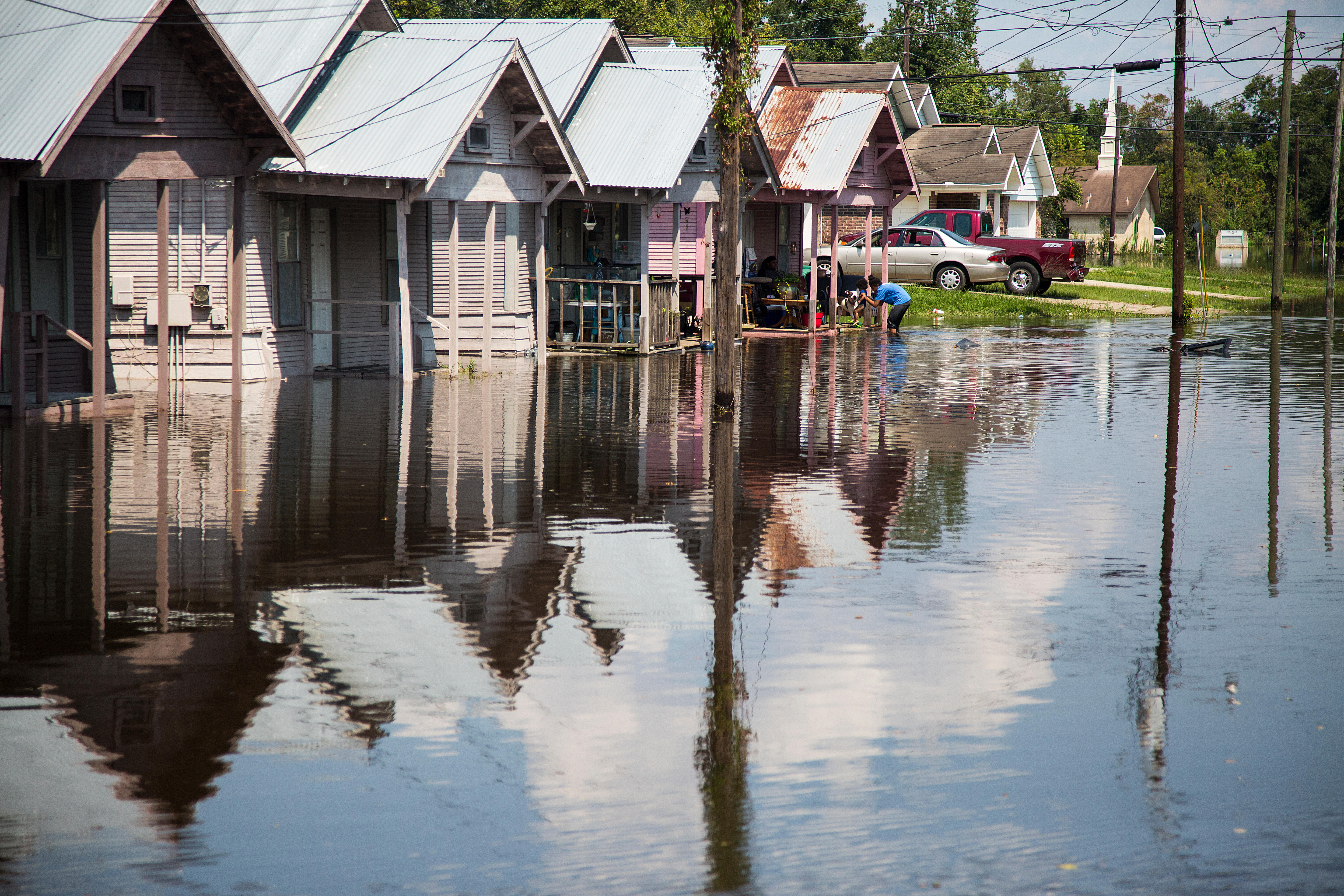
Climate Wire | Industrialized communities in the Deep South are the most vulnerable to climate change in the United States, according to a new index analyzing climate impacts and local conditions such as poverty and health, created by the Environmental Defense Fund and Texas A&M University. is.
Almost all of the most vulnerable communities are located along the Gulf Coast from Mobile, Alabama to Corpus Christi, Texas. The region is prone to floods and hurricanes, and suffers from poverty, poor health, and economic and racial inequalities. The communities of Memphis, Tennessee, Birmingham, Alabama, and Chattanooga, Tennessee also scored highly on the index.
“Black communities in the Deep South are fighting for their lives to protect their communities from years of environmental racism. To show what years of pollution look like in our communities. , we need all the tools available,” said Founder and Executive Beverly Wright. Director of the Deep South Center for Environmental Justice based in New Orleans.
Praising the new index, Wright said in an email, “Data is crucial to ensuring federal resources reach their intended communities.”
The index is the latest in a series of new or newly updated interactive tools that assess the environmental and climate risks of over 70,000 small geographic areas known as census blocks, each of which has only a few residents. Thousands. The effort comes as the Biden administration prioritizes “underprivileged communities” when allocating billions of dollars for new environmental and community-building spending.
Grace Tee Lewis, lead author and senior health scientist for EDF’s Climate and Health program, co-authored the blog post.
Other interactive tools include the Centers for Disease Control and Prevention’s Environmental Justice Index, the Federal Emergency Management Agency’s National Risk Index for Natural Hazards, and EPA’s EJScreen. These were launched in 2015 and updated in 2022. The White House recently published the Climate and Economic Justice Screening Tool. Help guide federal spending on climate and environmental protection under the Biden administration’s Justice40 initiative.
Dozens of states, including California, New York and Pennsylvania, have their own screening tools that are sometimes used to prioritize funding and protect vulnerable areas.
And in August, Wright’s group and the Bullard Center for Environment and Climate Justice at Texas Southern University launched the HBCU Climate and Environmental Justice Screening Tool as part of a collaboration with Justice40. Justice40 Initiative allocates 40% of benefits from federal investments in climate change and clean energy to “disadvantaged communities” with high environmental exposure and high social vulnerability It is intended to
The EDF and Texas A&M index stands out for its breadth and scope, officials said. Researchers have collected data on more than 180 indicators of both ‘baseline vulnerability’ and climate change risk. That’s about three times the number of metrics the White House used for screening tools. Data cover five categories: health, socioeconomic status, infrastructure, and environment. Extreme events such as hurricanes.
The five categories are part of the Climate Change Index because “vulnerable groups are disproportionately impacted as they are more exposed to climate risks and less able to prepare for, adapt to and recover from their impacts.” ,” the researchers wrote in the journal. environment internationalSuch communities have become the focus of advocacy campaigns for ‘environmental justice’.
The index is intended to help communities consider federal funding opportunities such as bipartisan infrastructure and inflation reduction laws.
Elena Krafft, EDF Associate Vice President and Health and Climate Expert, said:
Sarah Colangelo, director of the Environmental Law and Justice Clinic at Georgetown University, said the indicator “provides data that confirms the life experience of communities and helps decision-makers at the government, nonprofit, and corporate levels. It helps vulnerable communities, both by visualizing risks.”
Colangelo added that the index provides a “nuanced understanding of climate vulnerability.”
The index shows that the most climate-vulnerable communities are along the industrial Gulf Coast from Corpus Christi to Mobile, along the Mississippi River in Memphis and part of the Parish of St. John the Baptist, Louisiana. . The parish south of Baton Rouge, Louisiana, is part of an area popularly known as “Cancer Alley.” EPA is investigating the region’s legacy of industrial pollution and high cancer rates.
Top non-Southern regions include major cities such as Philadelphia, parts of the Ohio Valley, and Central and Southern California.
Study co-author Weihsueh Chiu, professor of veterinary medicine and biomedical sciences at Texas A&M University, said rising average temperatures and associated hazards such as hurricanes, wildfires and droughts are driving health and socioeconomic disparities. emphasized that the “hyperlocal nature” of
“If you look at specific indicators, some are spread out geographically,” Chiu said. “But many of them, especially the baseline vulnerability, are otherworldly across the street.”
Chiu said the South generally scores higher on baseline vulnerability indicators due to its higher rates of poverty and health problems. “This highlights a lot of what the EJ movement has been talking about,” he said.
Reprinted from E&E News with permission of POLITICO, LLC. Copyright 2023. E&E News provides essential news for energy and environmental professionals.
