











Europeans have feared freezing this winter for months because of the energy crisis sparked by Russia’s war in Ukraine.
On the first day of the year, weather stations across Europe recorded the highest temperatures for January.
Nearly a thousand records fell in Germany alone in the first few days of the year, according to climatologist Maximiliano Herrera, who tracks temperature extremes around the world. Thousands have fallen elsewhere across the continent.
The extent and intensity of the warming will make it “perhaps one of the most intense we’ve ever seen,” Herrera said in a message to E&E News.
At least 15 European countries have set record temperatures in the past week. The worst-hit areas ranged from France to Germany, Belgium and the Netherlands. Records also fell in Luxembourg, Poland and Belarus.
Herrera said the temperature anomaly was “unprecedented”, with some weather stations exceeding average temperatures for July. Boasting a 200-year-old climate record, Warsaw, Poland beat its January temperature record by more than 5 degrees Celsius.
A warm air mass moving over Europe from the west coast of Africa brought unseasonable weather.
London-based meteorologist Scott Duncan says a variety of factors are likely contributing to the erratic heat. The ongoing La Niña event continues to affect extreme weather around the world. Parts of the North Pacific and Mediterranean Sea will also be unusually warm, potentially increasing temperatures in Europe.
And climate change is steadily increasing global temperatures, making extreme heat more likely and more severe.
“The warming of our atmosphere and oceans is ultimately making it easier to break temperature records, and is definitely playing a role,” Duncan said in an email.
A blessing in disguise?
Warm weather is a reminder of the ominous effects of a changing climate. But this year has brought some relief to the European Union from the energy crisis, which has seen heating costs skyrocket for homes and industries.
Rising temperatures, combined with reduced consumption and alternative energy sources, are driving lower demand and prices for natural gas. Prices on Wednesday fell to around €70 per MWh. That’s the lowest level since before Russia’s invasion of Ukraine in February last year threw fuel markets into turmoil.
The drop in demand will allow countries to replenish their gas storage facilities, which could help ease concerns about supply shortages next winter.
Countries should import less gas during the summer if inventories are high at the end of winter, reducing pressure on markets, said a natural gas expert at the Center for Global Energy Policy at Columbia University. Ansophie Corbeau, who serves as the director, said.
Despite its positive outlook, some leaders continue to encourage citizens to conserve energy. Winter heatwaves are also causing concern among climate-sensitive Europeans.
“It’s very nice to be outside in December sunbathing and eating ice cream, but now people are really realizing that this is not the norm,” Corbeau said.
The latest weather event came after a summer of extreme weather surged energy demand as the European Union searched for alternatives to fossil fuels in Russia (climate wireAugust 21, 2022).
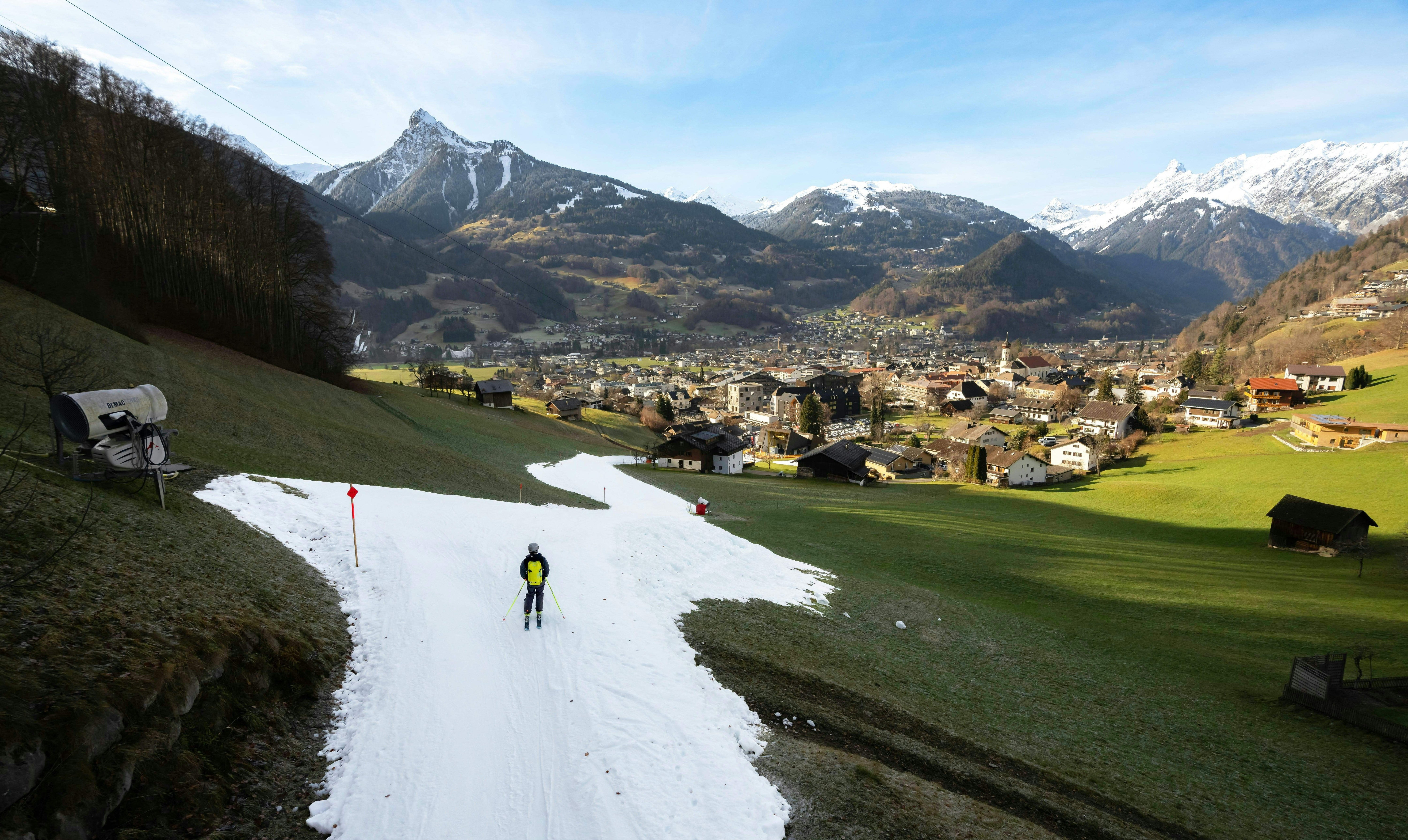
There may also be ripple effects. Ski resorts in the Alps, for example, were virtually snow-free and some had to close before the start of the season, said Luca Bergamaschi, the international political director of ECCO, an Italian climate change think tank. .
“The problem is that we all know that this isn’t just any winter, it’s probably going to be a more normal winter. And suddenly companies and countries realize they’re not ready for it. ” he said.
Tightrope walking
Demand for gas was declining before the heat wave. This is because the European Union has campaigned to reduce energy use by combining energy conservation measures with alternative fuels such as coal. At the same time, liquefied natural gas imports from the United States and others will nearly double in 2022, partially offsetting Russia’s gas losses.
“The market is in terms of bringing Europe the amount it needs in times of crisis so that no one has to force it to switch off,” said Georg Sachmann, senior fellow at Brussels-based think tank Bruegel. It worked very well,” he said. “Now that fundamentals have eased, that is reflected in the ease in prices,” he said.
But Europe’s problems are not over.
Russia’s gas imports will be much less than last year, meaning the European Union will need to cut energy use and build wind and solar power while continuing to look for alternative sources.
Gasoline prices have fallen significantly, but are still five times their 10-year average and well above US prices.
And if China’s economy overheats in 2023, or Japan experiences a cold snap, increased competition for gas could pull LNG volumes away from Europe, creating a shortage.
“Essentially, it’s going to be a tightrope walk for quite some time, as every individual item that can break can go back into crisis mode,” Zachman said.
This also means that the European Union’s largest energy consumer is likely to boost supply.
Germany, Europe’s largest economy, is investing in LNG terminals for additional imports and restarting some coal-fired power plants while delaying decommissioning others.
Climate activists have questioned whether building such infrastructure is necessary. Some say these moves are part of a broader effort to diversify Germany’s gas supply and build a cushion into the system to make it more resilient to future energy shocks.
change in demand
Meanwhile, climate-related extreme events are expected to intensify.
Winter heatwaves are likely to become more frequent and severe in the future. Winters across Europe are generally milder, according to Freja Vanborg, senior scientist at the European Union’s Copernicus Climate Change Service.
In the long run, this means that energy demand may decrease during colder months. But even Europe’s famously mild summers are getting hotter and more prone to brutal heatwaves.
A recent study found that heatwaves are increasing in frequency about three times faster in western Europe and intensifying about four times faster than in other mid-latitude regions.
As a result, parts of the continent may see a shift in high electricity demand from winter to summer over the next decade. A 2017 study of 35 countries found that energy demand is likely to increase overall in southern Europe and decline in the north under a relatively benign climate scenario.
Other studies have reached similar conclusions. A milder future climate scenario may leave overall energy demand unchanged for the year, but summer could be the period of greatest stress for Europe’s energy infrastructure.
“We have the same problems as before,” said Corbaugh of Columbia University. “OK, things are a little better, but it’s not like, ‘Oh, I’m fine now.’ No, we’re not fine.”
Reprinted from E&E News with permission of POLITICO, LLC. Copyright 2023. E&E News provides essential news for energy and environmental professionals.
