











samsung display
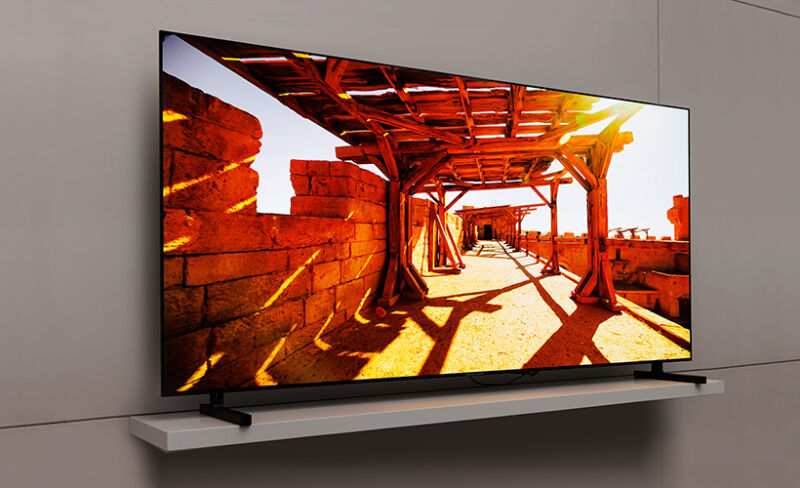
OLED TVs have become a key focus of many modern home theaters, but they are still an imperfect technology. As usual, his CES in Las Vegas last week saw a slew of OLED-based TVs. We have witnessed an increase in size and increased competition among OLED panel makers. But the most interesting development was the boosted peak brightness claim.
Darker screens have long been a weakness of OLED displays, especially compared to cheaper LCD rivals. But while OLED TVs coming in 2023 have vastly improved brightness capabilities, showing the potential for unprecedentedly rich highlights, we don’t want to put an OLED TV in a sun-filled living room. It will take many more years before I can come to my senses.
OLED brightness problem
The downsides of OLED and LCD TVs are usually price and darkness. Despite its deep blackness, OLEDs are known to be noticeably darker than LCD displays. Dark blacks help the screen deliver next-level contrast.A good OLED TV can make the highlights of HDR content pop dramatically.But overall brightness is low. This makes it difficult to enjoy images on OLED TVs in bright rooms or under low lighting.
Take LG TVs for example. According to FlatPanelsHD, the 2022 LG G2 hit full-screen brightness of 269 nits in SDR and 166 nits in HDR right out of the box. RTINGS.com reported 199 nits in SDR and 177 nits in HDR. That’s a noticeable difference from LG’s most premium 4K LCD TV, the LG QNED90. According to RTINGs’ review, the Mini LED TV hits 571 nits in white fullscreen in SDR mode and 622 nits in HDR mode.
Of course, there is image quality above the TV’s maximum full-screen brightness. When it comes to rich HDR highlights, the 2022 LG G2 outperforms the Mini LED QNED90 (976 nits vs 750 nits respectively). And the deep black levels and wide dynamic range of OLED TVs create more nuanced colors and details in dark areas.
But when choosing a TV for a bright room where people might view the screen from the side, the full-screen brightness feature should (or should) be seriously considered.
The hard truth is that OLED TVs are actually better suited for dark rooms, even the next-generation OLED TVs promised this year.
And while HDR with OLED is a sublime experience, opt for an LCD TB with advanced features like mini-LED and local dimming backlighting for SDR content and strong but not OLED-level contrast in bright rooms Some people see a brighter image at . As for HDR.
New LG OLED TV
At CES, LG made a pretty good-looking announcement. Brighter OLED. But when and how will new TVs be able to squeeze out those extra nits?
LG’s 2023 OLED TVs include the G3 series of 55, 65, and 77-inch 4K screens that claim to be up to 70% brighter than traditional OLED TVs. The TV has Brightness Booster Max, which uses an updated “light control architecture and light enhancement algorithm,” which LG says isn’t available on all other LG 2023 OLED TVs.
An LG spokesperson told FlatPanelsHD that the G3 series can reach a peak brightness of around 1,800 nits, and the TV’s Vivid Mode is likely brighter. It states that it has seen documentation suggesting that it supports luminance. Both numbers apply only to his HDR mode highlights. According to LG Display, which manufactures his OLED panel for the G3, the latest OLED technology allows him to achieve 2,100 nits with a 3% window.
On the other hand, according to the documentation FlatPanelsHD has seen, full-screen brightness is expected to reach 235 nits.
All those numbers are subject to change, though, as the TV doesn’t have a firm price or release date, and there’s still a lot to confirm and test. And LG Display’s 2023 OLED panels, at first glance, “look very bright,” at least. 1,514 nits on a % window and 209 nits on full screen brightness.
