











Artificial intelligence is poised to change our world, enabling new archaeological discoveries and self-piloting boats, among many other innovations. bring. That’s the goal of a new study conducted by the Center for Educational Information (CEI) at North Carolina State University. A team of CEI researchers recently presented their findings at his AAAI Artificial Intelligence Conference in New York last February. Their presentation showed how artificial intelligence can be used to predict the learning ability of a group of students in an educational game. The team used a multi-task learning model approach that evaluated responses to each test question rather than an overall score.
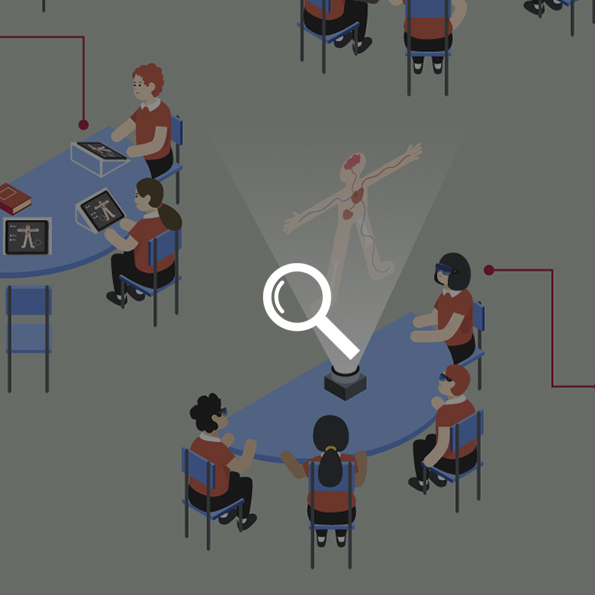
In this study, we selected 17 task models featuring the same number of questions, answered by 181 students. First, the students played an educational game called Crystal Island. In this game, an AI engine evaluated the student’s response to each task. The algorithm then analyzed the responses to the corresponding questions and established correlations. After processing each item’s correct or incorrect answer, the algorithm matched the in-game behavior with the test answers provided by the new students. The system’s developers point out that the model allows immediate detection of learning problems simply by evaluating how users approach educational game challenges. This means that educators can help students early and spot obstacles facing students.
According to the researchers, this opens the door to adaptive educational software that automatically adjusts to each user’s needs and the hurdles they find along the way. For example, you can improve your success rate by changing your approach to difficult tasks. The goal of this project is to participate in various fields such as psychology, machine learning and artificial intelligence.
Artificial intelligence, a support tool for teachers
AI won’t replace educators anytime soon, but artificial intelligence platforms will be valuable tools to cover the needs of large student groups. In this way, the software detects knowledge gaps and offers alternatives and advice to support educational work, as well as help with grading reports and homework, or with administrative tasks. In the future, it may be possible for IA to use facial recognition systems to identify gestures that indicate embarrassment or lack of attention. Finally, these systems are likely to include online educational applications, increasing learning opportunities for students unable to attend classes. Indeed, artificial intelligence and education must join forces. A recent survey commissioned by Microsoft found that 99.4% of his teachers believe AI will become an important teaching tool in the next few years.
sauce: Science Daily, Technology Review
