











factory robot, A robot that explores the deep searobots working on offshore oil rigs… robotics, most of which come to mind are related to manufacturing and industrial applications. However, robots are also required to play important roles in society, such as supporting the elderly and performing educational tasks. The University of Glasgow (UK) is exploring this approach in a joint technology project with Amrita Vishwa Vidyapetham University in India.Result is robot technology Improving hygiene conditions for children in Kalpetta Village, Wayanad District. Dubbed “Pepe,” their device, a hand-shaped robot with a mouth on the screen, helps raise awareness among local elementary school children about the importance of regular handwashing.
of robot handCharacterized by a set of eyes, the school’s 100 students feel like they are paying attention and speak in their native language, Malayalam, creating a sense of familiarity. Pepe’s developers attempted to create an emotional bond with students by using an animated mouth and taking advantage of the “Hawthorne Effect”, in which behavior changes when it feels being observed. The robot is controlled from a nearby room with a screen that receives the video stream, from which a human operator activates the device.
first test of this technology project It’s a success because the rate of children washing their hands has increased by 40%. These figures are especially significant given that 300,000 children die each year worldwide from diarrhea and other illnesses related to lack of hand washing. Additionally, the school is using this robotic technology to increase student interest in her STEM degree.
Pepe is manufactured with existing technology, which has kept the cost down to Rs 7,000 (approximately €90). The technology will be rolled out to other education centers across India throughout 2020.
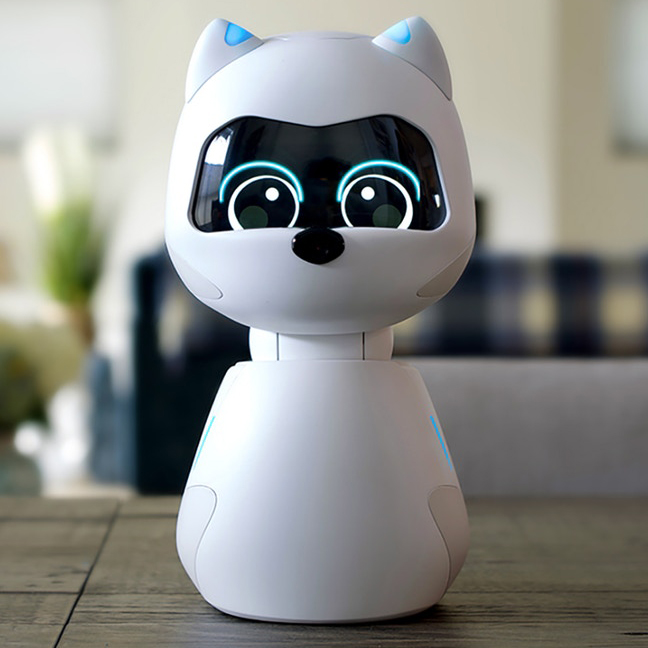
Advent of the era of social robotics
nevertheless social robot is on the rise, but previous experiments in this area, such as the AIBO robot, have not garnered the expected interest. That’s it. The key beyond anthropomorphic representations seems to lie in deep learning. Artificial intelligence, and personality. That’s, at least, what Mita Yun, a former Google engineer behind Zoetic AI and Kiki, the company’s cat robot debuted at the CES 2019 tech show, believes.
According to Yoon, Kiki benefits from advances in psychology, social sciences, and technology. Each device therefore has its own personality and learns from its environment and its owner. Considerable efforts have also been made in terms of privacy as Kiki is not connected to the cloud and does not transmit any information online. The creators of this robot envision it being used at home to educate children, keep them company, and monitor people with motor or cognitive disabilities. , not yet seen.
sauce: TechXplore, ZDNET
