











Multi-material 3D printers already exist, but the filament they extrude is typically all one material at any point in the printing process.create a new system actual However, it is a multi-material filament and boasts a potentially very useful helical design.
The experimental setup was developed by a team at Harvard University led by Professors Jennifer Lewis, Professor David Clarke, and postdoctoral student Natalie Larson.
Its printhead contains four separate cartridges, each containing a different “ink” (viscous printing material). All four cartridges are fed into one nozzle, extruding a single filament consisting of a continuous strand of all inks.
As the nozzle rotates throughout the extrusion process, the strands spiral onto each other in a twisted helical pattern. This same pattern is common in nature, with muscle fibers contracting and plant stems changing shape. Of course, it is also the shape that the DNA strand takes.
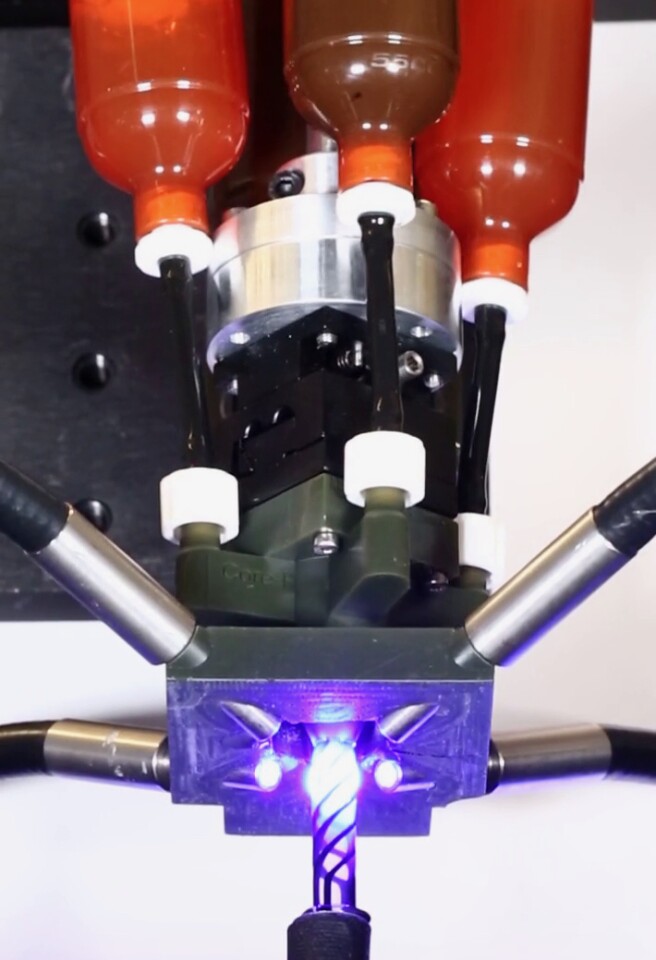
Natalie Larson, Lewis Lab, Harvard University
In one experiment, scientists created artificial muscle filaments. In this filament, two conductive elastomer strands that act as two electrodes are helically wound around each other within a soft elastomer matrix. When voltage was applied to the filament, it showed a reaction that the filament contracted. The degree of shrinkage depended on how tightly the spiral electrodes were wound during printing.
The researchers also created a grid-like structure of cross-woven filaments that act as springs. Again, by varying how tightly the strands within these filaments were wound, we were able to adjust the elasticity of the filaments, and thus the elasticity of the entire lattice. Such structures could potentially be used as hinges and joints in soft robotic devices.
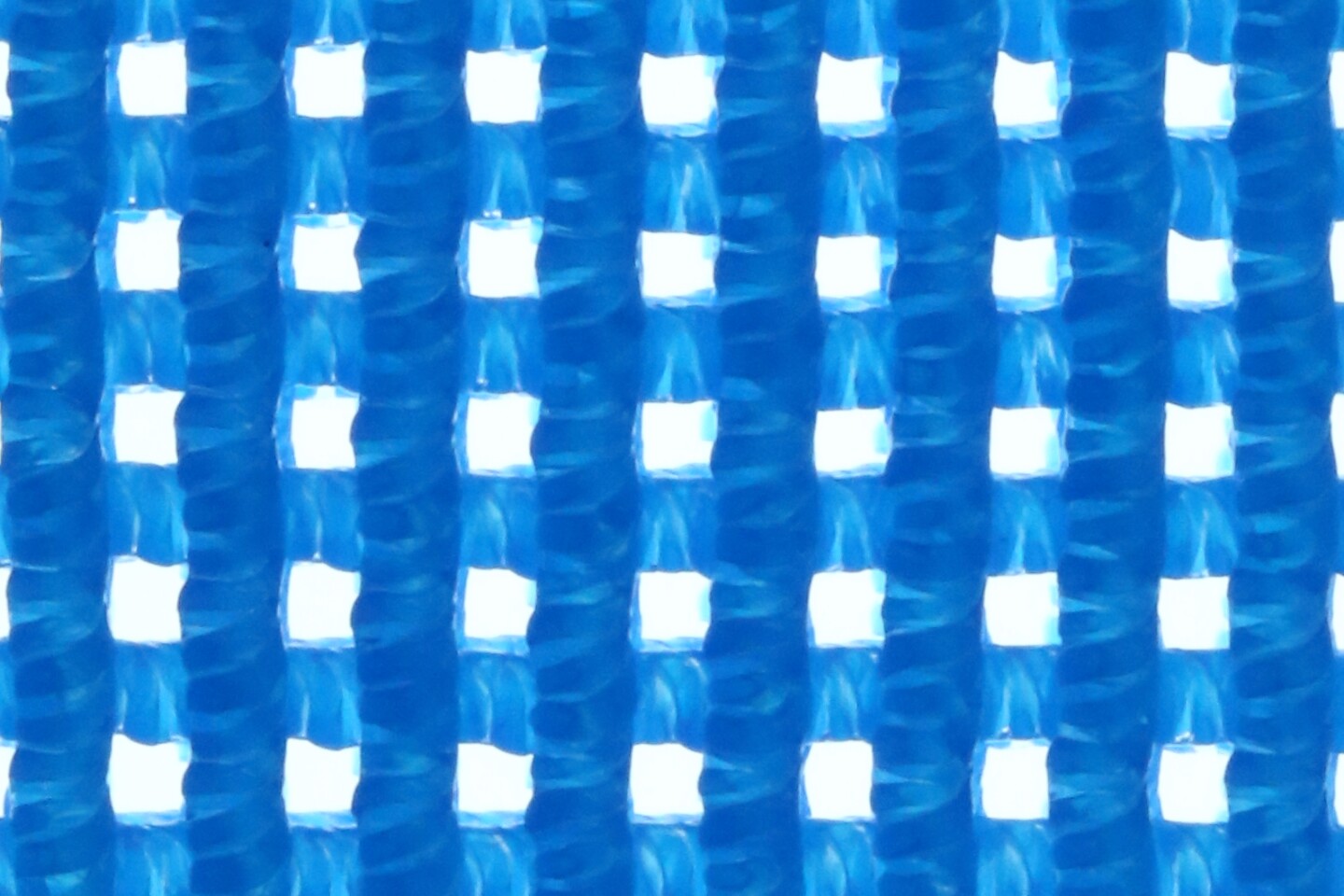
Natalie Larson, Lewis Lab, Harvard University
The team is now looking to other possible applications to refine the technology.
“By designing and building nozzles with more extreme internal features, we can further improve the resolution, complexity, and performance of these hierarchical, organism-inspired structures,” Larson said. said.
A paper on this study was recently published in the journal Nature.
Source: Harvard John A. Paulson School of Engineering and Applied Science
