











This year has been a bountiful harvest of outstanding architectural projects. As 2023 approaches, we decided to take a look back at some of our favorites. From dune-shaped buildings rising out of the desert to the world’s tallest wooden skyscraper, we’ve handpicked the best buildings of the last 12 months.
The 10 Best Buildings of 2022 feature projects that represent the variety of styles and types featured that year.
However, two main themes dominate: wood and green. This reflects a significant increase in architects embracing the benefits of using sustainably sourced timber, plants and trees in their projects. But there are other examples of great architecture, such as the masterful use of concrete and the sympathetic restoration of architectural icons.
Selections are displayed in no particular order. You can also go to the gallery to see more photos and information about each.
New Library at Magdalene College, Cambridge – Níall McLaughlin Architects

Nick Kane
Recently awarded the UK’s highest architecture award, the Stirling Prize, the new library at Magdalen University in Cambridge, England, combines gorgeous timber design with remarkable longevity. The building is expected to last at least 400 years.
Designed by Níall McLaughlin Architects, the building was constructed using brick and cross-laminated timber (CLT) beams, with multiple skylights to maximize natural light inside. Additionally, carefully placed ventilation chimneys create a stack effect that naturally cools the space and ensures a comfortable reading space.
CapitaSpring – BIG/CRA

Capitaland
An interesting collaboration between Bjarke Ingels Group (BIG), developers of the horizontal skyscraper CapitaLand, and Carlo Ratti Associatti (CRA), CapitaSpring is literally a skyscraper green at the seams.
Soaring 918 feet (280 m) above Singapore, it is characterized by an aluminum façade that reveals an abundance of lush greenery growing within. Its 51 floors are home to offices and residences, a lush green ‘green oasis’ walkway open to the public, a rooftop farm, and the city-state’s highest public observation point.
PAE Living Building – ZGF Architects

Jamie Goodwick/Portland Drone
PAE Living Building by ZGF Architects is another great example of resilient wood design. The office buildings are mostly wooden, designed to withstand severe earthquakes and last 500 years.
Located in a former parking lot in Portland, Oregon, it is constructed from sustainably sourced glue-laminated timber and CLT, but also concrete. The overall design pays homage to the city’s local architecture and minimizes grid-based energy use, both passively and with green technologies such as solar panels.
Battersea Power Station – Wilkinson Air

Brendan Bell
Nearly 40 years after its decommissioning, London’s Battersea Power Station has finally been painstakingly restored by Wilkinson Ayre, transforming the iconic Art Deco building into a mixed-use development that retains its original character.
Inside, the Turbine Hall has been transformed into a retail area, and the Control Room is now a bar and event space. Meanwhile, the huge boiler room has been converted into office space. Its chimneys have been rebuilt using original construction methods, one of which now hosts the new glass elevator visitor experience.
SuperHub – Black Dog

Ronald Tillman/Black Dog
The SuperHub is a striking cathedral-style wooden market hall with a flexible interior layout that will last for decades to come.
Its supporting structure is made entirely of CLT columns and beams, creating an impressive 9 m (nearly 30 ft) ceiling height. According to De Zwarte Hond, the structure is stable enough to withstand localized seismic activity, and solar panels have been installed on the roof to reduce grid-based power demand.
Beer Headquarters – Zaha Hadid Architects

Huffton + Crow
Designed by Zaha Hadid, Beeah Headquarters is an energy efficient office in Sharjah, United Arab Emirates.
The building is classic Hadid, featuring a stunning curved fiberglass reinforced concrete façade designed to reduce solar heat gain while blending in with the local landscape. It also keeps the room at a comfortable temperature and helps with natural ventilation and shaded spaces.
Constructed using partially recycled materials. An on-site water treatment system filters the wastewater, and all the electricity needed comes from a solar farm connected to Tesla battery packs.
Vancouver House – BIG

Laurian Guinitou
Another superlative skyscraper by BIG, Vancouver House is more than just a sight to behold, it has an incredible overall form. It actually came about as a response to a very challenging site. The site was too small to build, according to the company.
Strict local planning laws require towers to be at least 30 meters (98 feet) from bridges before they reach a height of 30 meters (98 feet). BIG accordingly sculpts the shape of the tower, rising off the ground with a slim triangular podium that twists and unfolds as it rises to heights of up to 155 m (508 ft).
Museum of the Future – Killa Design
future museum
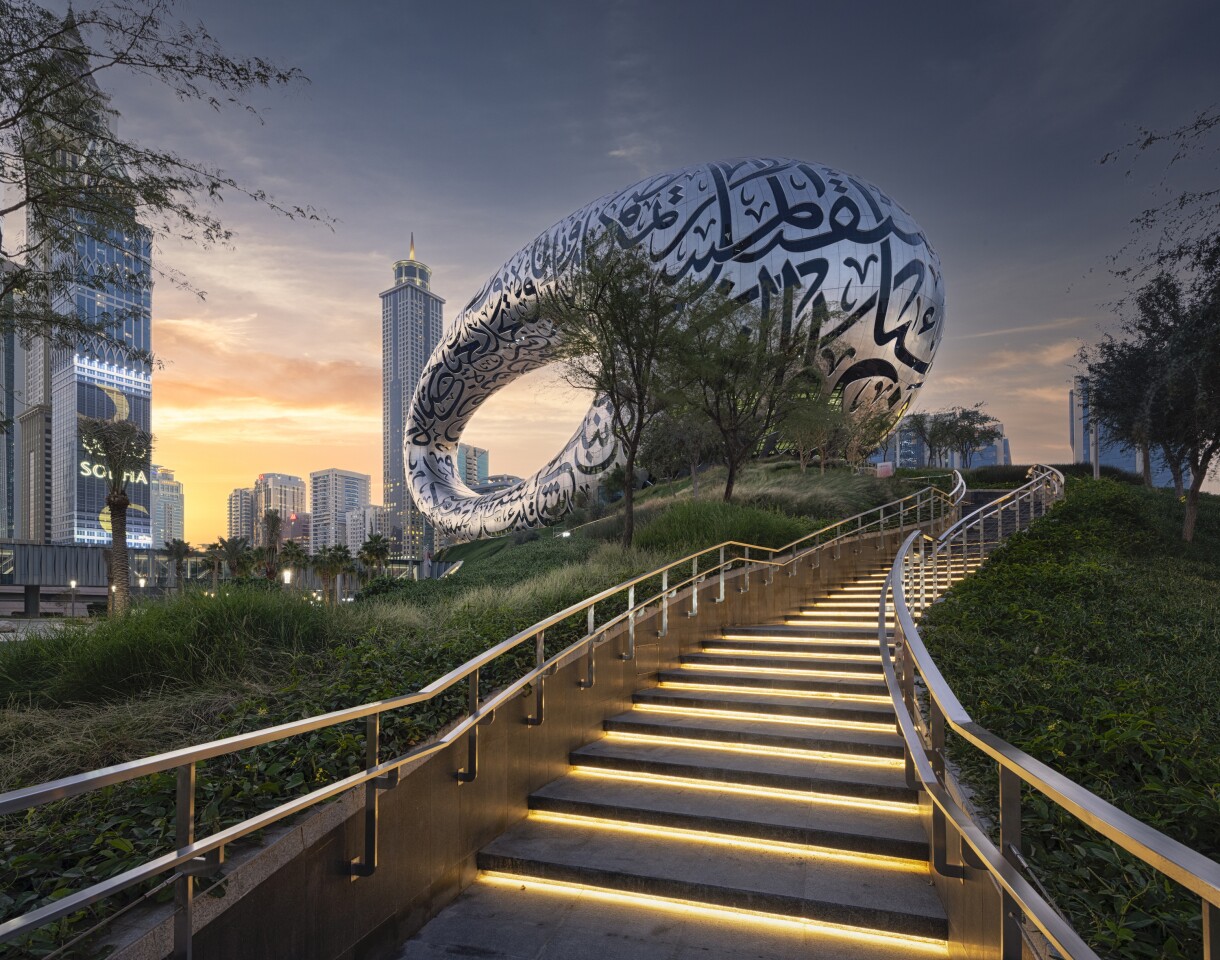
Dubai’s Museum of the Future, included here for its bold design, was created by Kira Design in collaboration with engineer Bro Happold. The building has the overall shape of a large silver eye and boasts an intricate façade covered in Arabic calligraphy.
It sits on a podium envisioned as a green hillside consisting of about 100 varieties of drought-tolerant local trees and plants. The museum building soars up to 252 feet (77 meters), and its stainless steel and glass exterior is adorned with inspiring quotes from the UAE’s prime minister and Dubai’s ruler.
Ascent – Korb + Associates Architects
Cobh + Associates Architects/Nairn Ochler
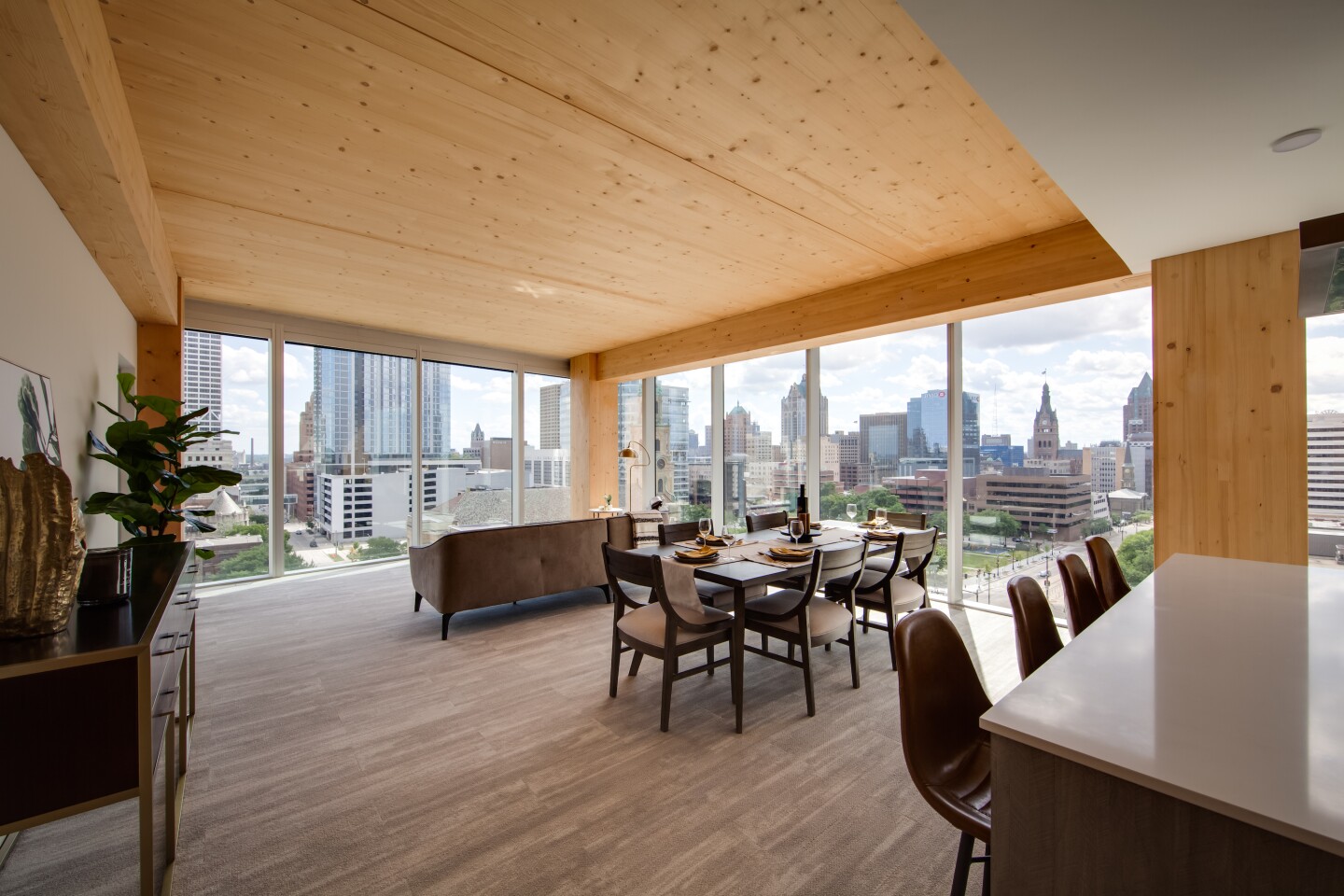
Cove + Associates Architects’ Ascent in Milwaukee, Wisconsin, is the world’s tallest wooden skyscraper at 284 feet (86.6 meters).
It has 25 floors, with retail and amenity spaces on the lower floors and 259 apartments on the upper floors. Structurally, it rests on a five-story concrete parking lot and concrete-filled steel pipe piles, as well as his two concrete cores that house the elevator shaft and colonnade. The tower body is primarily composed of glue-laminated timber (laminated wood) beams and columns supporting the CLT floor.
Grand World Phu Quoc Welcome Center – VTN Architects

Hiroyuki Oki
VTN Architects proves its mastery with bamboo at the Grand World Phu Quoc Welcome Center in Vietnam. The astonishing building amazes visitors with its intricate structure made from over 42,000 individual pieces of bamboo.
Reaching 14.8 meters (48.5 feet) in height, it consists of a concrete base and a thatched roof, with skylights to maximize the natural light inside. The main structure is formed of many layers of modular sections of bamboo that are painstakingly joined using ropes and pins.
