











Here’s a quick look at the new ProArt StudioBook 3D OLED laptop that brings glasses-free 3D to a portable machine.
quick link
- ASUS ProArt StudioBook 3D OLED introduces spatial vision
- 3D without glasses is an exciting concept.
It’s amazing how much technology CES brings. Many manufacturers are taking it as an opportunity to introduce hardware updates, while some are introducing new directions they’ve pioneered with their products.
At CES 2023, ASUS will fall into this second bucket, both innovating and iterating. Here’s a quick look at the new ProArt StudioBook 3D OLED laptop that brings glasses-free 3D to a portable machine.
ASUS ProArt StudioBook 3D OLED introduces spatial vision
Before we dive further into this topic, glasses-free 3D is not a new concept and we’ve seen other manufacturers try it.In fact, ASUS partner Dimenco has worked with Acer before. and helped create the Spatial Labs experience for Acer. But to do this with an OLED display, the ProArt StudioBook has an element of its own: ASUS calls the technology Spatial Vision.
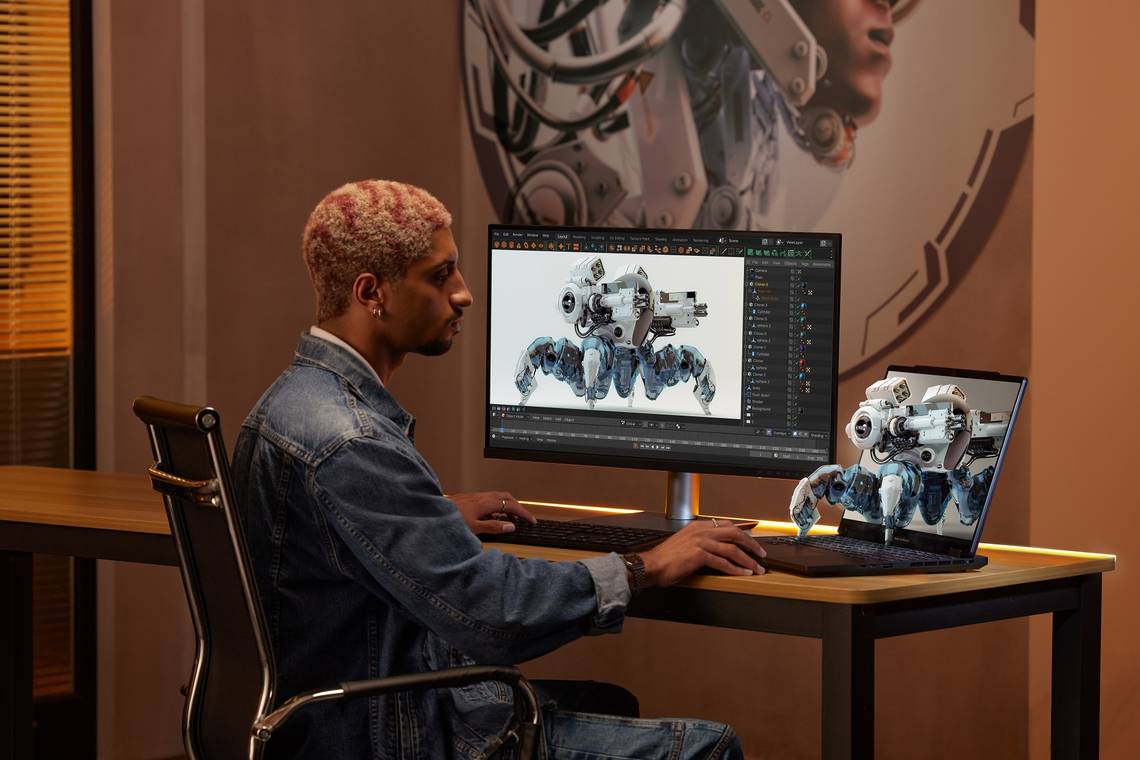
Spatial Vision uses lenticular lenses and eye tracking cameras. They work together to allow the display to generate separate images for each eye in real time. This will give you a 3D image of him in autostereoscopic view. Additionally, the display offers a 1,000,000:1 contrast ratio, a 0.2 ms response time, and a 120 Hz refresh rate.
If you choose 3D visuals that don’t suit you, you can switch to 2D only mode.
ASUS believes this technology demonstrates the immense potential of the rapidly growing Metaverse. In the meantime, however, to get the most out of this hardware, you can use the applications available on ASUS Spatial Vision Hub that allow you to view and play content in 3D.
High-end devices often showcase unique hardware, and it’s no different here. The ASUS ProArt StudioBook 16 3D OLED is a premium laptop with the latest Intel 13th Gen HX processor, Nvidia’s RTX 40 series graphics card, support for up to 64GB of RAM, and 8TB of PCIe 4.0 storage.
3D without glasses is an exciting concept.

I can’t speak for ASUS’ statements about the Metaverse, but as a mechanical engineering graduate, I believe the ability to visualize models in 3D space is valuable.
Additionally, ASUS’ decision to make this feature available on cheaper devices within their lineup is another positive we see as increased market penetration will only help further iterations and developments. 3D without glasses is an exciting concept for laptops, and we hope to see more features in the near future.
