











Sustainability in aviation is vital for the environment and, of course, for planes to stay in the air. Today, at least on long-haul flights, batteries are too heavy to achieve this. As such, companies like Airbus have been exploring the potential of hydrogen-powered aircraft for some time.
And while this mode of transport is more energy efficient than batteries, fuel storage remains a challenge.a New ultralight graphite tank It could be a game changer.
This article describes:

New ultralight tank for hydrogen aircraft
The new hydrogen-based mobility challenge requires the involvement of many stakeholders, from the traditional aviation industry to innovative companies. unusual solutionFor hydrogen aircraft, Airbus has signed a deal with a US company that specializes in manufacturing hydrogen fuel cell and manufacturers of ultralight cryogenic tanks that could quadruple the range of these aircraft.
The goal is to combine an ultralight hydrogen fuel cell with a tank. Same efficiency in terms of weight; because hydrogen here is a matter of weight. Typically, 9-10 kilograms of storage material are required for each kilogram of hydrogen. In other words, Ten% efficiency.
The new ultralight graphite tank developed by this collaboration is 2.4 meters long, 1.2 meters in diameter and weighs 67 kilograms. However, it can store up to 150 kilograms of hydrogen. So the efficiency of the new hydrogen aircraft is about 70%.
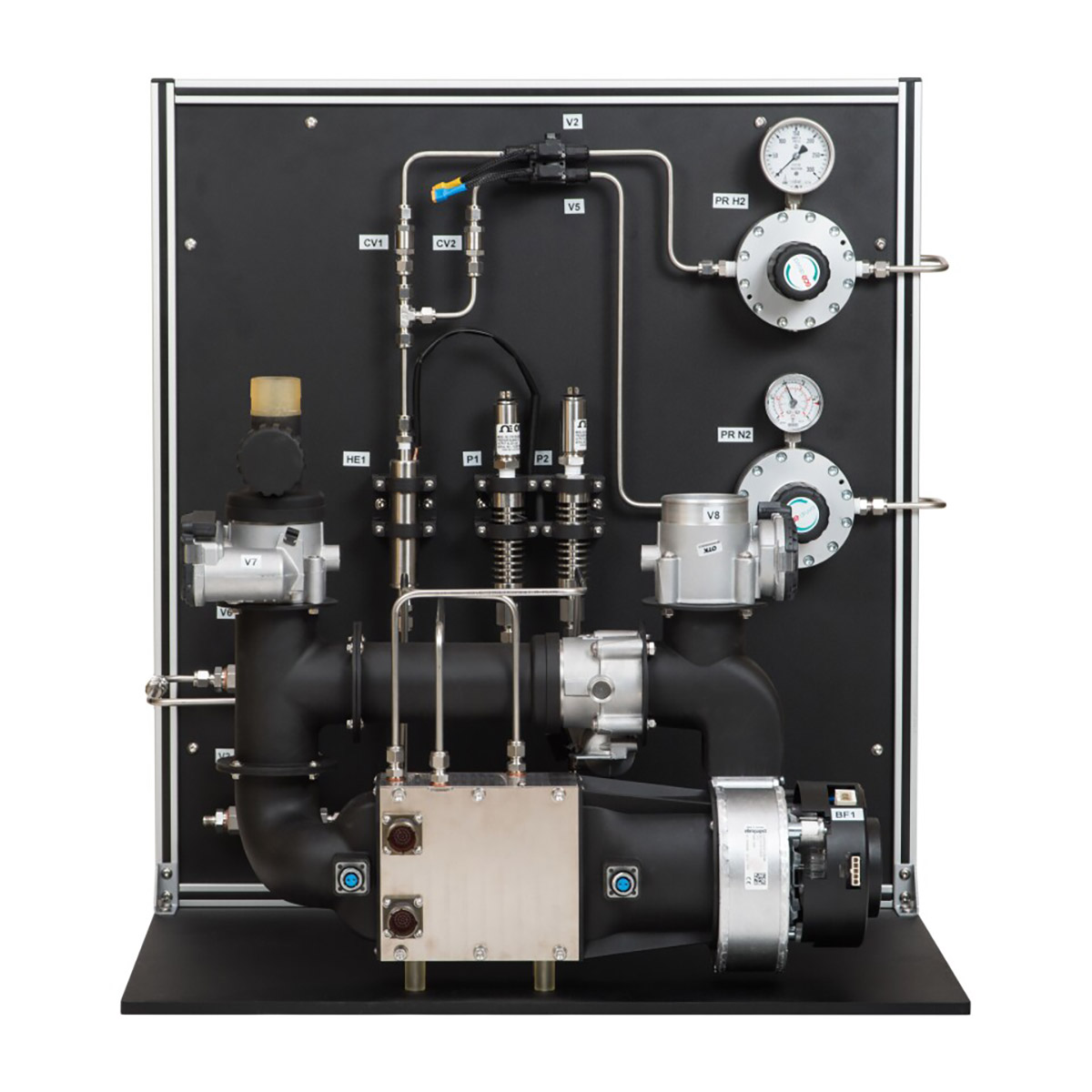
The developer states that an aircraft like the De Havilland Canada Dash 8 Q300 carrying about 60 passengers has a range of 1558 km. Equipped with tanks and hydrogen fuel cells, it can fly up to 4488km without refueling. And all of this with zero greenhouse gas emissions.
Moreover, if the plane uses green hydrogen derived from renewable energy, we are talking about the birth of green aviation.
Flying car powered by hydrogen
But the technology used in hydrogen aircraft has applications beyond traditional aviation. If there is one recurring theme in recent years, it is that of urban air mobility.
The repeated term in this field is eVTOL or electric vehicles with horizontal take-off and landingIn short, flying cars that promise to revolutionize metropolitan mobility. As with ground locomotion, batteries may not be the only alternative.
The same company that is working with Airbus to develop new hydrogen aircraft has just opened a hydrogen fuel cell factory for flying cars in the UK and is working with an Israeli start-up to equip taxi drones with hydrogen technology. I made a contract to
Under the name CityHawk, the Israeli company’s air taxi Two oversized rotors integrated into the chassis Only visible at a 90 degree angle. This new arrangement aims to offer a more efficient alternative to urban air mobility. Combined with technologies such as big data, these solutions can help drive more sustainable and less congested cities.
Other sustainable aviation fuels
Unlike hydrogen, which still requires advances in fuel cells and storage systems, some fuels work in today’s engines with little modification.We’re talking about technology that can convert methane from landfills into greener fuels A mixture of 30% kerosene.
A new fuel developed by National Renewable Energy Laboratory, It is expected to be tested in aircraft by 2023. 165% reduction in net greenhouse gas emissionsThis is equivalent to removing methane from landfills and reducing kerosene used in aircraft.
Of course, alternative fuels are not the only shortcut to sustainable aviation. In addition to hydrogen or biofuel-fueled aircraft, innovative designs like this V-shaped aircraft can reduce emissions by 20%.
sauce
