











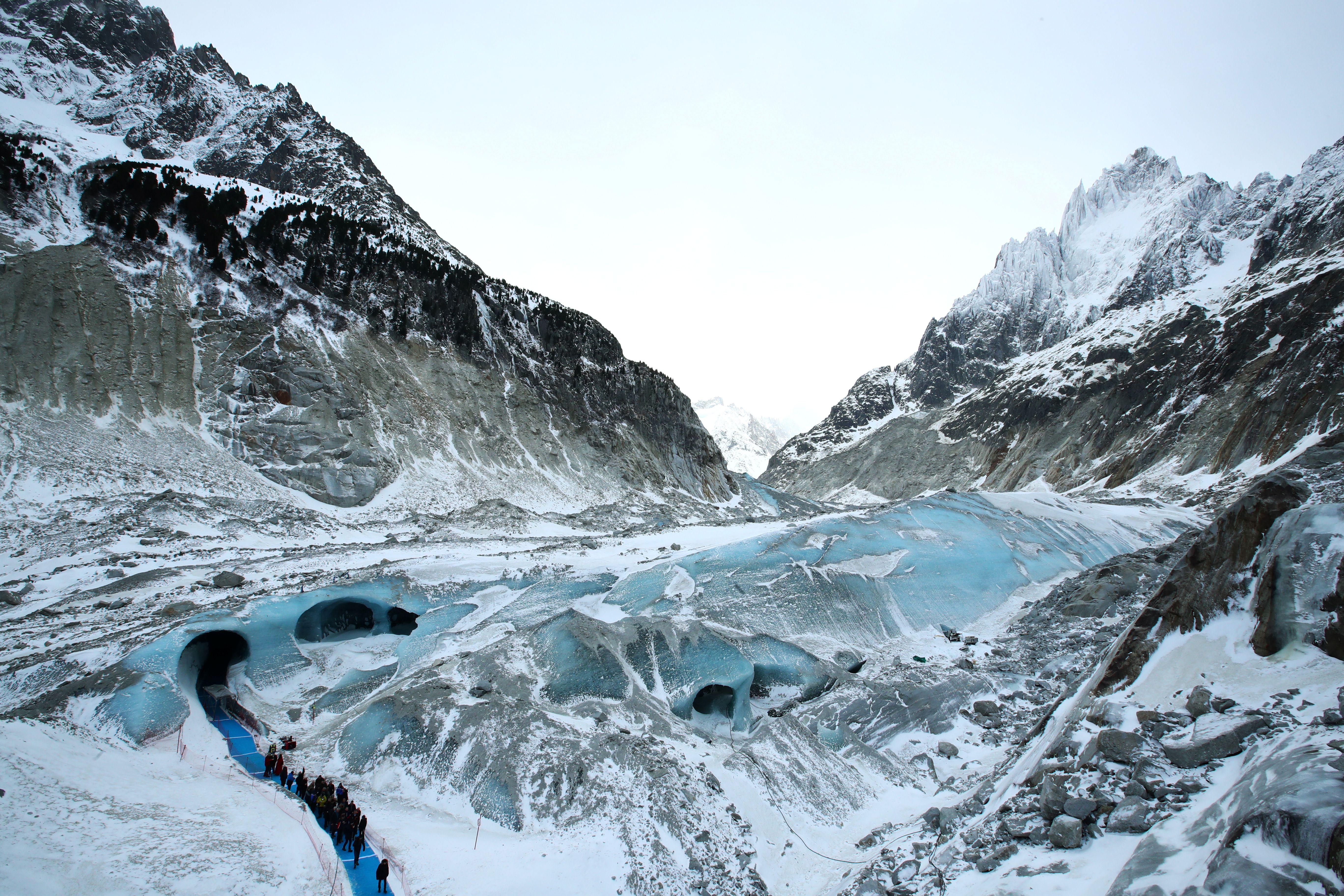
Nearly half of the world’s mountain glaciers are expected to disappear by the end of this century, even if the world achieves its most ambitious climate targets.
A new study finds that 1.5 degrees Celsius of global warming will cause about 104,000 glaciers to disappear, raising global sea levels by about 3.5 inches in the process.
And that’s the best case scenario.
Keeping global temperature within 1.5°C of pre-industrial levels is the most aggressive goal under the Paris Agreement. But that threshold is fast approaching, and the world may cross it in her decade or so. Climate change pledges currently in place will result in global warming of more than 2°C.
It can be devastating for mountain glaciers.New study published Thursday in the journal chemistrywe can see that the ice melts a little more every fraction of a degree.
If temperatures reach 1.5 degrees Celsius, half of the world’s mountain glaciers will be lost. This includes many small glaciers that contain about a quarter of the Earth’s mountain ice.
Nearly 60% of all glaciers will disappear at 2 degrees Celsius. At 3 degrees Celsius, more than 70% of them will disappear and sea levels will rise nearly 5 inches.
It’s a dire warning about the volatile future of the frozen part of the world. But it’s also a cautious message of hope. Any future warming the world can prevent can save ice.
A new study looks at every glacier on Earth except the Greenland and Antarctic ice sheets. This primarily includes mountain ice spread across Alaska and Canada, the European Alps, Alpine Asia, South America and New Zealand.
The study incorporates many of the latest advances in glacier modeling and allows us to make the most accurate estimates to date of how the world’s ice will respond to future warming. It explains complex factors such as how the ocean accelerates the melting of coastal glaciers.
These frozen places are smaller than the vast Greenland and Antarctic ice sheets and get less attention. Yet they are of great cultural, ecological, economic and hydrological importance.
Mountain glaciers are often important sources of fresh water for downstream communities. It attracts tourists and winter sports enthusiasts. Some are of great cultural or religious significance to indigenous communities.
Melting glaciers are also a major contributor to sea level rise, affecting islands and coastal areas around the world. Scientists estimate that glaciers outside of Greenland and Antarctica are currently responsible for about 21% of global sea level rise.
A new study finds that some parts of the world are more sensitive than others. Especially mountainous regions with small glaciers in subtropical regions of the world.
Studies show that a 3°C increase in temperature will result in the loss of nearly all glaciers in much of the ice-covered regions of Europe, northern Asia, New Zealand, western Canada and the United States. Even at 2 degrees Celsius, much of the ice in these places is gone.
Still, the study highlights that preventing future warming as much as possible makes a big difference.
In comments to the new study published Thursday, chemistryscientists Guðfinna Aðalgeirsdóttir and Timothy James say the study achieves both a grim warning and an optimistic message at the same time.
“Although it is too late to avoid the loss of many glaciers, efforts to limit the rise in global average temperatures will have a direct impact on reducing the number of glaciers lost,” they wrote.
These findings “could provide important motivational messages needed in this critical decade for climate change action,” they added.
Reprinted from E&E News with permission of POLITICO, LLC. Copyright 2023. E&E News provides essential news for energy and environmental professionals.
