











Although more and more wearable and wireless devices are becoming available, the ritual of plugging them into a mains power source to charge them remains an obstacle. Smartwatches, activity trackers and mobile phones require power every day. Much of the problem lies in the reliance on lithium batteries, the same Achilles heel as electric vehicles. The development of triboelectric nanogenerators (known as TENG) can cover the power requirements of some sensors based on kinetic electricity. Still, their contribution is too small when it comes to powering the latest generation of wearables.
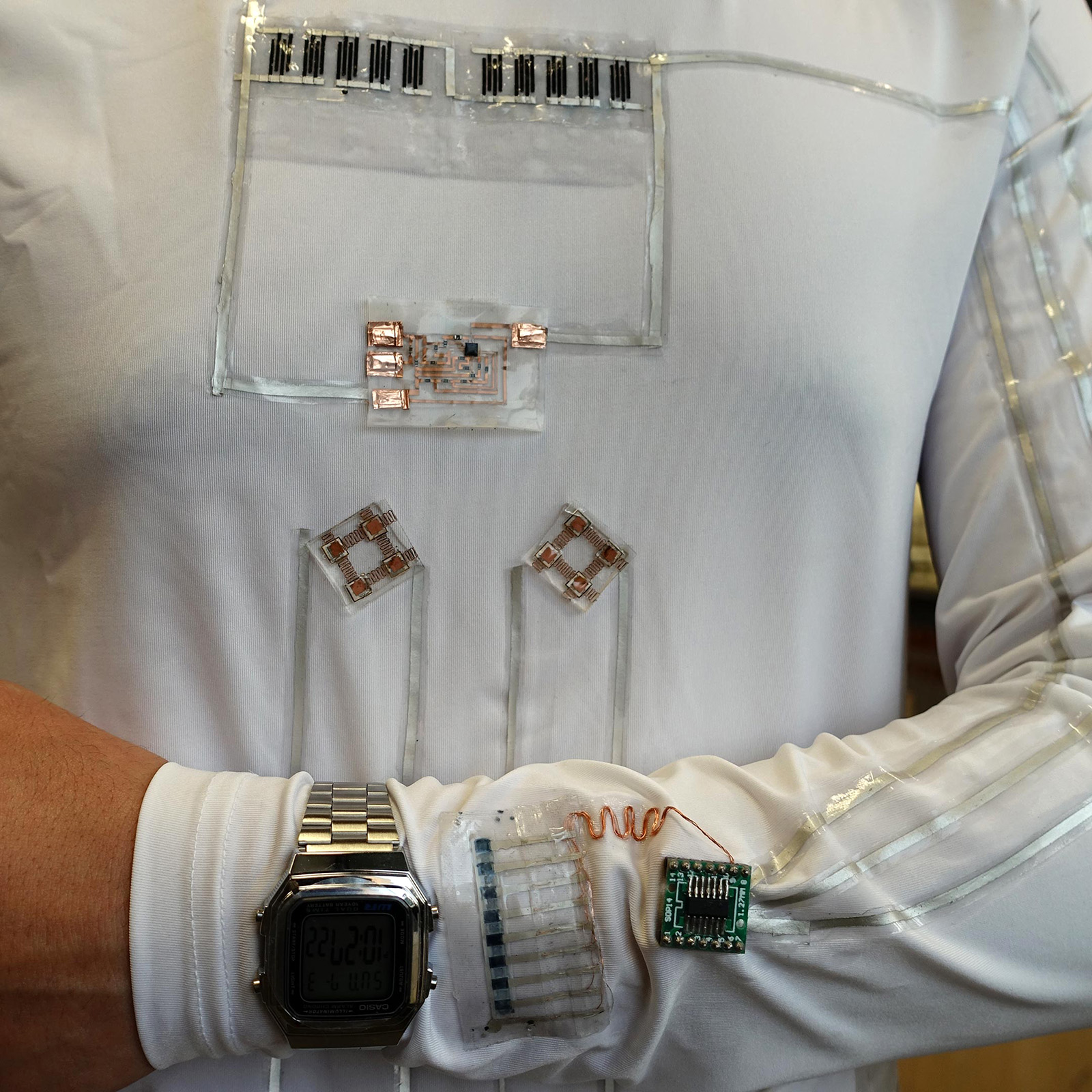
Researchers at the University of California, San Diego Jacobs School of Engineering believe that one solution could be to integrate different energy sources into one garment. After all, when we turn on our TVs and microwaves at home, we use a so-called energy mix that uses power from hydroelectric plants, solar panels, or wind turbines indiscriminately. Therefore, the US team applied the concept of ‘wearable microgrids’.—A shirt that can generate and store electricity in various ways. This garment combines two well-known energy sources.
Triboelectricity and biofuel
Imagine an athlete starting physical activity. First, we transmit the movement to the clothes. After that, they start sweating due to their physical exertion. The researchers’ approach is to take advantage of both sides. First, they rely on triboelectricity to harness the energy generated by movement. increase. Each of them is printed on different areas of the garment and divided into positive and negative charges. A small electrical current is generated when the arm is rubbed against the torso.
The second mechanism is based on a chemical reaction caused by sweat. Therefore, biofuel cells incorporate enzymes that stimulate electron exchange between lactic acid and oxygen molecules found in human sweat.
The first system randomly generates higher intensity discharges and the second system provides continuous low intensity currents. Here comes the third element. A supercapacitor printed on the front of the shirt. There the electricity generated by both mechanisms is stored. The supercapacitor is connected to the power supply by a silver filament with a waterproof coating.
Significant improvement in energy efficiency
In a test using this technology project, researchers have found several benefits. The first is that he starts producing electricity twice as fast as when using biofuel cells alone. Second, it triples the duration of power delivery compared to using triboelectricity alone. In this way, they found that in his 30-minute session, which included 10 minutes of exercise and 20 minutes of rest, the LCD clock could power the entire time. In addition to use in strenuous exercise routines, researchers are exploring applications in everyday clothing that can generate electricity through slow movements such as walking. Mountaineering clothing could also benefit from this new technology, as it can generate electricity in isolated areas with no access to the grid.
The inventors of this new microgrid argue that the real innovation lies not in the energy sources used, but in the integration of all of them and the use of flexible and stretchy circuit printing technology.
sauce: science daily
image: University of California San Diego Jacobs School of Engineering
