











The use of artificial intelligence in construction opens up unprecedented possibilities. From calculating structural changes in real time to determining materials with the lowest carbon footprint, AI can streamline processes and optimize building construction.One of his most exciting recent applications is the University of Michigan’s technology project, went one step further and developed a system to automatically generate new designs. The research, just published in the International Journal of Architectural Computing, promises a new tool in the hands of architects.
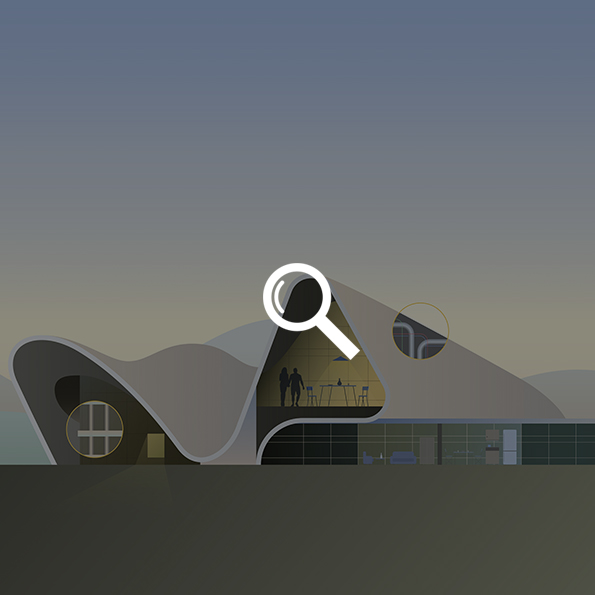
The first step in the project was the use of 2D to 2D neural networks, transforming images to adopt a particular artistic style. For example, draw to look like the work of a classical painter such as Rembrandt. The model was then applied to buildings and transformed into different architectural styles. Gothic buildings can therefore be brutal. The next step was to apply the algorithm to 3D structures. It worked with OBJ files, an exportable 3D standard, and used a convolutional neural network (known as a CNN) to learn from a database of architectural designs. Finally, the time has come to envision the new building.
The term “dreaming” is not meaningless, as algorithms such as DeepDream, a technology that emulates the human dream world, are used to generate new designs. A Robot Garden project that serves as a testing ground for bipedal robots. Researchers have revealed that while the resulting design is not currently functional, it could be a source of inspiration for architects. Moreover, these results may change the way we think about what architectural authorship is. Who knows if the buildings of the future will be designed through the collaboration of AI and the human mind.
What is parametric architecture?
While the work of University of Michigan researchers has a strong theoretical component, AI is already making a tangible contribution here and now. One of his most integrated is the so-called parametric architecture. In this case, instead of great design, it is important to change the structure and find alternatives for the distribution of space. For this purpose, so-called generative algorithms are used. The starting point is the introduction of parameters and constraints. For example, the floor plan of the building he should not exceed 120 square meters. This way, you can also include height, number of rooms, or type of material. Once the initial design is established, it is possible to change elements and all other parameters adapt on the fly. So it becomes a process like molding clay rather than a static design.
Another way to think about it is in terms of responsive websites that adapt to devices. If you view this article on mobile rather than on a desktop computer, you’ll see that the layout of the text and images has changed significantly while keeping the content intact. With a similar approach, the user can change the floor plan from rectangular to square and the software will redistribute the space accordingly. Parametric architecture makes it possible to not only change the layout of a basic floor plan, but also to adjust organic forms, such as the Guggenheim Museum in Bilbao. Artificial intelligenceBased parametric design program.
sauce: TechXplore, Obasen
