











smart city It’s a concept on everyone’s lips. For the most part, however, the transformation is gradual, with minor changes towards new concepts of urbanism. But what if it was possible to build a city from scratch without being bound by current technology? That’s the idea of a new Japanese project that sweeps and brings together the most important innovations in the field. At the foot of snow-capped Mt. Fuji, a group of his 360 residents, including inventors, senior citizens and young family members, test its capabilities. In the long term, it is expected to house approximately 2,000 residents. Dubbed Toyota Woven City, it covers 90 acres and is expected to be completed by the middle of this decade.
smart home with renewable energy
One of the pillars of this ambitious project, designed by the architectural firm BIG, is fully renewable energy such as solar power and hydrogen batteries. Therefore, houses will integrate photovoltaic panels on their roofs. Also, the building structure will be constructed from recyclable materials such as wood, reducing the carbon footprint. Speaking of buildings, they will all be equipped with the latest in home automation and artificial intelligence. It also has sensors to monitor occupants’ health and respond to basic needs like an empty refrigerator and room temperature. No matter how cozy their home may be, Toyota Woven City is envisioned as a place that promotes socialization and common areas.
New urban mobility, a key factor
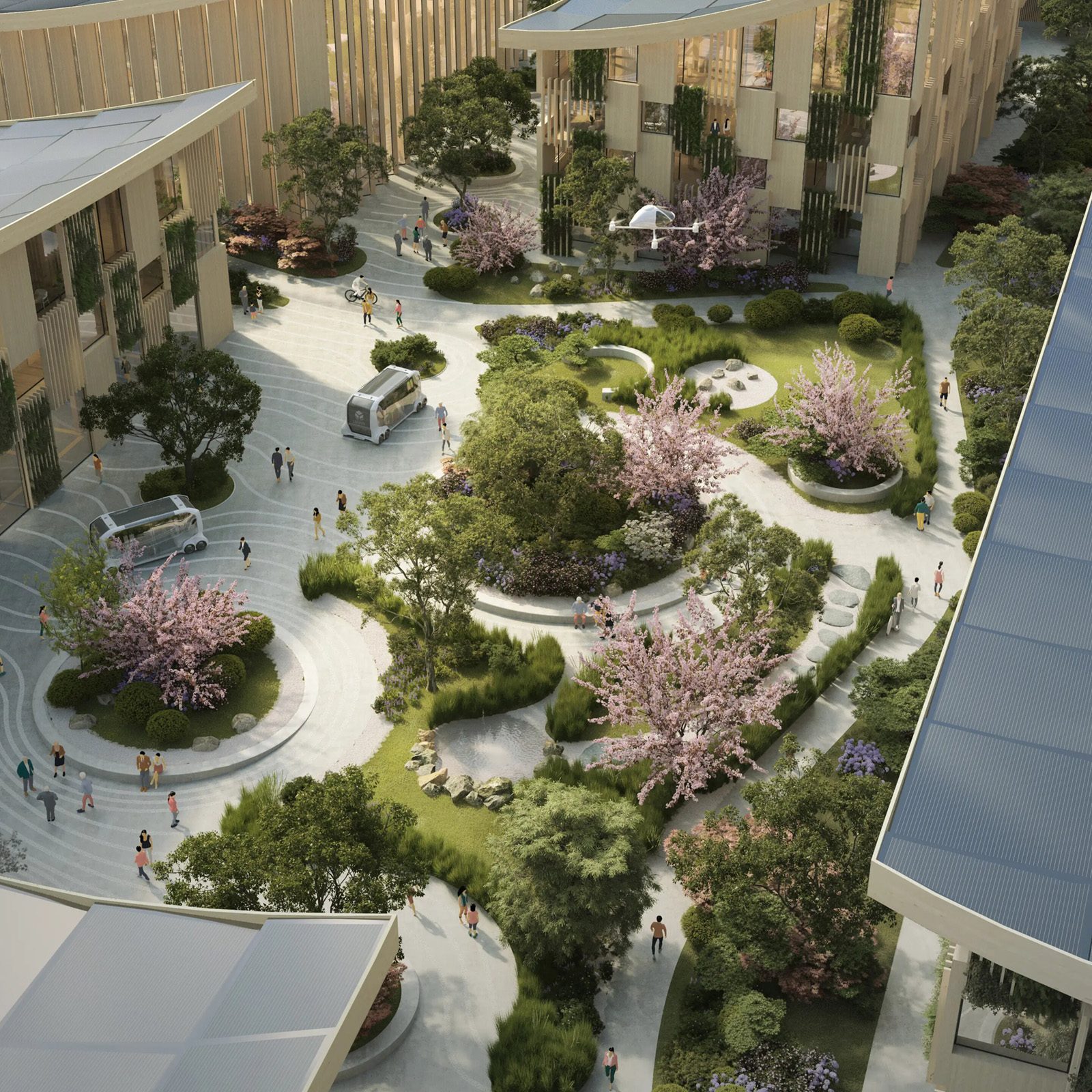
Where cities differ from simple residential developments is their approach to mobility. In this sense, future cities serve pedestrians. For this smart city, it is based on three different types of lanes. The first is a green area for pedestrians who want to move and walk around the area. Then there is another lane for residents who want to use electric mobility devices such as bicycles, scooters, or scooters. These types of vehicles are beginning to form part of the regular landscape of our cities, with initiatives such as ACCIONA, all suggesting their increasing role in personal transport. Thirdly, a kind of track will be created specifically for self-driving cars. It is used both for transport vehicles and for the delivery of goods. In this case, the e-Palette model of the microbus developed by Toyota will be used.
Another strategy is to build tunnels for transporting heavy vehicles and bulky freight to minimize traffic inconvenience. Proponents of the project describe this series of roads as an “organic network.” The ultimate goal is to eradicate urban pollution and prevent traffic jams by providing residents with a wide range of choices. Vegetation is present almost everywhere in the city, but the focus is also on large green spaces.
Toyota Woven City smart city Efforts in Japan are beginning to take shape. A new city with this profile, Fujisawa Sustainable Smart Town, designed by another Japanese firm, is also set to launch by 2022. What they all have in common is their human-centered and sustainable design, a far cry from 20th-century cities. The century when cars with asphalt and internal combustion engines appeared.
sauce: Business Insider, Toyota Woven City
