











As you cross the pedestrian crossing, an ambulance approaches at full speed. Unfortunately I’m deaf so I can’t hear the sirens. Luckily, the smartwatch vibrates to alert you that an “ambulance is approaching.” In a nutshell, that’s the goal of a new project at the University of Washington. By harnessing the potential of wearables, we aim to provide new tools for people with hearing impairments to manage themselves in homes and urban environments.
The app, called SoundWatch, uses machine learning to identify a large number of sounds. Its library includes police cars and ambulances, microwave bells, fire alarms, doorbells, and even chirping birds. Because, according to its developers, it’s a device meant to amplify people’s sensory experiences as well as being a practical addition to their daily tasks.
The first prototype, which the developers named HomeSound, was based on a network of tablets distributed throughout the home. On each screen, users can see what’s going on in their home, from crying children to performing taps to barking dogs. Successful preliminary tests created demand for a device that could work outdoors, leading to the development of SoundWatch.
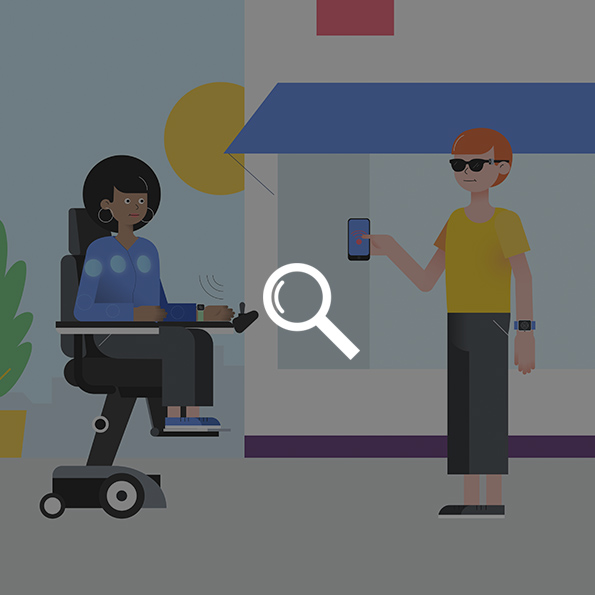
Real-time audio processing is power intensive, so I decided to pair my smartwatch with my phone via Bluetooth. This is how the phone handles computationally intensive processes. Still, the software is still in the learning stage. One area of work is the ability to distinguish between specific sounds and mere ambient noise.
We already have a beta version of the app available for download, but the app will be available for Android soon.
Meanwhile, in addition to this smartphone tech, the team uses augmented reality glasses, but is developing a system to provide similar visual warnings.
Smartphones, the new guide for the blind
As the SoundWatch app shows, smartphones are becoming essential support tools for people with physical or cognitive disabilities. If the former serves as a tool for those suffering from hearing impairments, the new generation of mobile phone technology will do the same for those suffering from visual impairments.We are talking about LiDAR sensors. This technology allows his 3D mapping of the environment with laser pulses. Besides being used for augmented reality, these sensors are starting to become allies for managing the outdoors where there is no vision. This feature is already available in some of the latest generation mobile phones and can determine the distance of people, objects and vehicles with great accuracy. For reference, a phone with LiDAR can act as a meter to measure a room with an error of just a few centimeters. However, they are not as attractive as Labradors.
In short, the field of wearables is opening up in a number of areas smart accessibility An alternative for all types of people. To learn more about other applications of this technology in the health sector, check out this article on smart clothing.
sauce: TechExplore
