











Seeking survival, nature has devised thousands of ways to optimize the reproduction of species. For mammals and insects, species usually go in search of a mate, but plants have more restrictions. Normally, the plant kingdom relies on other species, such as bees, to pollinate flowers and birds as seed messengers.However, in some cases, plants and trees choose Solutions close to aerospace engineeringThis is the case for the maple seed structure that has triggered new technological breakthroughs based on biomimetics.
Drones inspired by the ‘helicopter’ species
Light maple seeds that fall from trees in a rolling motion are sometimes described as one of nature’s helicopters. That’s what his three scientists at the City University of Hong Kong looked into when they thought about how to increase the flight range of lightweight drones.Specifically, the weight of the device less than 100 grams.
The new drone approach omits the helicopter-based central rotor and replaces it with Attach two rotors to the tips of the bladesThese blades have the same design as maple seed pods and offer great stability with very low energy consumption.
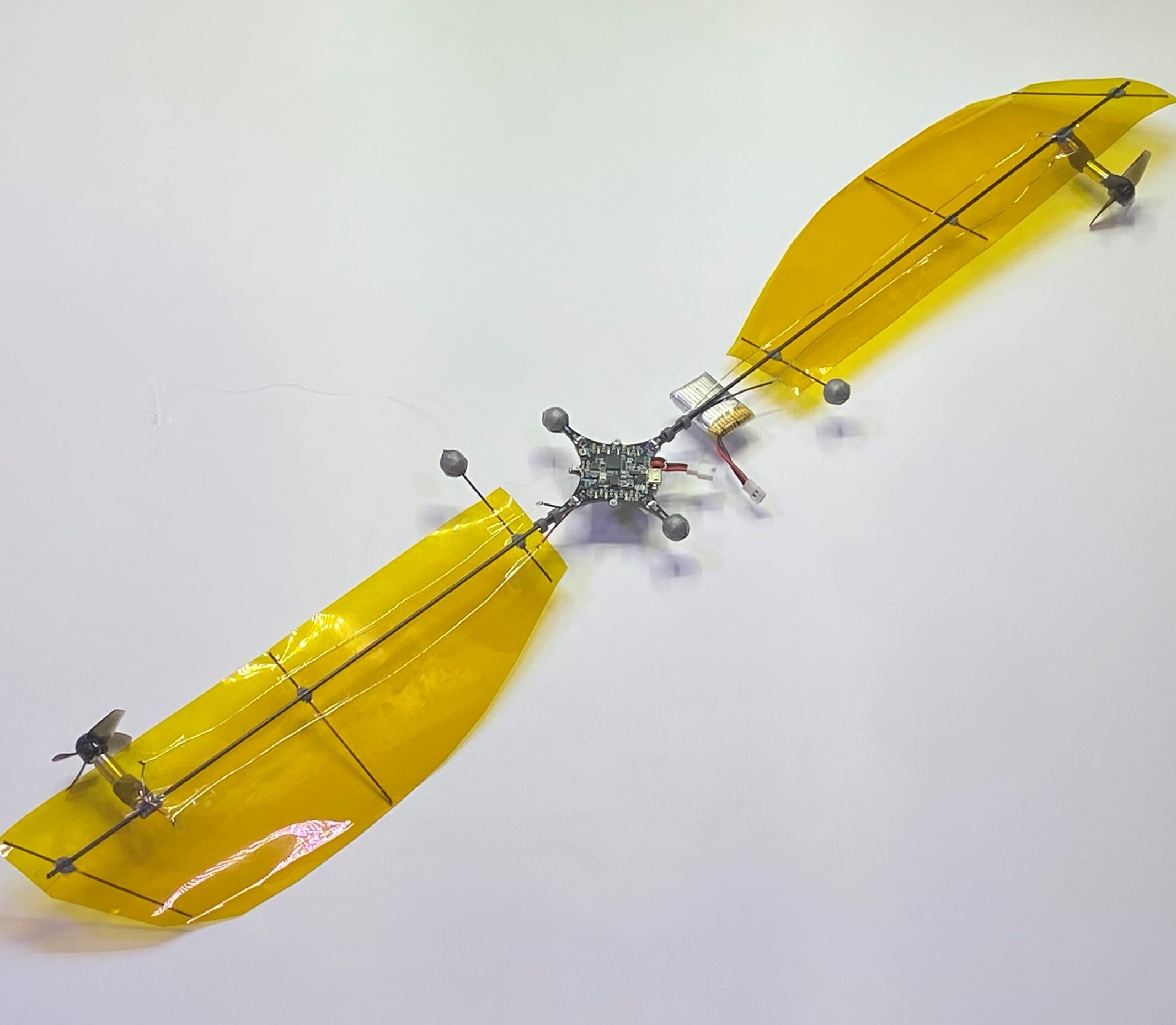
prototype It weighs 35 grams and the blade spins at 200 rpm., keeps the device in the air for 24 minutes thanks to a small battery. Flight direction can be controlled simply by changing the speed of each rotor.
The model they developed can carry a small payload of just over 20 grams and has been tested with small cameras. Spatial mapping or monitoringA paper on this innovative device was published in Science Robotics.
Amazing Aerodynamics of Maple Seeds
Maple tree seeds are covered with V-shaped pods as they grow. At first it is still green, but the seeds fall like stones from the tree. However, it loses moisture and weight when dried. After reaching the optimum maturity point, the seeds are ready to fly to other latitudes.Maple seeds are traveled up to 4 kilometersHow are you doing?

The secret lies in the structure of the “blade”. A wind tunnel study published in the journal Science revealed that maple seed blades produce lift, the same force that propels an airplane wing. Therefore, when dropped, the thin maple seed blades create a small vortex that stays in the air longer.In addition to the Hong Kong scientist’s drone, there are other flying, biomimetic-based ones, Systems such as this Airbus aircraft.
A biomimetic company?
At a time when sustainability is an integral value for any business project, it’s no surprise to see new numbers emerge. Director biomimicry. If biomimicry enables the implementation of sustainable solutions in industrial design, why not bring this perspective into all your company’s processes?
This is why Jamie Miller has been appointed director of biomimetics for a Canadian architectural firm.Miller we studied with Biologist and biomimetics pioneer Jeanine Benyushas already integrated biomimetic solutions into his company’s projects.
Specifically, we are already applying biomimetic solutions to homes in places like Ontario and Gabon. For example, they designed a house in India. A cooling solution based on elephant skins and termite mounds, and a garden that emulates forest ecosystem.
Miller also talks about how spider webs and mangroves can provide inspiration for creating energy efficient structures. Therefore, spiders can create highly resistant materials with little energy consumption, unlike conventional materials such as concrete. In fact, this expert believes biomimetics could become one of the greatest weapons in the fight against climate change.
If you want to learn about biomimetic architecture See this article for a project that integrates this approach.
sauce:
