











In the previously mentioned Innovation-Hub Passive cooling solutions for buildingsThese technologies improve power efficiency and contribute to more sustainable architectures. Given the projected global warming over the next few years, scientists and engineers logically want to: Alternative to traditional air conditioning unitsEnergy saving is now possible with efficient building materials. These alternatives include the use of reflective paint and green coverings, or even ancient Egyptian pigments. Could a special material with these properties be developed to make life easier for builders? That was the starting point for scientists at the time. University of MarylandAfter all, it was not in vain that mid-infrared reflective coatings had already been developed that would send radiation back into space.and they came to develop new type of tree.
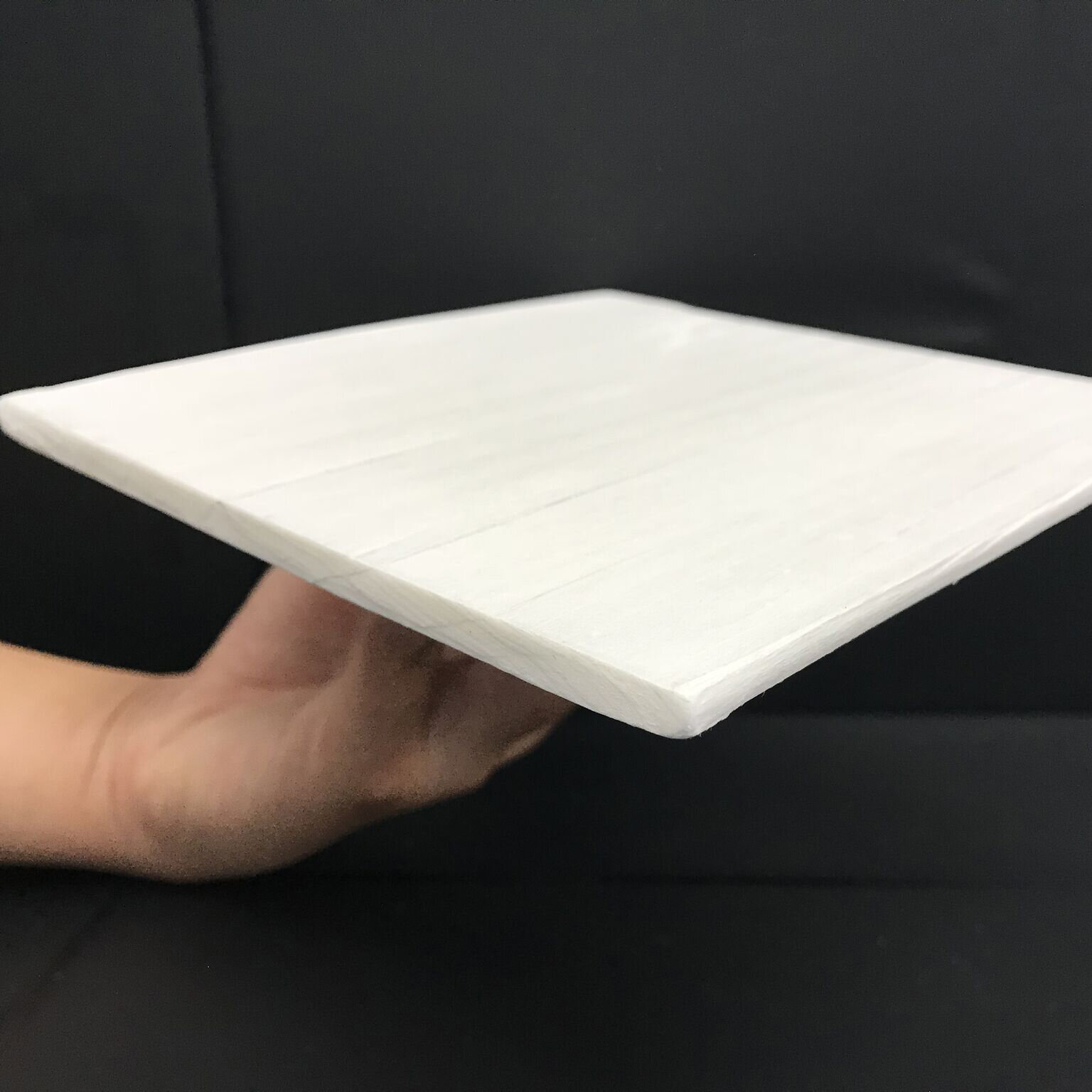
when the material is emitted short wave infrared, the surrounding air is warmed. That is, no heat is dissipated.So the first step is to get rid of it lignin, a powerful infrared emitter. To accomplish that, they soaked lime trees in a hydrogen peroxide solution that breaks down lignin molecules. The next step in the process was cleaning the wood and pressing it with a hot press. Compact the remaining cellulose and hemicelluloseNot only is it made of highly reflective material, it is eight times harder than traditional wood. Also, when the lignin is removed, the wood turns white and scatters sunlight. absorb heat It emits as mid-infrared.
The result of the research is a treated wood that can reduce the surface temperature by up to 10°C and, thanks to its properties, is an efficient building material. Reduced energy consumption of the building. According to researchers, power savings can reach up to 60%. However, since the material is flammable and wood is not commonly used as a roofing material, there are still some obstacles to overcome. can be used for
Lignin-based bio-asphalt
Lignin is typically a by-product of papermaking and has traditionally been discarded as waste. However, researchers are already looking at this biopolymer as a promising material with many applications.One of the latest is that Use on asphalt, a mixture that has already been experimented with including textile fibers from used tires.development of Bio-asphalt containing lignin An initiative carried out by Wageningen Food & Biobased Research in the Netherlands. The center carried out his first test four years ago, in which he paved 100 meters of road with an asphalt mixture with 50% lignin. After 4 years, the results look promising as even traffic noise has decreased slightly. But researchers warn that the wait to establish the material’s durability is not over yet, as roads have a useful life of he 10 to 15 years. But they are cautiously optimistic, and in a few years he believes 100% lignin asphalt will be on the market, reducing the amount of petroleum-based asphalt.
sauce: Science Direct, WUR
