











Environmental problems such as deforestation and trash dumped in the countryside are painfully prominent. However, the deterioration of the seafloor ecosystem goes unnoticed by anyone other than researchers. Degradation of Posidonia wilderness and bleaching of coral reefs are just a few examples. In fact, a shopping bag was discovered recently. Bottom of the Marianne Trench, the deepest sea floor in the world.Therefore, under development technology To monitor ocean health is very important.a few months ago robot fishthis time explore that possibility. new autonomous technology: robot jellyfish.
Researchers at Florida Atlantic University (FAU) are flexible and versatile technical equipment It can penetrate narrow openings in the seafloor. When they thought of inspirational sea creatures, they immediately thought of jellyfish. First, because of soft tissue, and second, because of natural neutral buoyancy. Addressing these characteristics, the FAU scientist developed five devices with varying degrees of softness, aiming to create a robot better suited for seafloor exploration.
As a starting point they 3D printed designEach model incorporates eight tentacles inspired by moon jellyfish. Each tentacle has a channel that connects to the center of the robot and utilizes hydraulic propulsion, with four on each side of the machine. In this way robot jellyfish It can be steered and moved sideways using just four tentacles. The robot can also rotate and go up and down. The design is completed by a central processing unit that includes a battery and chipset.
Thanks to the silicone used to manufacture them, these biomimetic robot You can explore every corner of the reef and establish its health.
My next goal is to add a range sonar based sensor This allows the device to calculate the space around it.
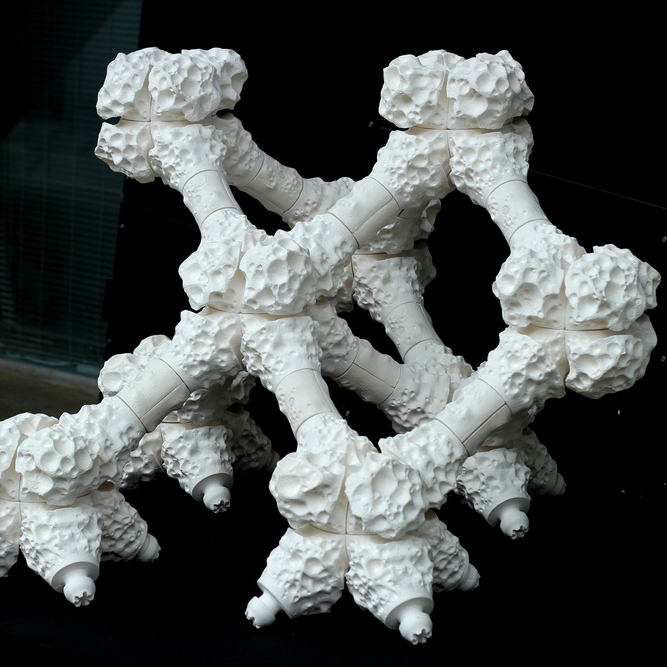
3D printed coral reef
Conservation of these seafloor ecosystems is an undeniable progress, 3D printing technology Not worthy of praise.This is the strategy adopted by leaf design labis a company that specializes in creating ceramic coral reefs by additive 3D printing, with models placed in remote locations such as the Caribbean and the Maldives.the team behind this innovative technology projects Submerge structures with attached living coral debris to achieve full colonization over time. In the long run, it attracts seaweed and fish, creating new ecosystems. In fact, in addition to the abundant fauna, if you go scuba diving in the Maldives, you may come across the world’s largest man-made coral reef.
sauce: Techxplore, national geographic
