











All life on earth depends on water. As such, it is the first element to look for on other planets when searching for extraterrestrial life. Not surprisingly, nature has developed a wide range of techniques for organisms to capture water from the environment. From California redwoods, which absorb moisture through their leaves and branches, to Namibian beetles, which harvest water vapor with their exoskeletons. Examples demonstrate the material’s ability to trap atmospheric moisture. For example, redwoods can meet one-third of their water needs that way, while beetles manage to survive even in extremely dry conditions. As already explained in a previous article, Abundant steam recovery technology for human consumption. A group of scientists at the University of Texas now collecting water By creating materials with hydrophilic lubricants.
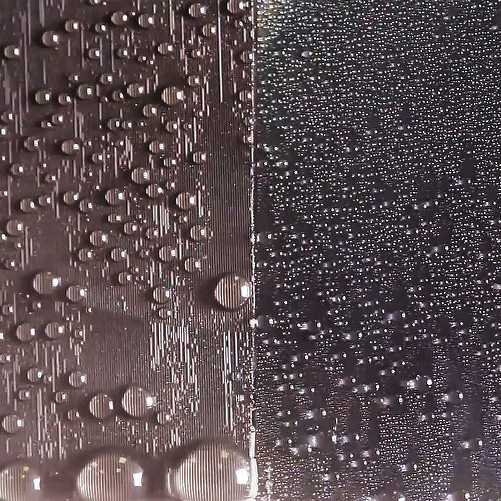
According to magazine publication Science Advance, The key lies in creating a slippery rough surface (SRS) with hydrophilic properties and the ability to direct water droplets in specific directions. These slippery rough areas are much more efficient than existing techniques based on slippery liquid-infused porous surfaces (SLIPS). But before we go any further, we need to clarify some of these initials. SLIPS technology is Innovative porous material Lubricant is injected. Thus, achieving a water-repellent and self-cleaning surface that repels not only water, but also dust specks and other contaminants. In addition to these materials, his SRS technology, inspired by Namib beetles and carnivorous plants, goes a step further by promoting the accumulation of larger droplets and then feeding them through lubricated microgrooves into a reservoir. Pour into.
So these two main properties Innovation One is the ability to attract water droplets, as some desert beetles do, and the other is the ability to provide a very slippery surface, like that provided by pitcher plants. To do so, the researchers took advantage of the properties of hydroxy functional groups, which are highly hydrophilic and a major constituent of lubricants. Additionally, the material to which the lubricant is applied features a series of nanotextures that enhance droplet mobility.
Applications of superhydrophilic and superhydrophobic materials
Researchers say the new surface can collect an estimated 120 liters per square meter each day. in addition to the ability to harvest water vaporSRS systems enjoy many other applications, such as air conditioning systems, industrial equipment, or as a surface for keeping hulls clean by preventing rust and debris build-up.
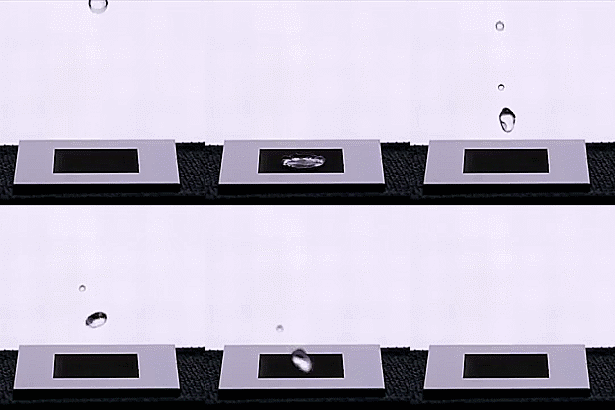
On the other hand, there are also techniques to create superhydrophobic surfaces using carbon nanotubes and laser etching.These achieve the opposite effect, repelling liquids in a very efficient manner, sometimes even causing water droplets to bounce off upon impact. new material It can fight rust, ice, and layers on solar panels, preventing water and impurities from accumulating and reducing efficiency.
One of the most impressive technologies in this field is the materials developed in . University of British Columbia (UBC) utilizes an electric current to alternate between superhydrophobic and superhydrophilic states with the flick of a switch.
sauce: Phys.org
