











Tesla is pushing the limits of shifting, Electric car Other manufacturers are also in the race to launch vehicles with a range of 500km by 2019, but the reality is that today’s lithium-ion batteries cannot compete equally with conventional internal combustion engines. The main problem stems not only from the short range, but also from the significantly longer charging time than refueling at a petrol station. But let’s imagine that our brand new electric car can charge its battery while driving. The truth is that this is no longer a figment of the imagination. This is a strategy already being tested in the first few miles of Sweden’s soon-to-be nationwide e-road network.
The Swedish government has just launched a relatively low-cost program of €1 million per kilometer that could bring an end to charging stations and annoying waiting. The first of his two miles of track, connecting Arlanda Airport and a distribution center, opened to traffic last April. The goal is to cover his 20,000km highway network across the country in the future. But how does the system actually work?
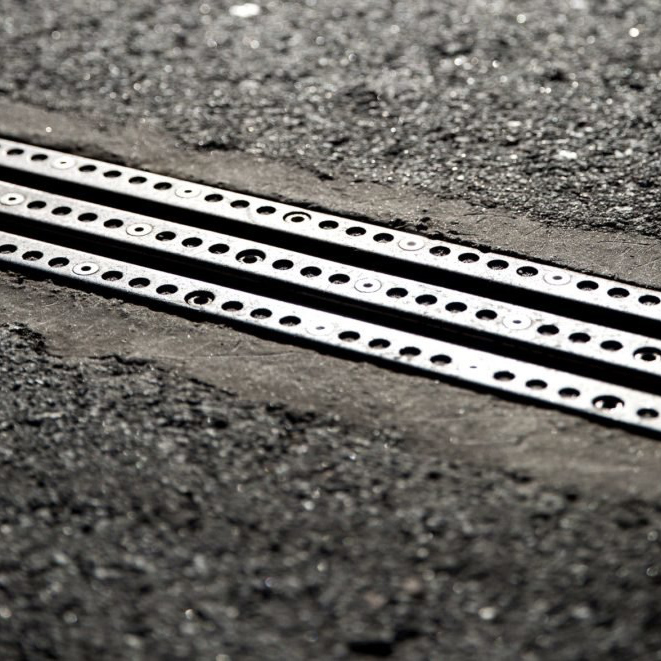
Consider a type of tram with overhead power lines laid over the road. In this case, when the arm unloaded from the vehicle contacts as a tram with electricity, it becomes a specially designed rail that transmits electricity. The system is divided into 50-meter sections and can determine whether vehicles are moving over them to supply electricity and calculate energy consumption. The system will automatically shut down if there are no vehicles using electricity. This technology is called “dynamic charging”.
The consortium behind the project, named eRoadArlanda, claims that once the highway network is fully covered, all vehicles in the country will always be within 45km of the e-road. This has important practical consequences. Electric cars will be able to run on smaller batteries, and a range of 100-200km will be more than enough to get around the country. Never worry about running out of juice in the middle of nowhere.
But don’t these surface rails come with some sort of risk? Well, the truth is they’re trapped centimeters below the surface. In fact, it works just like a wall outlet. Furthermore, tests have shown that when the road is flooded with salt water, the system only needs to emit 1W of him, finally allowing pedestrians to step on the road without danger.
The project belongs to Sweden’s ambitious plan to reduce fossil fuel consumption in transport by 70%.
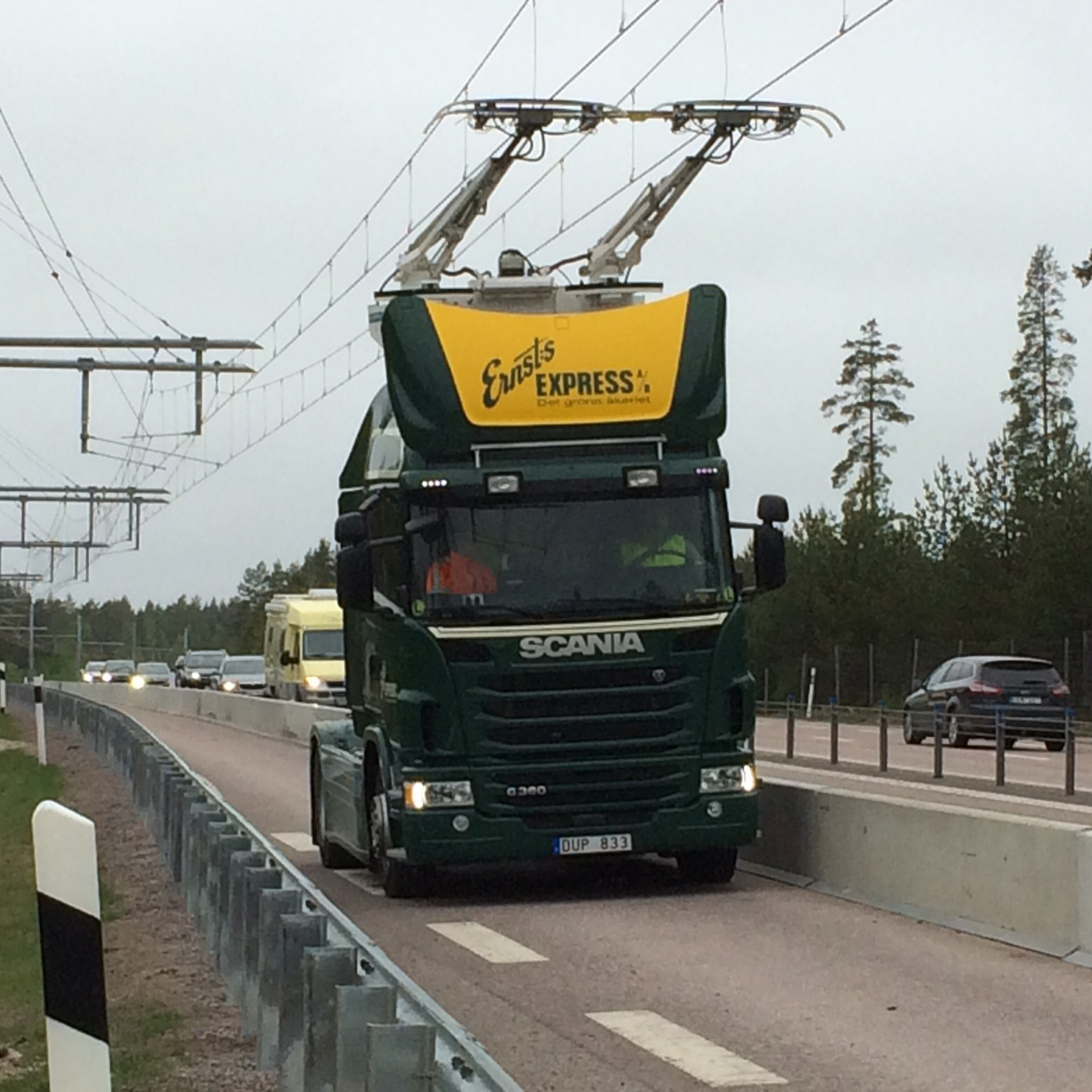
eHighway: Early Trials
Although the most efficient e-road ever tested, the new system is not the first of its kind. In fact, another approach was attempted in the same country in 2016. A system developed by Siemens after several trials in 2012. This technique utilized a more common set of aerial cables. The idea was to turn the truck into a kind of tram. The test was carried out on a 2km track, similar to the roads recently rolled out in Stockholm. Each vehicle was equipped with smart pantographs (moving arms) that drew energy from the electrical network.
The Swedish eHighway has also been tested in Germany and also in California (USA). However, in the long run, this approach is much more efficient and less flexible than rail tracks embedded in the road.
Fuente: Guardian
