










Buildings are born, grow and die just like living things.But ecological footprint Their passage through this world is far from ideal. Brick, concrete, metal, plastic… During demolition, such debris tends to end up in landfills or, in some cases, to be used as filler. These materials are construction and demolition waste (CDW). The European Union alone generates 461 million tonnes of these mixed wastes each year, and they are often difficult to deal with. recyclingTheir treatment lacks a holistic approach that considers the entire process from the moment a building is completed to the end of its useful life.
And that is the H in HISER (Holistic Innovative Solutions for Efficient Recycling or Innovative Holistic Solutions for Efficient Recycling). This is a European project in collaboration with numerous companies and research centers such as ACCIONA, Tecnalia Research & Innovation, Lafarge Center de Recherche, Leiden University and ADR Technology.
Mission?to bring about the principle of circular economy For the process of construction and demolition of buildings and infrastructure. This means maximizing the use of resources and zero waste.
“HISER intends to bring circular economy principles to the process of infrastructure construction and demolition.”
So far so good, but what exactly does HISER consist of? This circular economy project includes three main focus areas.
- One of the first issues is the harmonization of methodological solutions and tools to control the type, quality and quantity of materials used in project construction and the resulting CDW.For that reason, new Smart BIM-SD A building information modeling (Building Information Modeling) tool and material tracking system was developed to allow classification and inventory of available resources.
- Development of high-purity raw material manufacturing technologyOnce the quantity and quality of CDW are established, find a way to restore them. We aim to produce 80% to 100% pure commodities using methods of selection, grinding and selective electrolysis. These techniques are complemented by systems that analyze the quality of the raw materials obtained, a key aspect of the durability and reliability of structures. These measures are estimated to be 20% more efficient than regular recycling solutions.
- Use of new building materialsAfter producing these goods from CDW, the next step is to replace or supplement raw materials with new materials. These include carbon footprint 10% less than the current one, green concrete More than 1,300 kilograms of material added per cubic meter of new concrete, brick containing 10% recycled material, or drywall composed of 50% recycled material, including wood and wool fibres.
Proof of concept in Madrid
HISER is now a reality thanks to the first tests on the ground. Following pilot tests conducted in Finland, the Finnish National Forest Department (Metsahallitus) has contracted to build a new eco-friendly shed for storing timber. WPC (Wood and plastic composites) Integrates clean wood, painted wood and medium composites together rock wool ACCIONA made a unique demonstration in Madrid using recycled materials. It implements technical solutions based on circular economy The project principle is created using CDW’s gypsum and stone fractions.
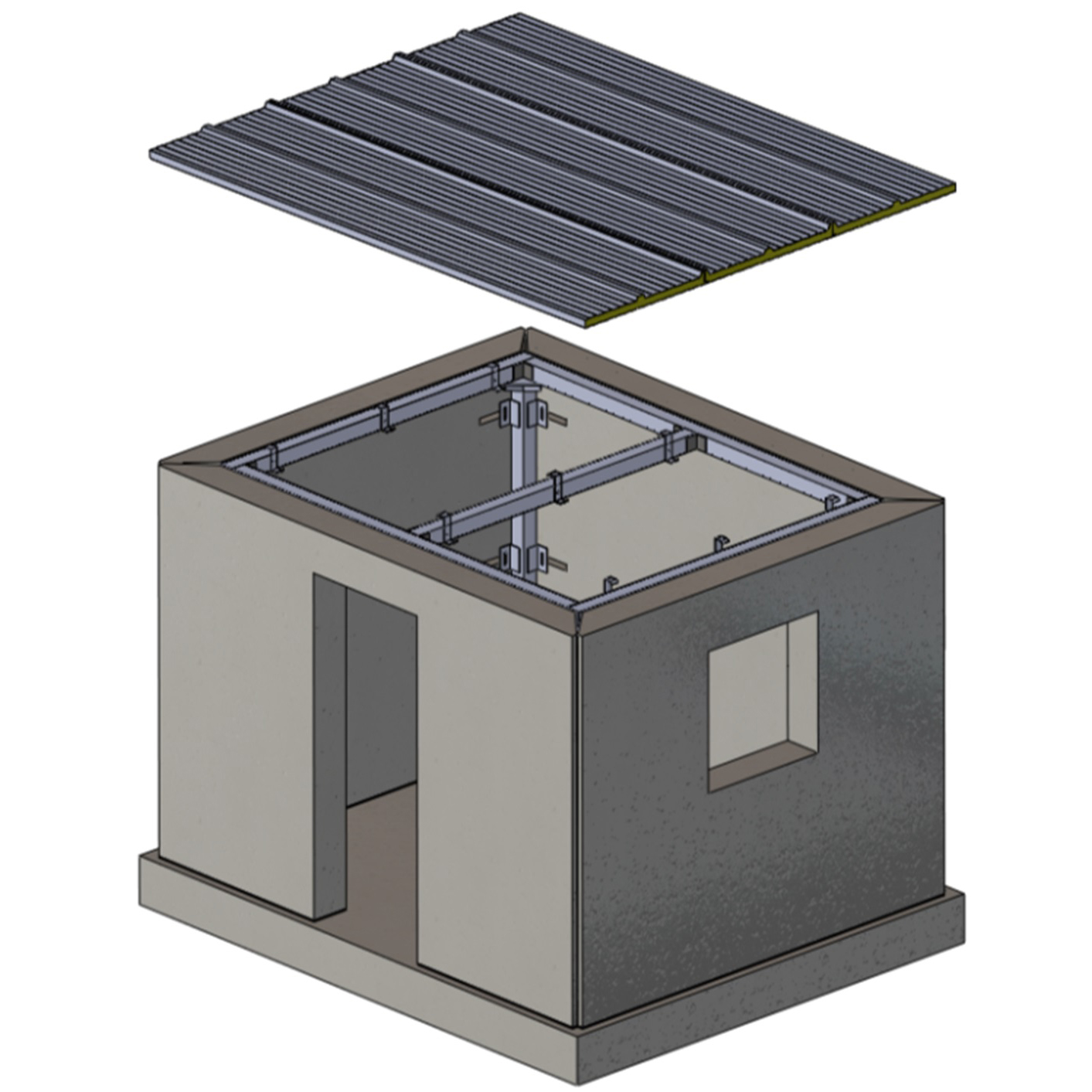
In this case, the construction of two modules is in progress.The first utilizes concrete panels recycled concrete Gypsum panel with 7.5% recycled gypsum. The second uses conventional concrete and gypsum panels as reference models. The modules constructed essentially consist of a steel structure connected to concrete slabs with prefabricated concrete panels that form the perimeter wall of the building, embedded in the steel frame and standing on concrete slabs placed on the floor. I’m here.
Physical parameters of both modules are monitored under real conditions and energy efficiency Comfort provided by the aforementioned concrete and gypsum panels. Temperature, heat flow, energy consumption and moisture will be the main ones.
The concrete composition is customized to include recycled sand and gravel from a CDW treatment plant with an automated classification system that works with sensors.
sauce: HISER project
