











Let’s run a simple test. It takes 5 seconds to list all recycle containers that come to mind. Ready? Plastic, paper, glass, organic waste, it’s not that hard. Maybe if you have a few more seconds you can come up with a few more, like an oil bank or a battery collection point. Wood. You could call it the ugly duckling of recycling. Currently, the main ways to dispose of it are mainly to use it as fuel in power plants, dump it in landfills, or in the best-case scenario turn it into plywood. , aims to change this and open up new possibilities for reclaimed wood. CaReWood (Cascading Recovered Wood) is an acronym for a series of procedures for recovering and reusing large pieces of wood, giving them his second chance.
But why are there so few wood recycling schemes? In addition to technical and cost reasons, the main obstacles lie in the veneers and chemical treatments that are commonly applied, and the widespread use of DDT in the past. Toxic substances such as PCBs and PCBs are frequently used. Debris of PVC particles or lead-based paint may also be present. European regulations require that these materials be discarded as they may pose a health hazard. In Germany, where afforestation programs are more firmly established in one of his European countries, the Fraunhofer Timber Institute WKI, together with 15 other partners from five European ) have developed a set of protocols to retrieve , crossbeam, etc. Currently, this process consists of his two stages:
- Hazardous chemical detection and stress testing. This initial stage uses advanced spectroscopy, X-ray fluorescence, chromatography, and spectroscopic techniques to assess the amount of contamination and the depth to which the contaminants have penetrated the material. Some of these methods can detect wood preservatives, while others are suitable for detecting traces of heavy metals. Following this process, scientists also check the bending resistance and mechanical stability of the wood.
- Decontamination. After the part passes the initial inspection, the cleaning process begins. Researchers at the Fraunhofer Institute have proven that pollutants rarely leave the ground a few millimeters. Therefore, another set of techniques for cleaning wood has been developed, including rotating brushes, sandblasting with various abrasives, and sawing.
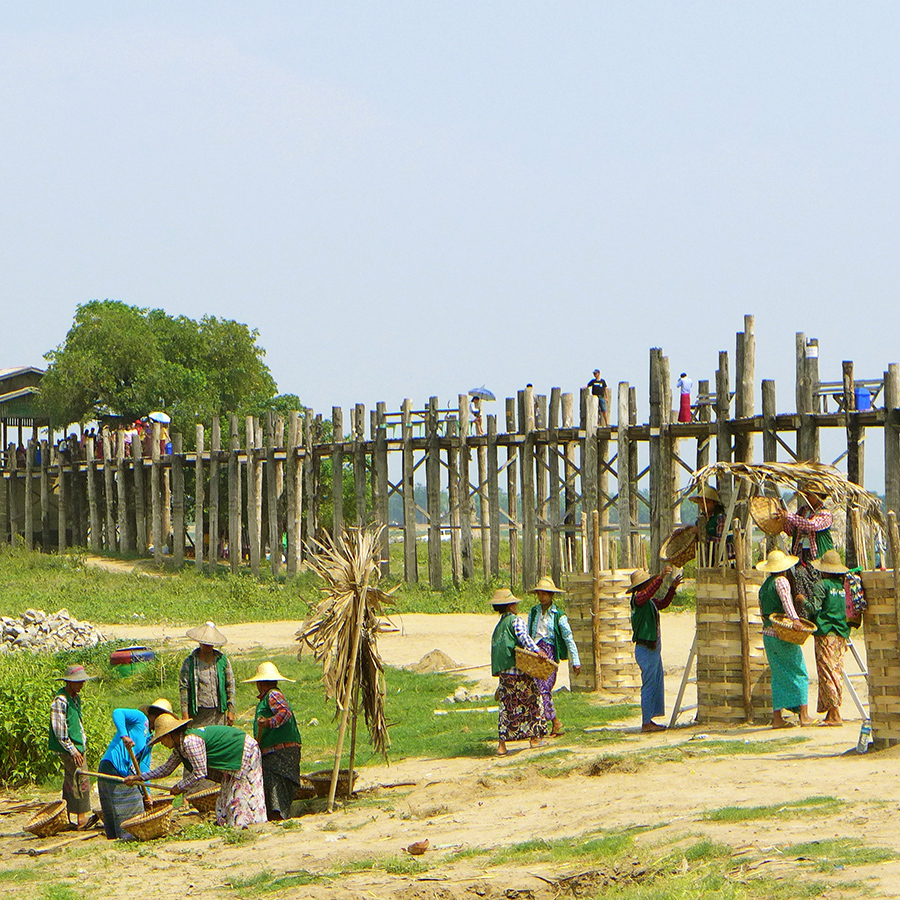
The results are so encouraging that pilot tests are already underway to help restore the world’s longest 150-year-old teak bridge in Myanmar. The stanchions, some 10 meters long, are reused as handrails and rest benches along his 1.2 kilometers of the structure.
Germany will soon pass new regulations that focus on recovering wood rather than destroying it by the end of its useful life. Hopefully these rules apply to the rest of Europe as well.
Advantages of the new wood recycling system “CaReWood”
This ambitious project has several advantages, some more prominent than others.
- Deforestation in Europe and other continents may slow down and revert as wood consumption declines.
- Burning of contaminated wood is avoided.
- Reduce waste.
- Regeneration of old wood that was a slow-growing tree decades ago.
Fuente: Fraunhofer Institute
