











Few areas of technology garner more interest than self-driving cars. At least, judging by the performance of automakers like Tesla and other start-ups like Apple, Google, Intel, and NVidia. and has hitherto been dependent on the driver (or jockey in the old days). But just like what happened in the space race, this new technology will also bring many technological breakthroughs. Artificial intelligence, advanced collision avoidance systems, vehicle-to-vehicle communication protocols, the end of the era of individual vehicle ownership, and eliminating city smog, to name a few. There is no doubt that these vehicles, approved for all regulations, can be used on public roads. It’s been a long time coming, but Korea’s new testbed, K-City, is a big step towards a future that seems inevitable.
Previous articles have mentioned initiatives such as M-City, a US city where Ford and other automakers are already testing prototypes, and Trondheim Fjord, where unmanned boats, submarines and flying machines are being tested underwater. bottom. However, K-City has a distinguishing feature that puts it in an entirely different category. Pioneering the implementation of 5G data transmission. That’s great news, but why is this new 5G so important besides ultra-fast transmission speeds? What’s important here is latency, the time interval between stimulus and response, which can be less than 1 millisecond. This feature isn’t life-changing when you’re watching YouTube videos, but it’s a whole different matter when you’re on a busy highway or in the middle of a complicated surgery with a robotic arm. It can also interconnect millions of devices within a square mile, another pillar of the Internet.
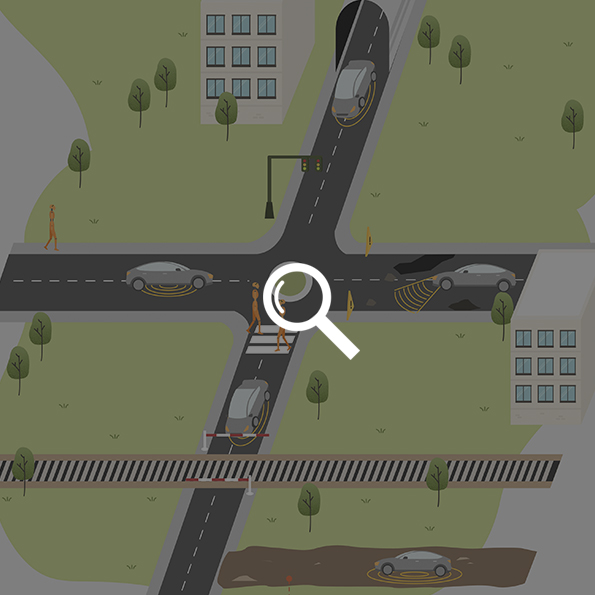
Announced in early 2017, with a budget of $10 million, K-City officially opened this month and the highway is already up and running. When the project is complete, the total area will cover 320,000 square meters, triple his M-City expansion, the first of its kind. In addition to 5G base stations and highway sections, this ambitious South Korean city has pedestrian crossings, toll booths, railroad crossings, and the same cumbersome roadwork as traditional cities.there will be Up to 35 simulated conditions The city also plans to test vehicles up to Level 4, or fully autonomous driving, albeit within a constrained environment.
- Level 0: Absolute human driver control (brake, accelerator, etc.)
- Level 1: Most functions controlled by the driver: Reduced automation (speed or gearshift)
- Level 2: Gear and acceleration automation through interpretation of environmental data. For example cruise control.
- Level 3: Automation of critical safety functions (overtaking, turning, braking, etc.)
- Level 4: Although it can only be used in pre-configured environments, it is a fully self-driving car.
- Level 5: It has completely replaced the driver in all areas, including extreme driving.
Google and Uber fight back in their own cities for self-driving cars
K-City was the world’s largest when it was announced earlier this year, but Alphabet (Google’s Matrix) just announced something even bigger, so the trend seems to be gaining momentum. Under the Castle name is the California testbed of Waymo, the self-driving car division that Google has been focusing on for the past few years. Spread over 370,000 square meters, it hosted a presentation on the latest advances in Level 4 driving technology last October.
Meanwhile, Uber just opened its own cities for self-driving cars earlier this year after shaking up the taxi sector. Founded in Pennsylvania, it’s about half the size of other projects like K-City and Castle, but it shows the company’s commitment to an era when driver’s licenses were little more than old mementos hanging on the walls. Witnesses of the past.
sauce: Guardian, Business Insider, QZ
